Celtic Cross Tarot Spread
Updated 2026-03-29 · 28 min read
The Celtic cross is the spread people love to fear: ten cards, big feelings, and a lot of moving parts. This guide gives you a single high-level map of the whole layout, then walks one position at a time with a sample traditional-style card in each seat so you can see how a coherent story might form—not as fortune-telling, but as structured reflection.
Different books swap labels for positions 5–7 or rename the staff. The numbering here follows a common Rider–Waite–influenced convention: six cards around the central cross, then four cards in a vertical staff to the side. If your teacher uses another map, translate by function (what the seat is asking) rather than fighting over digits.
What you need before you start
- A clear question or situation—not a vague “tell me about my life.”
- Ten cards from a well-shuffled deck, placed face-down in order, or turned one by one as you read each position.
- A journal or voice memo; Celtic cross readings are long and you will forget nuances ten minutes later.
If you are brand new to spreads, skim Introduction to tarot spreads first, then return here.
Helicopter view: all ten positions
The diagram below is your orientation tool. The cross describes the inner drama: what is happening, what blocks it, what supports it, what led here, what you are reaching for, and what is moving next. The staff widens the lens: how you see yourself, what surrounds you, what you secretly hope or dread, and where the narrative tends if nothing major changes.
Each tile links to a longer section below. This sample uses one card per seat to show how a full reading might look—not a prediction, just a teaching layout.
The cross
Miniatures use local Rider–Waite files when present; otherwise the YouTarot deck image from card data.
How to read this spread (order of operations)
- Stay on the cross first. Read positions 1–6 as one cluster before you interpret the staff. Otherwise the staff will drown out the immediate emotional truth of the situation.
- Notice repetition. Two Wands cards, two themes of “waiting,” or the same court twice usually mean the deck is insisting on something—say it out loud.
- Hold outcome lightly. Position 10 is synthesis, not a sentence from the universe. If you change behavior, the path changes.
Position 1 — Present / heart of the matter
This is the now of the question: the emotional weather, the active archetype, or the tension you are sitting in today. It is not “good” or “bad”; it is descriptive. When you read this card, ask: What is honestly true about my situation if I stop spinning it?
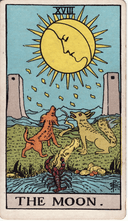
In our sample pull, The Moon suggests fog, intuition, dreams, or something not fully named yet. The “present” may feel uncertain or story-rich—more felt than explained.
Sample card for position 1 only
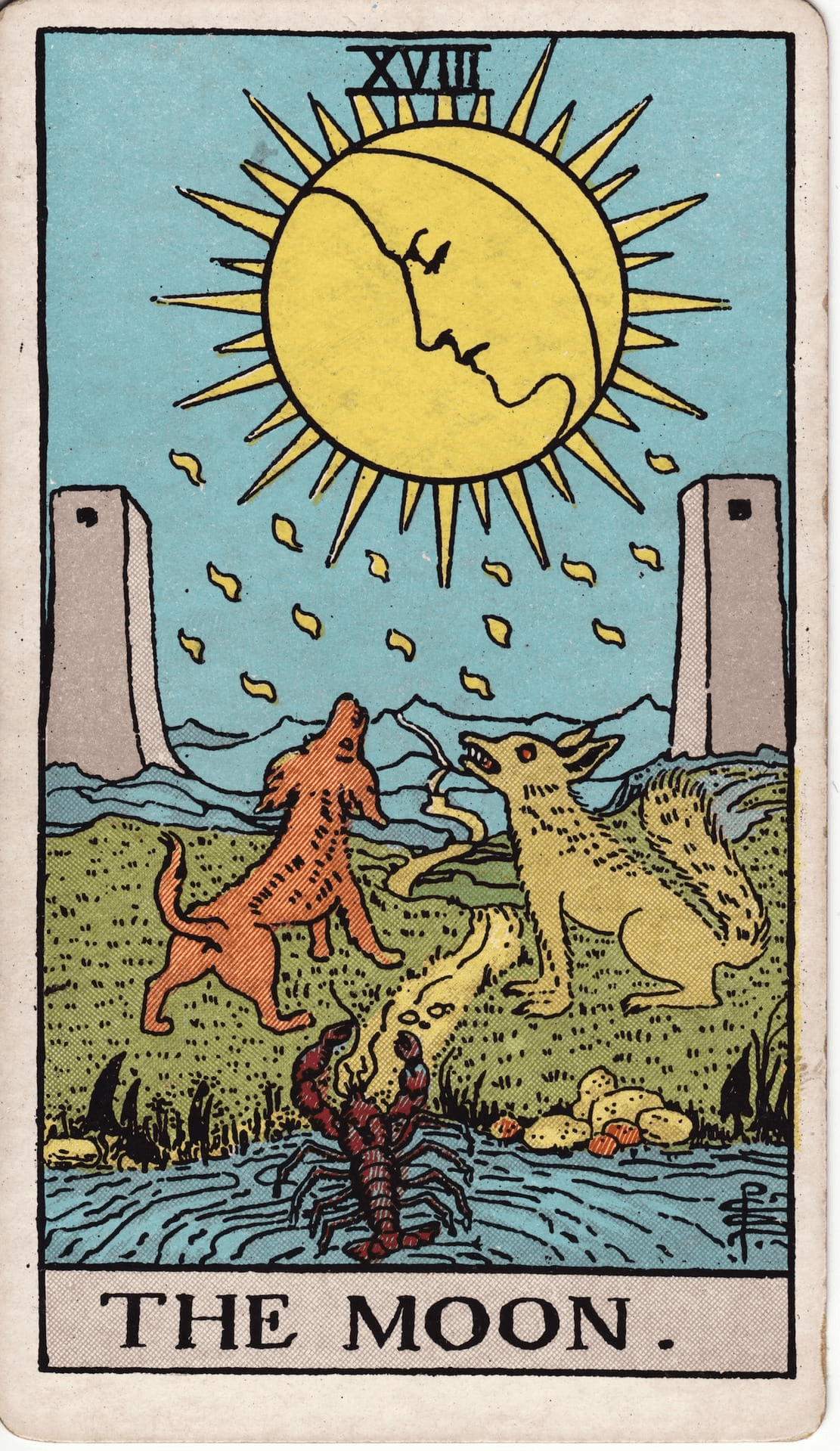
Rider–Waite–Smith examples for illustration. Explore full meanings in the directory.
Position 2 — Challenge / what crosses you
Laid across the first card (literally, in a physical reading), this seat is the friction: a belief, person, habit, or external snag that complicates the clean version of the story. It can be what you resist—or what the situation resists in you.
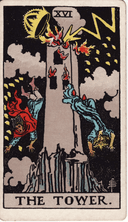
The Tower here is dramatic: sudden clarity, collapse of an old story, or an event that refuses to let you stay comfortable. Paired with The Moon in position 1, you might read it as “the moment ambiguity breaks open.”
For the visual language of crossing cards, see the multi-card example in Introduction to tarot spreads or run your own cross on the reading page.
Sample card for position 2 only
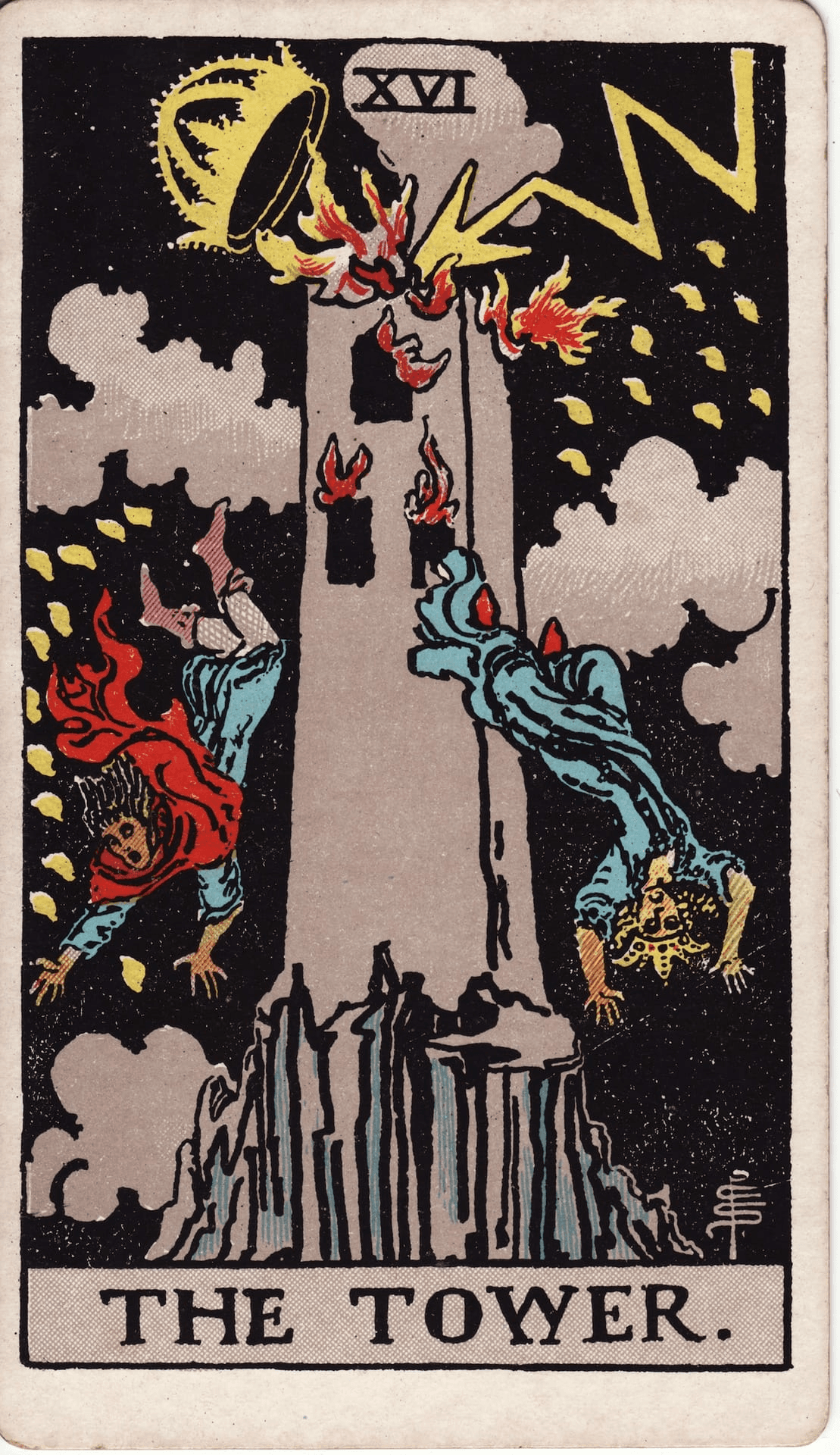
Rider–Waite–Smith examples for illustration. Explore full meanings in the directory.
Position 3 — Foundation / root
Beneath the central pair, this card points to what the situation is standing on: values, old agreements, money patterns, family scripts, or unconscious needs. It often answers Why is this happening now? more than What will happen?
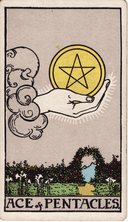
Ace of Pentacles hints at a seed of stability: a real opportunity, a body-based anchor, or a desire to build something tangible—even if the surface still feels chaotic.
Sample card for position 3 only
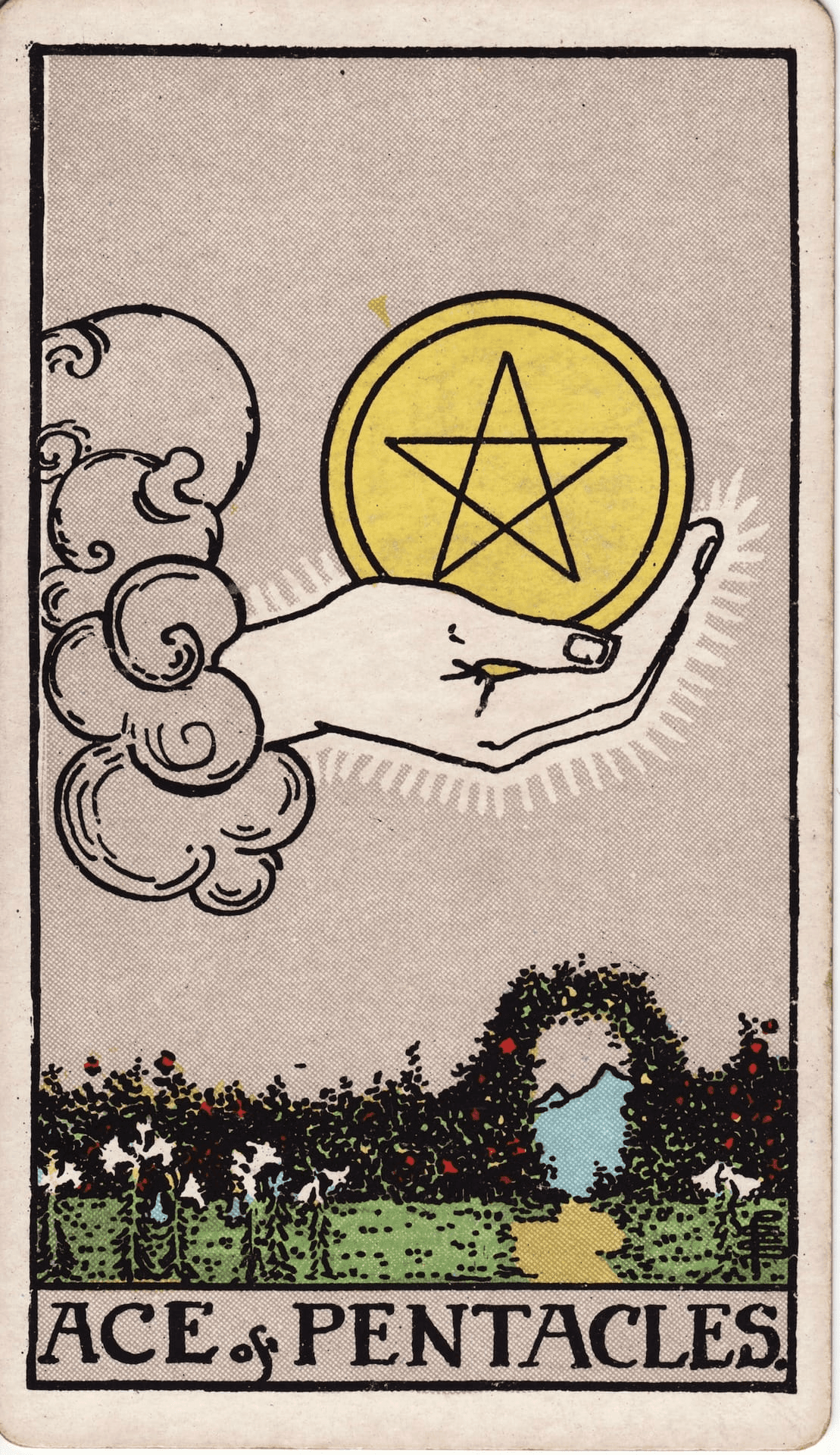
Rider–Waite–Smith examples for illustration. Explore full meanings in the directory.
Position 4 — Recent past
Usually read as what is receding but still coloring the present: last month’s decision, an old dynamic you are leaving, or a lesson you are still integrating. It is not your entire biography—just the wake behind the boat.
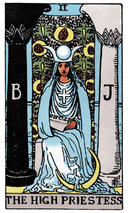
The High Priestess suggests there was secrecy, intuition withheld, or information held close. The past may include a phase of waiting, listening, or not saying the full truth.
Sample card for position 4 only

Rider–Waite–Smith examples for illustration. Explore full meanings in the directory.
Position 5 — Crown / conscious goal (or “above”)
Above the center, this seat often represents what you say you want, your ideal outcome, or the value you are trying to live up to. It can also show how you are trying to appear— the story you tell others or yourself about “who I am in this.”
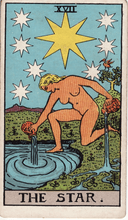
The Star is hopeful repair: healing after difficulty, a wish for authenticity, or faith that honesty will be worth it. It can soften a Tower-heavy crossing by pointing toward what you are rebuilding toward.
Sample card for position 5 only
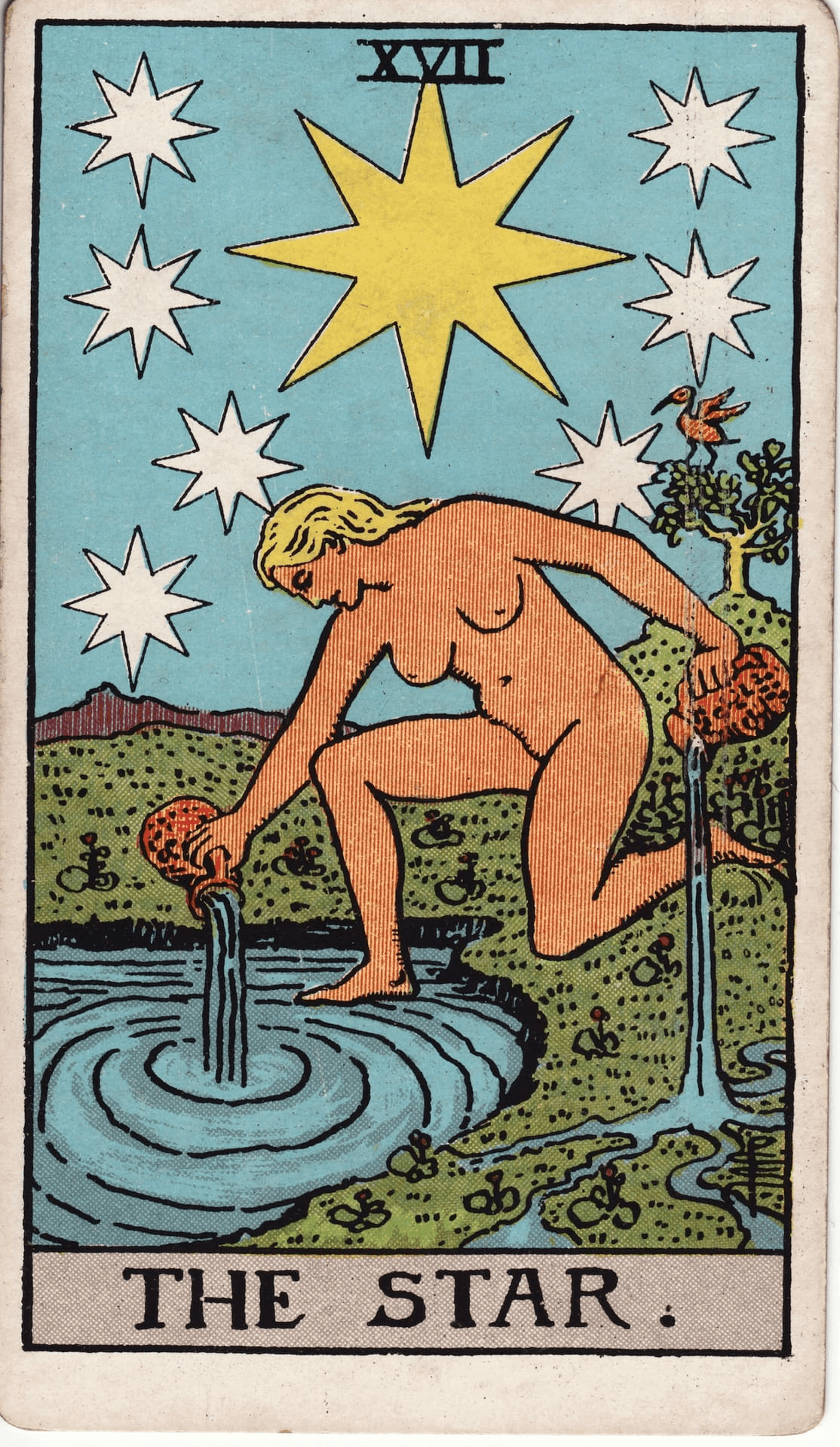
Rider–Waite–Smith examples for illustration. Explore full meanings in the directory.
Position 6 — Near future / approaching energy
Commonly the next visible movement: not a five-year forecast, but the chapter opening soon if currents continue. Read it as momentum, invitation, or the next conversation the situation wants to have.
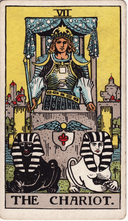
The Chariot adds directed will: boundaries, drive, or taking the reins after a murky Moon phase. It can be “we pick a lane and go.”
Sample card for position 6 only
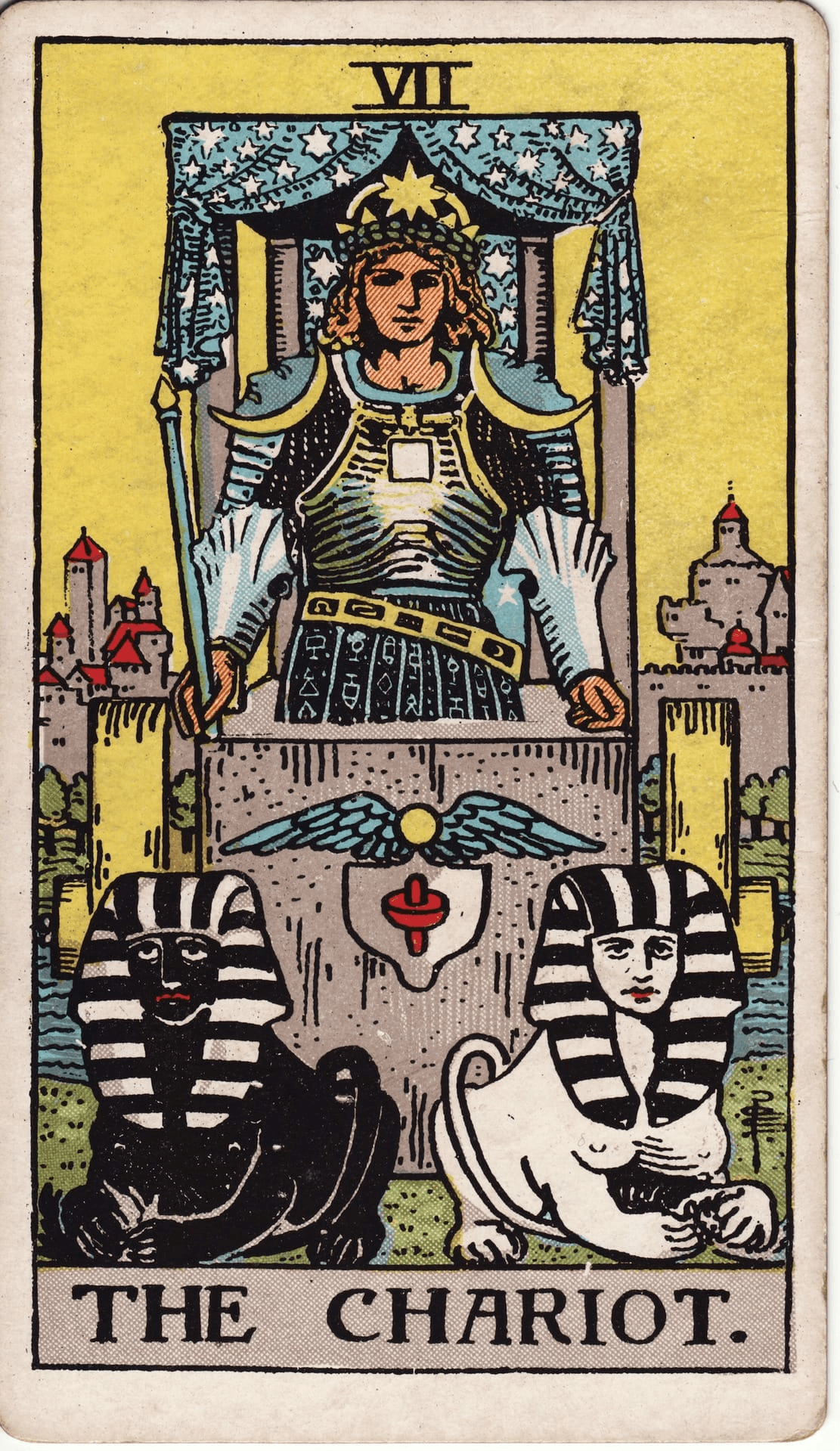
Rider–Waite–Smith examples for illustration. Explore full meanings in the directory.
Position 7 — Self-image / how you meet the situation
The staff begins with your role in your own story: confidence, shame, defensiveness, generosity, avoidance. This is not “who you are forever”; it is the mask, mood, or inner posture you bring to this exact question.
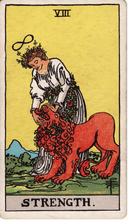
Strength (or Strength-as-patience in many decks) suggests courage with softness—holding steady without forcing. Useful if the crossing card felt sharp.
Sample card for position 7 only
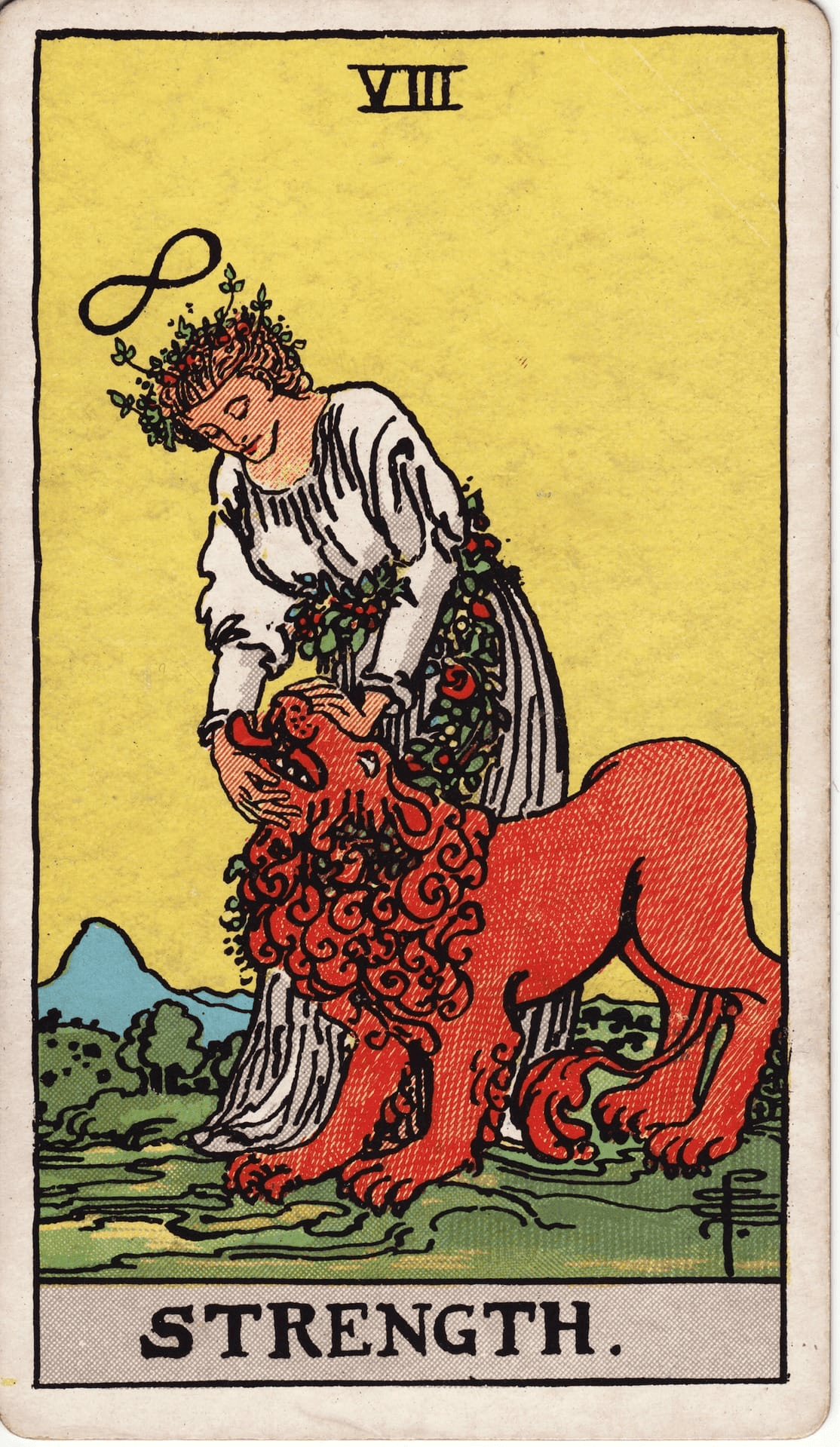
Rider–Waite–Smith examples for illustration. Explore full meanings in the directory.
Position 8 — Environment / external field
The people, culture, logistics, and invisible norms around you: what others expect, what the workplace rewards, family pressure, or literal circumstances (money, health logistics, geography). This card answers What is the room like that I am trying to speak in?
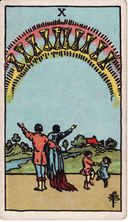
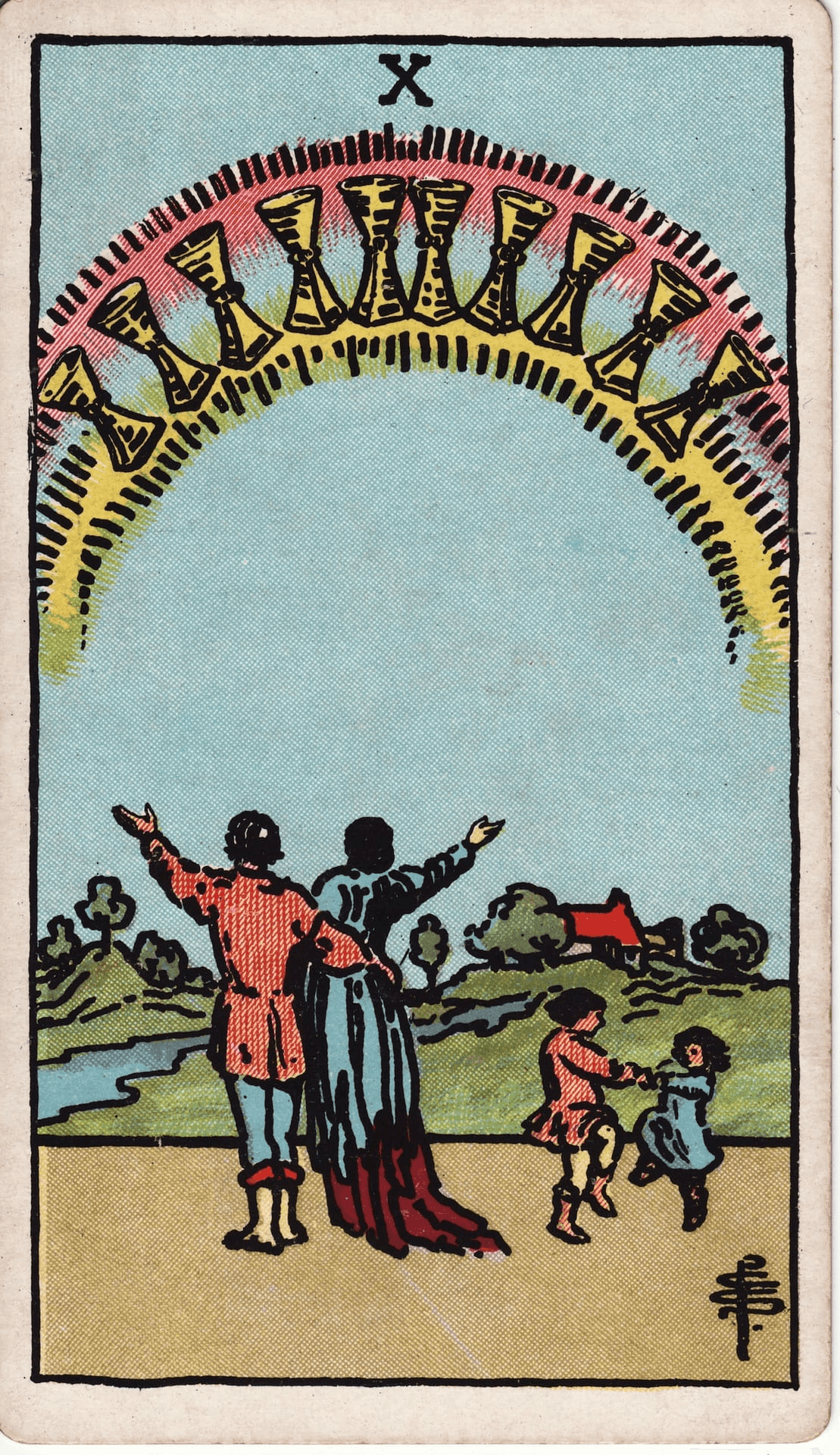
Ten of Cups often points to belonging, chosen family, emotional harmony, or the wish for a “happy ending” aesthetic—sometimes genuinely supportive, sometimes a heavy ideal to live up to.
Sample card for position 8 only
Rider–Waite–Smith examples for illustration. Explore full meanings in the directory.
Position 9 — Hopes, fears, or hidden driver
One of the most psychological seats: what you secretly want to be true, what you dread, or an obsession that steers choices beneath logic. The same card can contain both hope and fear (“I hope they choose me / I fear I am not chosen”).
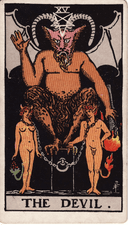
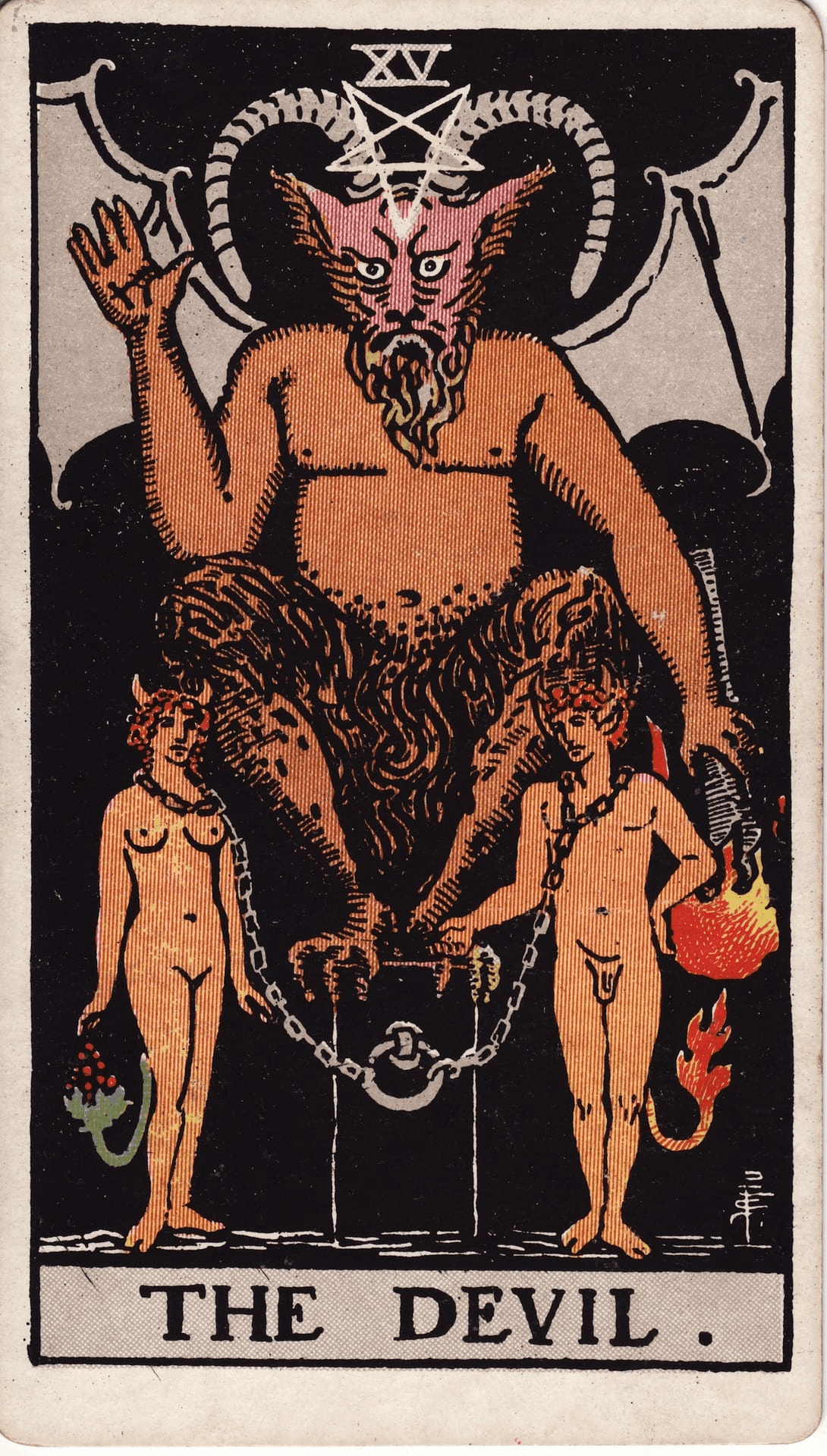
The Devil is not a moral judgment in a reflective reading—it can mean attachment, comparison, a golden handcuffs job, or a pattern you keep choosing because it feels like safety. Name the chain gently.
Sample card for position 9 only
Rider–Waite–Smith examples for illustration. Explore full meanings in the directory.
Position 10 — Outcome / synthesis
Last card: where the threads lean if the story continues on its current wiring. This is not destiny. It is a summary pressure—especially after you have seen environment, hopes/fears, and self- image. If you dislike it, the reading has already shown you levers (foundation, crossing, self) to adjust.
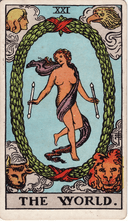
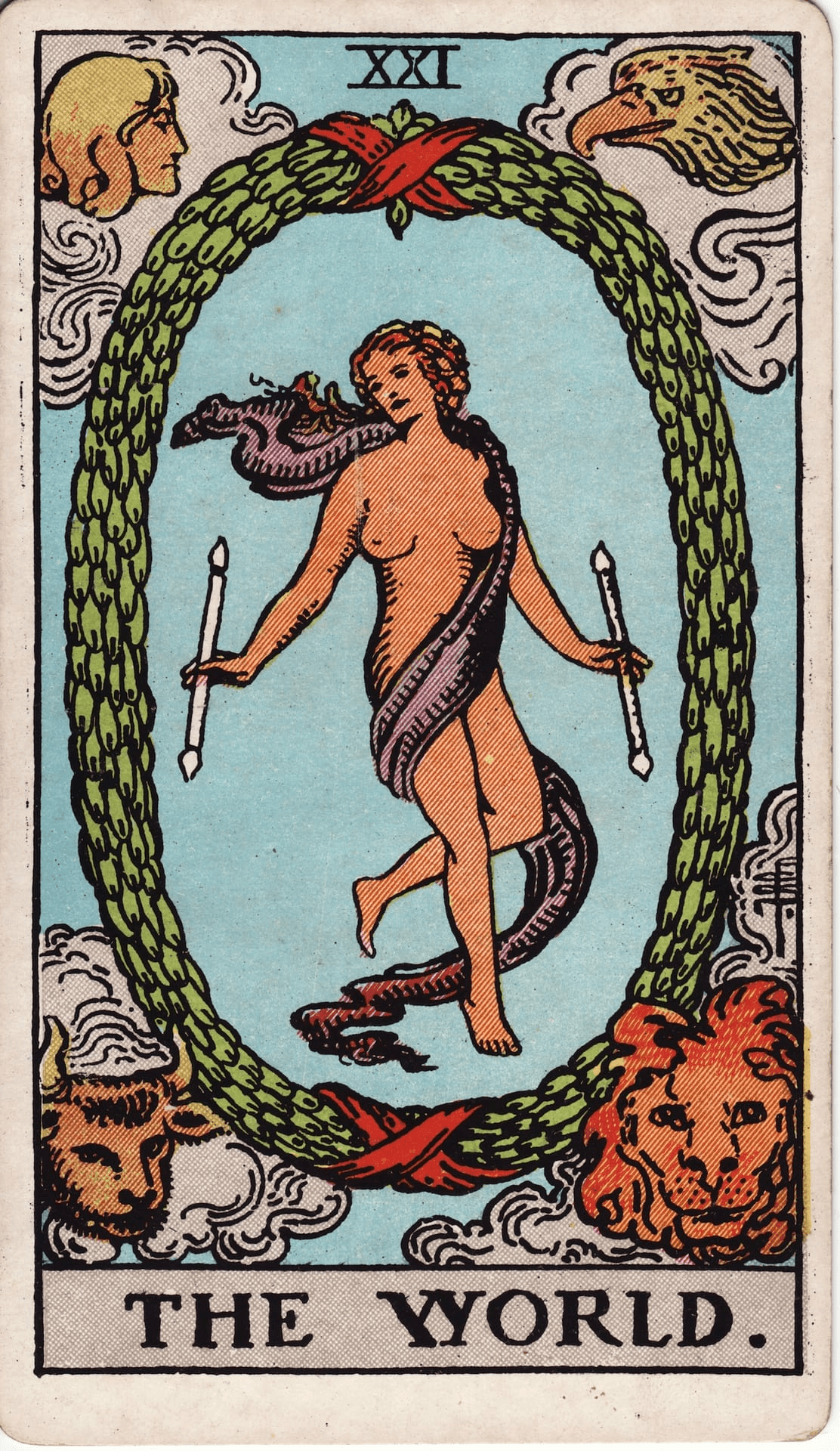
The World closes a cycle: integration, graduation, or “I finally see the whole shape.” With our sample, it can suggest that even a disruptive crossing can complete a chapter if you name the pattern honestly.
Sample card for position 10 only
Rider–Waite–Smith examples for illustration. Explore full meanings in the directory.
Synthesis: turning ten cards into one conversation
After you read each seat, zoom out and narrate in plain language: Right now it feels like [1]. What complicates that is [2]. Underneath, I am standing on [3], coming out of [4], reaching for [5], and moving toward [6]. I am showing up as [7] inside an environment shaped like [8], driven by [9], and if I do not change the wiring, this trends toward [10].
That paragraph alone is often more useful than ten isolated keywords.
Common pitfalls
- Jumping to outcome before you have felt positions 1–3—where most of the emotional truth lives.
- Treating position 10 as verdict instead of “current vector.”
- Ignoring the staff when the cross feels repetitive or stuck—the staff usually names the role you are playing and the water you are swimming in.
Shorter follow-ups
If one seat confuses you, pull a tiny clarifier spread just for that seat, or switch to past / present / future for a tighter time line. AI tarot chat can help you phrase questions without replacing your own judgment.
When you are ready, open a full session on YouTarot readings and run a Celtic-style exploration with your own question.
Try it on YouTarot
Get a reading tailored to your question
Tarot works best as reflection. Use our AI readings to explore what the cards might highlight for you right now—not as fixed predictions.