Read Your Own Spread · Free sample
See how two cards become a reading.
Read two examples, then try a pair yourself. The answer notes explain one possible reading and what could change it.
Prefer a PDF? Download the 8-page sample.YOUR FIRST READING
When pushing harder isn't helping
I keep jumping between tasks. What would help me finish today's work?
Suppose you sit down to work, check a message, remember another task, and switch again. By lunch, you've started five things. Nothing is finished.
Situation
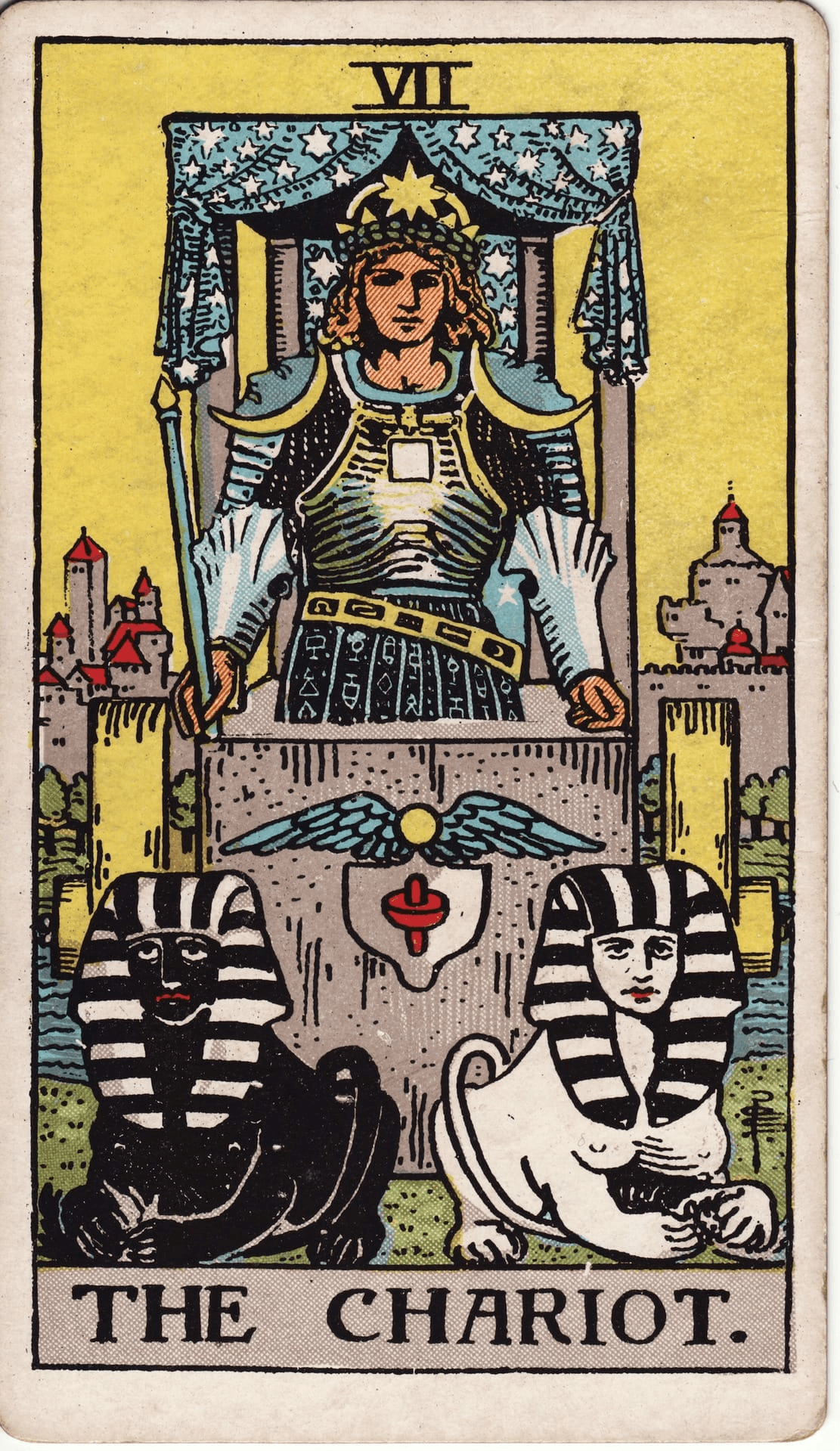
The Chariot
Choosing a direction and keeping it
The black and white sphinxes face forward beneath the driver.
Helpful response
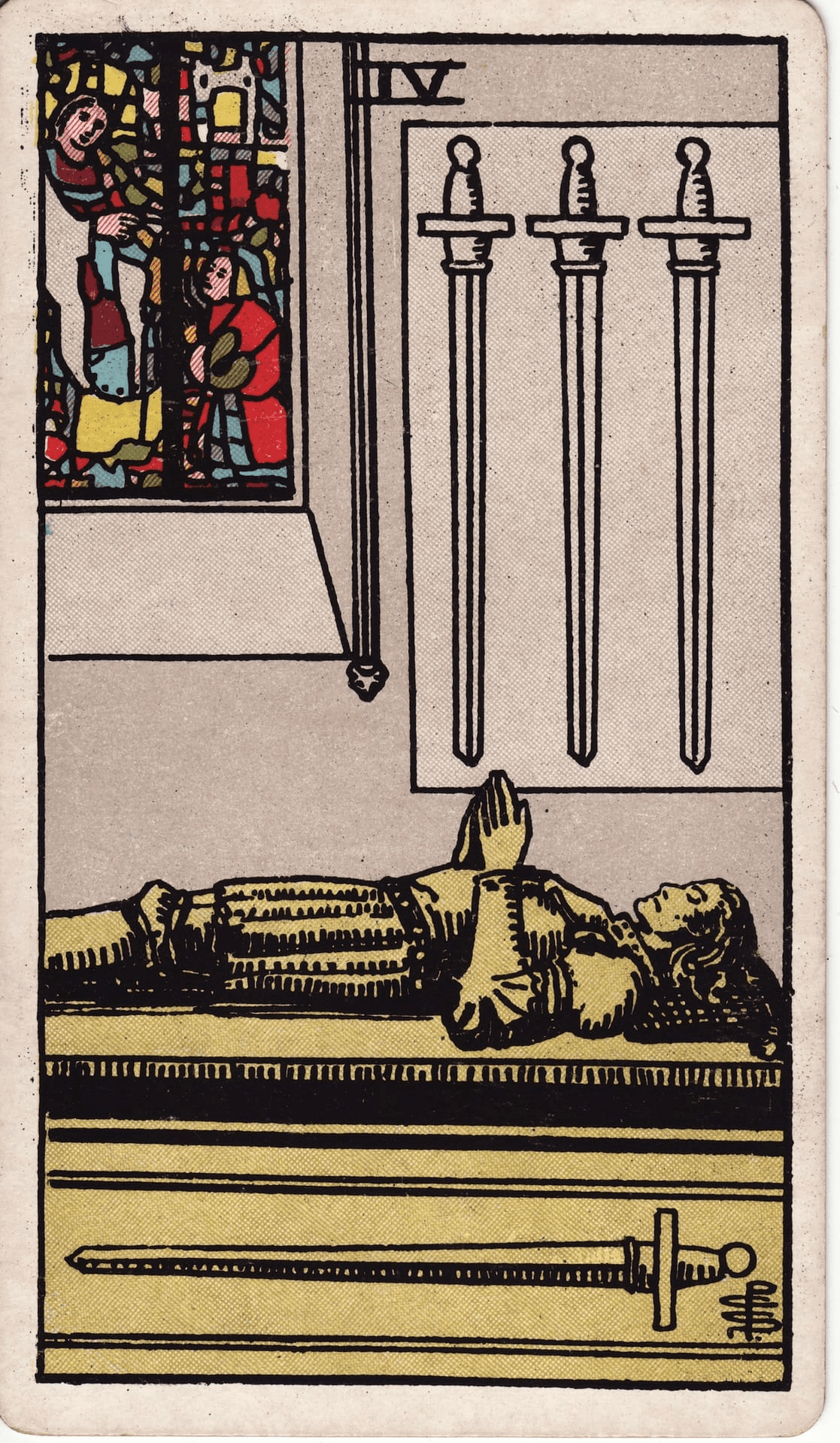
Four of Swords
A pause to rest or think
A knight's stone figure lies with hands together beneath three swords.
THE READING
I'm putting in effort, but a pause could help me decide where it should go. I'll step away for a few minutes, choose one task, and return to it before taking on the next.
YOUR FIRST READING / WORK IT THROUGH
How the pair becomes an answer
The Four's pause changes how you use the Chariot's effort.
The Chariot · Situation / Four of Swords · Helpful response
Before drawing, you chose Situation for the first card and Helpful response for the second. Keep those questions in mind as you work through the answer.
- 1. Ask
I'm asking about today's unfinished work. The first card describes my approach; the second offers a response.
- 2. Read
The Chariot suggests directing my effort. The Four of Swords suggests stepping away long enough to rest or think.
- 3. Connect
The pause could help me choose a direction. Pushing on without choosing may just mean switching tasks faster.
- 4. Write
I'll stop for a few minutes, choose one task, and return to it. My effort will have somewhere to go.
- 5. Check
Am I tired, or am I avoiding a choice? Take a short break, pick one task, and notice whether it becomes easier to stay with it.
Try a pair of your own
Before shuffling, write your question and choose Situation / Helpful response. Look up each card, then explain how the second responds to the first. Keep your notes on the two-card worksheet.
WORKED PAIR / TENSION
The reply you've been rewriting
I keep putting off replying to an old friend. What is getting in the way?
Situation
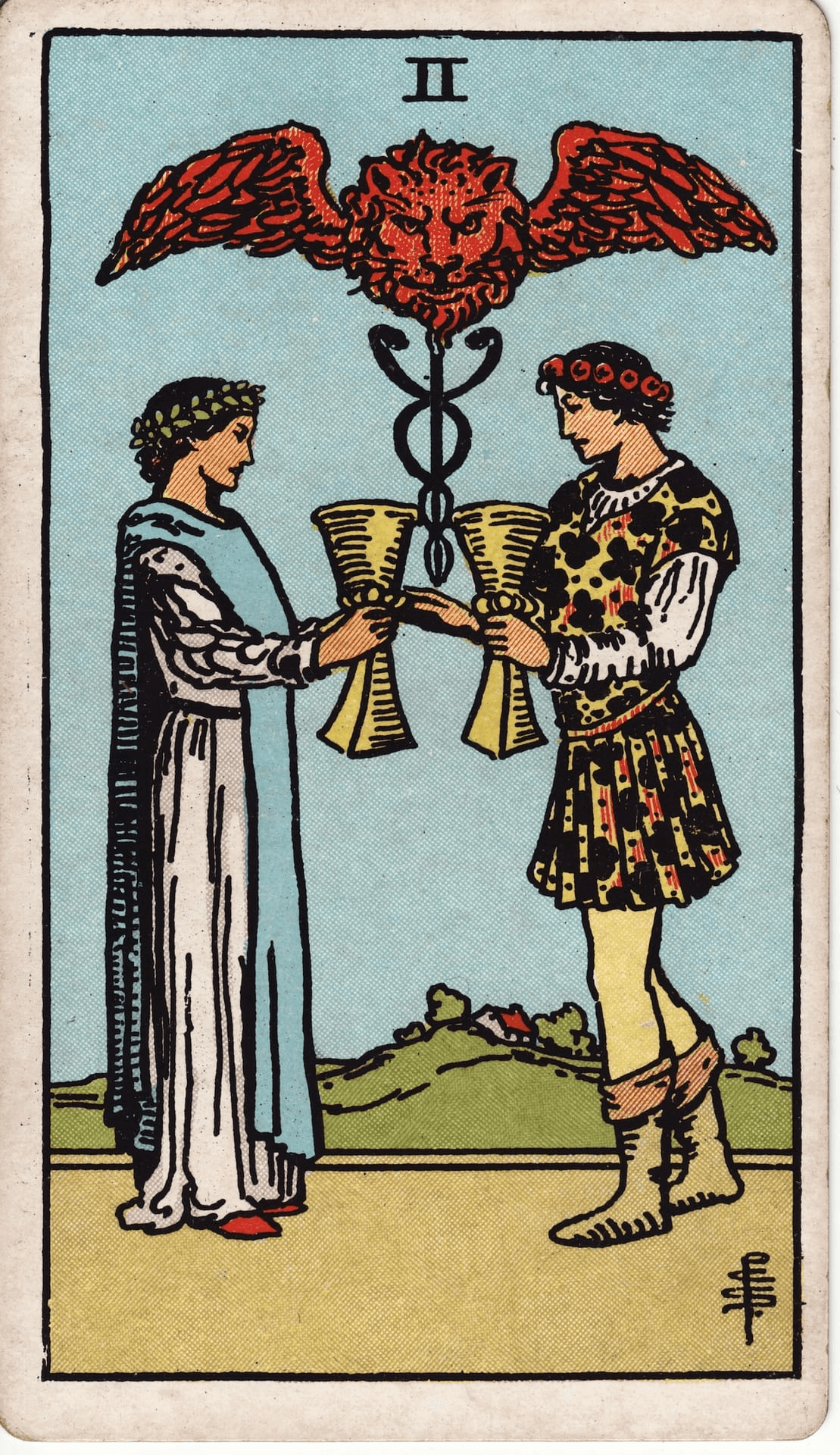
Two of Cups
A meeting between two people
Each person holds a cup toward the other.
Challenge
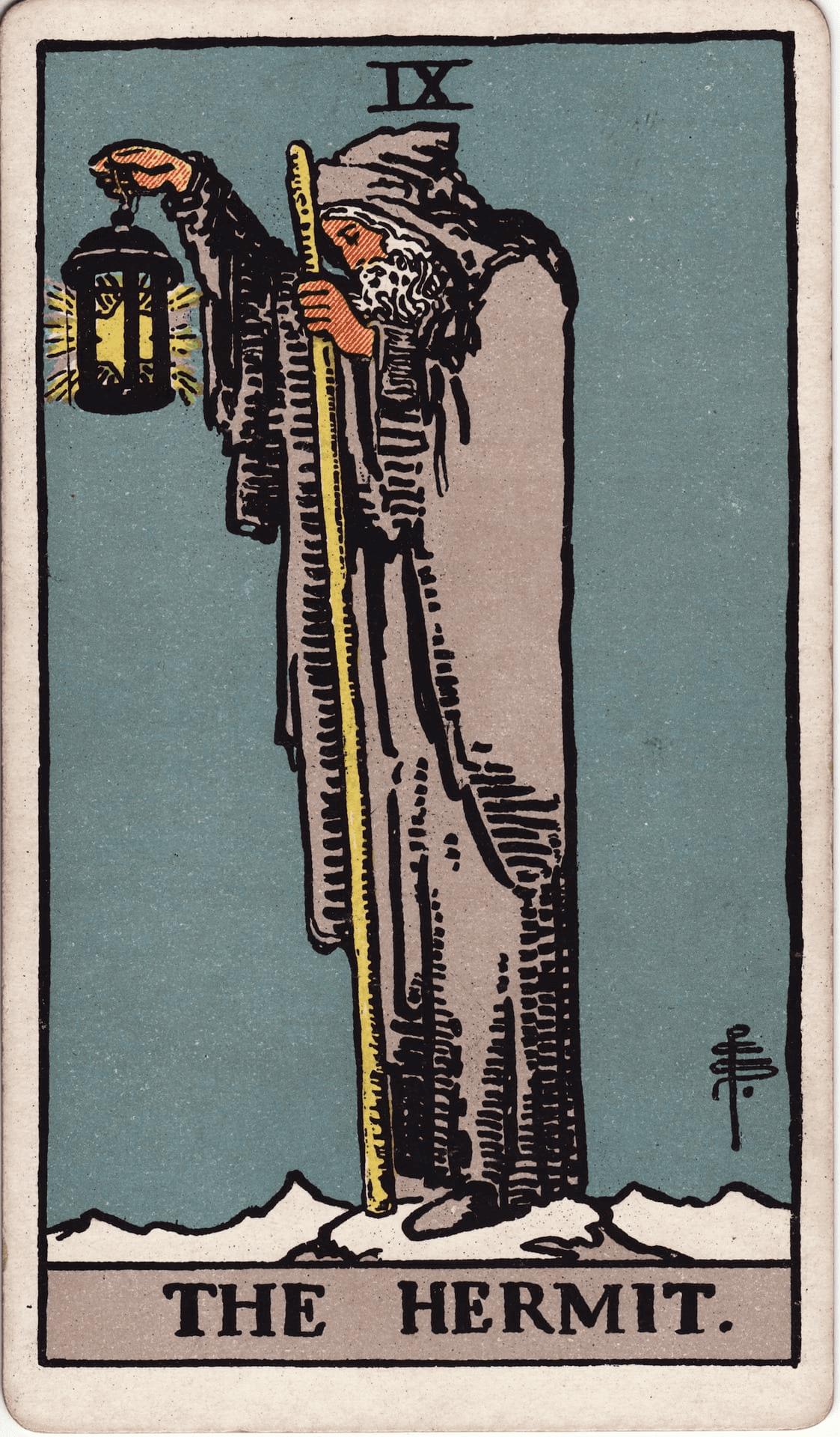
The Hermit
Solitude or private reflection
A lone figure holds up a lantern.
THE READING
Thinking about the friendship has started to take the place of speaking to your friend. Send a short, honest reply and give them a chance to answer. You can work out more when both of you are in the conversation.
WORKED PAIR / LOOK MORE CLOSELY
Why this reading fits
The reply you've been rewriting
Two of Cups · Situation / The Hermit · Challenge
Suppose your friend has asked whether you'd like to meet, and you've spent three days drafting a reply. The two people in the Two of Cups face each other, cups in hand. The Hermit stands alone with his lantern. In this reading, the contrast matters: there's a conversation available, but you're trying to work out the friendship by yourself. The unanswered invitation makes withdrawal a useful meaning for the Hermit in Challenge.
Read them together
The Hermit makes you examine what's happening around the Two of Cups. Reflection can help a friendship, but here it has become the thing delaying contact. The Challenge position keeps that difficulty in view.
Another possibility
Perhaps you don't know what you want to say yet. The Hermit can show difficulty finding a clear view; the Two of Cups can offer a conversation that helps you reach one.
Try it
Read the invitation again. Answer what it actually asks: whether you'd like to meet. If you need time, say that. You don't have to settle the whole friendship in the first message.
LOOK AGAIN
'My friend is avoiding me' turns the Hermit into a claim about the other person. This question concerns your own delay, and your friend's invitation is already part of the example.
TRY IT YOURSELF
The paper you're saving
How can I enjoy what I have?
Suppose you own good art supplies but rarely use them. Before drawing, you choose Situation and Challenge. Look at these two upright cards, then ask what might be stopping you from using what you have.
Situation
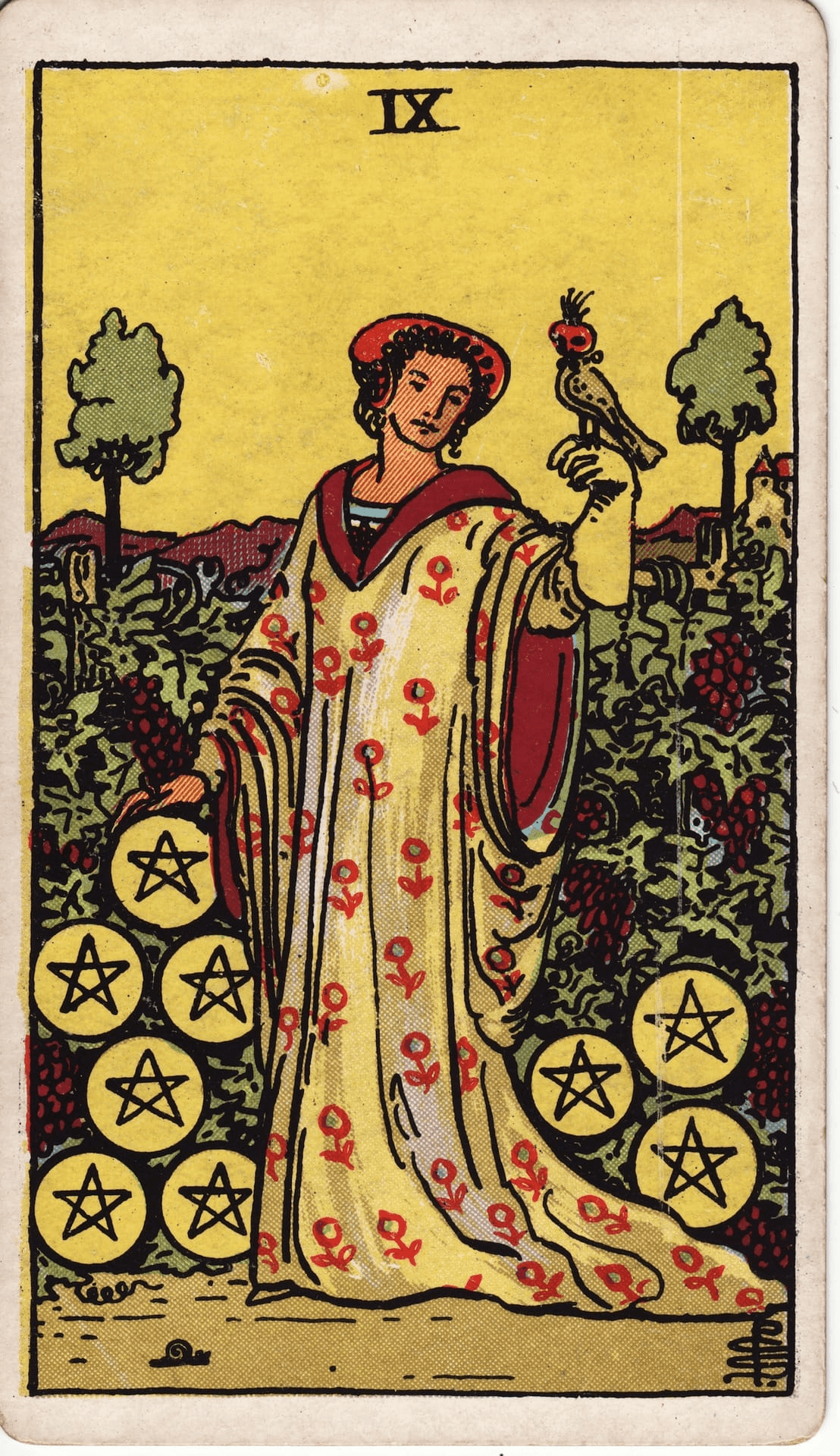
Nine of Pentacles
Well-kept resources
A woman stands among vines, coins, and grapes.
Challenge
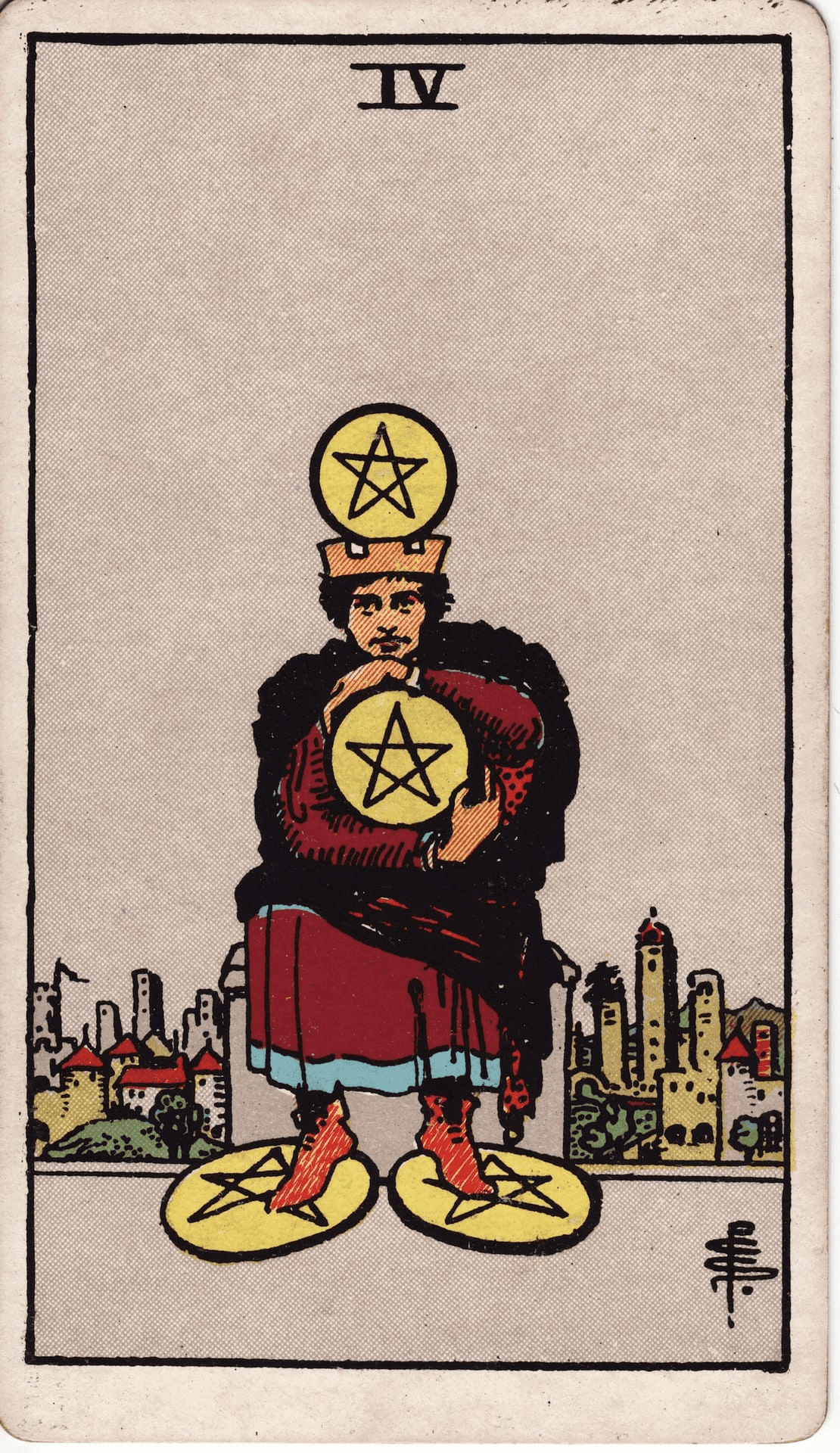
Four of Pentacles
Holding tightly to possessions
The figure grips one coin, with others above the head and under the feet.
Your answer stays in this tab when browser storage is available. Copy it if you want to keep it. We don’t receive what you write.
Compare with the answer notes
TRY IT YOURSELF / COMPARE YOUR ANSWER
What are you protecting?
Look at why the interpretation fits, even if your words differ.
Nine of Pentacles · Situation / Four of Pentacles · Challenge
The Nine shows a woman in a cultivated garden. The Four holds tightly to a coin, with others above the head and under the feet. You have something you could enjoy, but you might be holding on so tightly that you never get to enjoy it.
One possible reading
I have materials I could enjoy, but keeping them perfect is stopping me from using them. I'll try one drawing on the good paper, after checking that I can spare a sheet.
You might instead be protecting a genuinely scarce supply. That matters. Check whether the hesitation comes from having very little left or from being afraid of making a bad drawing.
Your answer stays in this tab when browser storage is available. Copy it if you want to keep it. We don’t receive what you write.
The Nine brings the resources; the Four makes you examine how you hold them. A different answer can work if both cards still have a part.
The complete kit
Bring a question of your own.
The full guide has six worked pairs and six worked trios, lessons on reversals and cards without positions, and eleven exercises with answer notes. You also get the reusable worksheets and the offline reader.
Original YouTarot text and fictional exercises. Classic Rider–Waite–Smith artwork by Pamela Colman Smith. Illustrated edition 2.1.