Tell similar tarot cards apart
The Hermit and Four of Swords both step back. Does the card ask you to think something through, or put it down and rest? The difference matters when you give advice.
These ten comparisons use the classic Rider–Waite–Smith pictures and one shared question for each pair. We compare drawing either card upright as advice. If you drew both, use the combined-meaning link beneath the example.
Choose a comparison · 10 lessons
Death vs The Tower
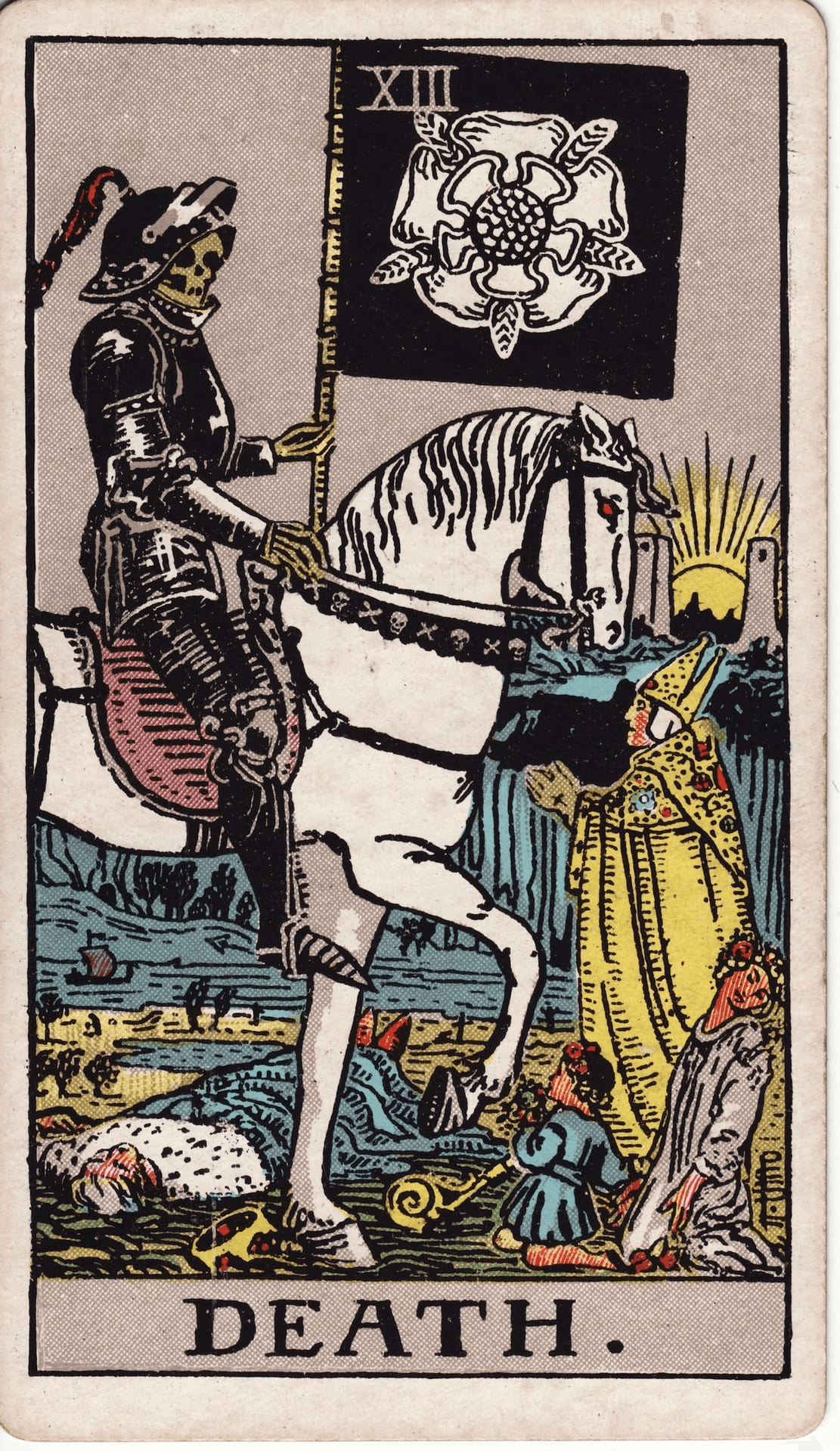
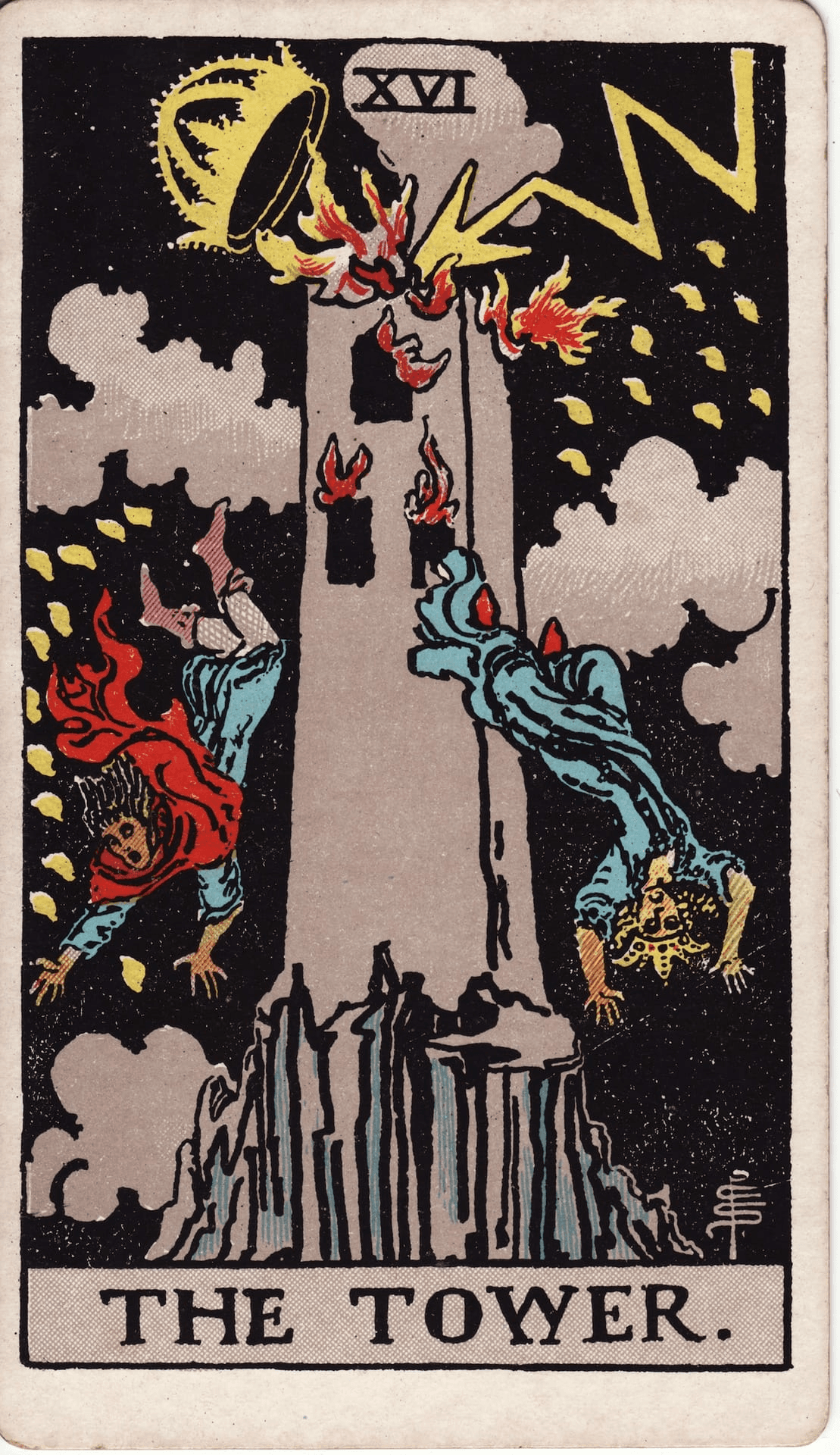
Both can describe a major change. Death asks what has run its course. The Tower asks what happens when an assumption or structure no longer holds.
Look at Death
The armored skeleton rides past people of different ages and ranks. A sun appears between two towers in the distance. The scene includes an ending and something beyond it.
What it can mean: An ending, a transition, or the need to stop preserving something that has finished.
Look at The Tower
Lightning strikes the tower, the crown is thrown off, and two people fall from the burning building. Something that looked secure has been exposed as vulnerable.
What it can mean: Disruption, a failed assumption, or a problem that makes the existing plan untenable.
Same question, different advice
“What should I do about the community newsletter I run?”
The newsletter began as a shared project, but the other contributors have stopped sending pieces. You now write every issue yourself and no longer enjoy producing it.
Compare drawing either card upright in the advice position.
If you draw Death
Let the newsletter end. Tell readers when the final issue will arrive, hand over anything worth keeping, and stop promising another edition out of guilt. You can care about the community without keeping this particular job.
If you draw The Tower
Name the arrangement that has broken down: this is no longer a shared project. Before promising another issue, ask who can commit to which pieces and how often. Set a schedule and responsibilities that reflect those answers. If nobody can contribute, do not keep planning as though they will.
What changes? Death would put a clean ending first. The Tower would put the failed assumption of shared work first, then ask what can realistically replace it. Neither picture predicts a literal death or an inevitable disaster.
The Hermit vs Four of Swords
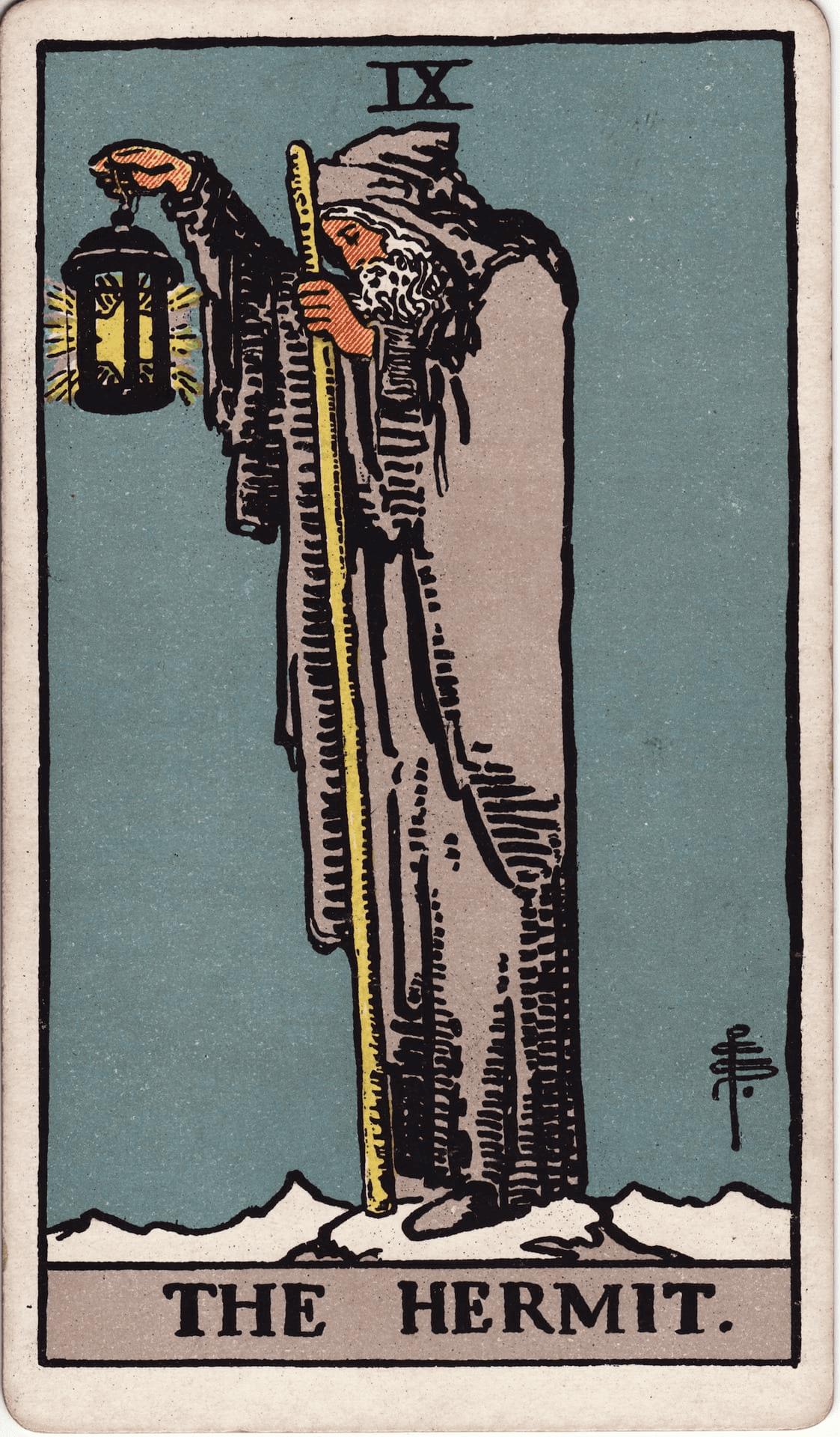
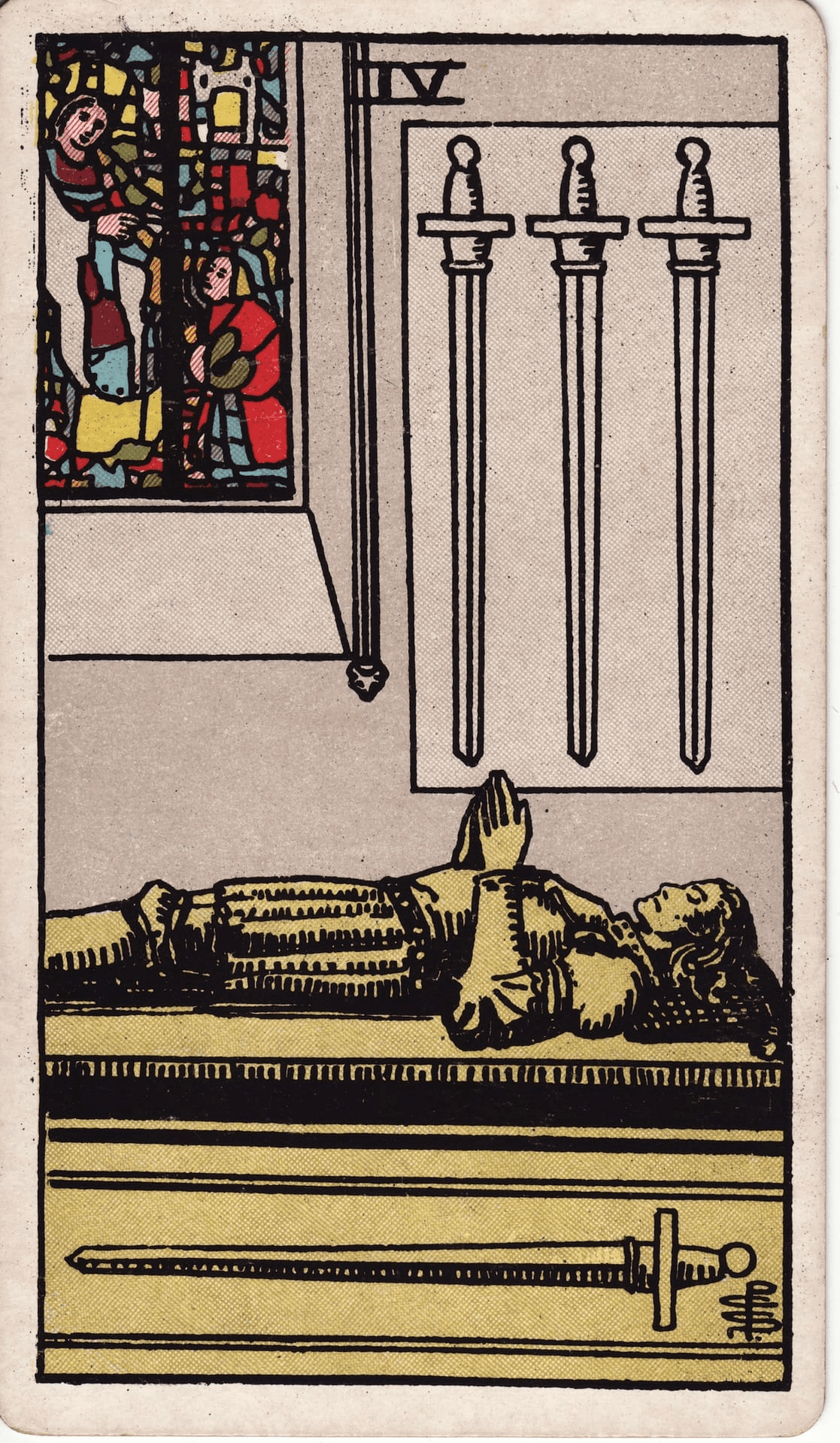
Both step away from other people and demands. The Hermit uses solitude to look for an answer. Four of Swords gives the search itself a break.
Look at The Hermit
A standing figure holds a lantern up and carries a staff. The light illuminates only a small area: enough to examine the next part of the path.
What it can mean: Deliberate solitude, investigation, and finding an answer you can stand behind.
Look at Four of Swords
A figure lies still with hands together. Three swords hang above; another lies below. Unlike The Hermit, this figure is not standing, searching, or holding a light.
What it can mean: Rest, a pause after strain, and temporary withdrawal from a problem.
Same question, different advice
“How should I use my first free evening this week?”
Your job has been exhausting, and you keep asking friends whether you should change careers. Their advice now contradicts itself.
Compare drawing either card upright in the advice position.
If you draw The Hermit
Set aside the group chat. Spend half an hour writing what you want from work and what you cannot keep accepting. Choose one useful question to research. The point of being alone is to hear your own answer, not collect five more opinions.
If you draw Four of Swords
Give career research the night off. Eat, put your phone away, and leave the decision for a time when you are less tired. Turning your only free evening into another assignment would miss the point of this card.
What changes? The Hermit makes the quiet time purposeful. Four of Swords lets you stop trying to solve anything for a while. Solitude and recovery can overlap, but they are different jobs.
The Moon vs The High Priestess
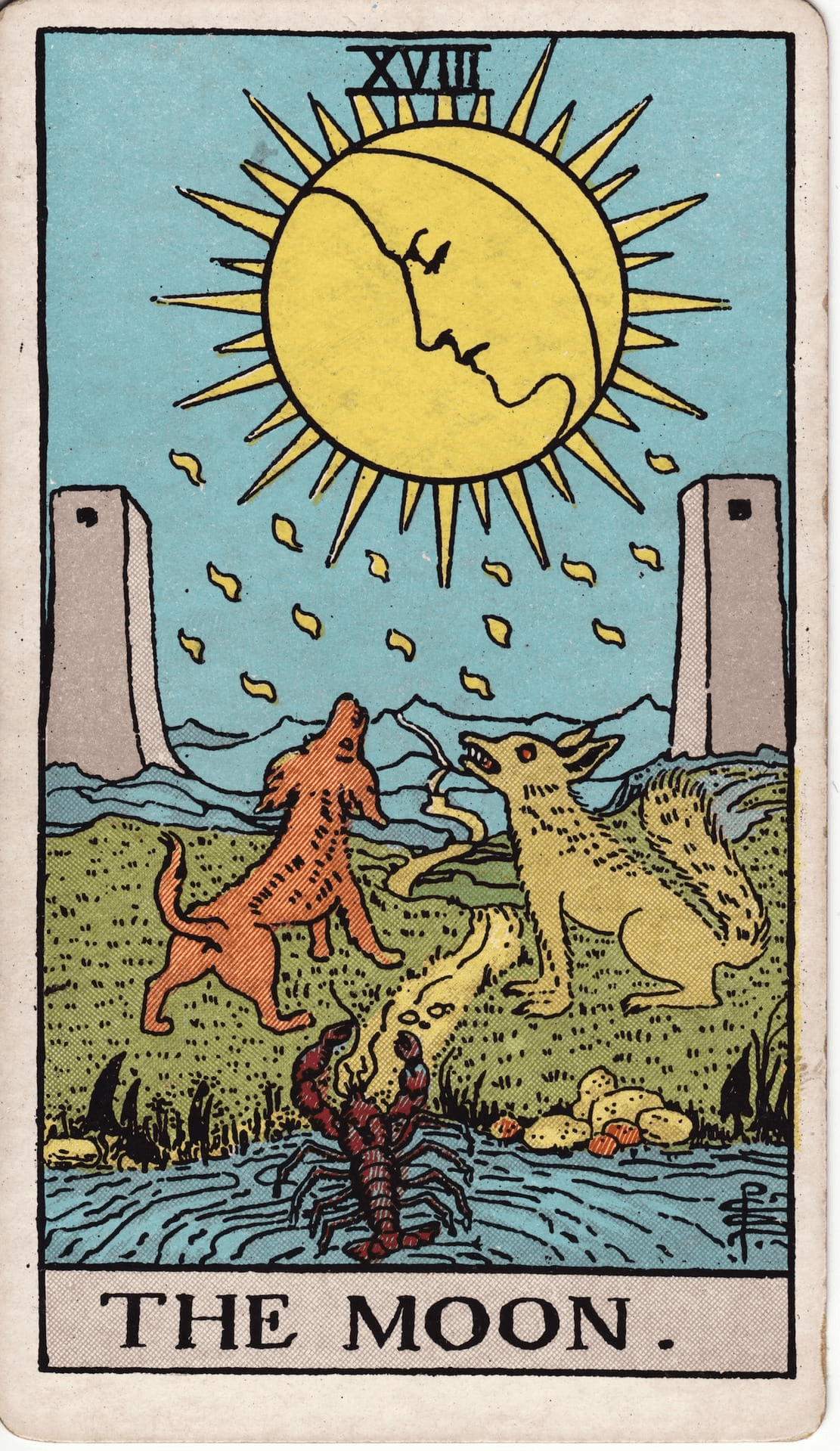
Both leave something out of full view. The Moon emphasizes an unclear picture and the fears we add to it. The High Priestess emphasizes listening and allowing understanding to develop before speaking.

Look at The Moon
A dog and a wolf stand beside a path under the moon. A crayfish emerges from the water, and the path winds between two towers into the distance. You cannot see the whole route.
What it can mean: Uncertainty, unease, imagination, and difficulty separating impressions from facts.
Look at The High Priestess
A seated figure holds a partly covered scroll between a dark pillar and a light one. A patterned veil hangs behind her. The image is still, with information partly concealed rather than a path to follow.
What it can mean: Quiet attention, discretion, intuition, and knowledge that is not yet fully expressed.
Same question, different advice
“How should I handle a short message from my project partner?”
They send “We need to talk about the plan.” No explanation follows. You begin drafting an angry reply, although you do not yet know what they want to discuss.
Compare drawing either card upright in the advice position.
If you draw The Moon
Do not answer the argument you have invented. You know the words in the message; you do not know the tone or the reason for it. Ask what part of the plan they want to discuss, then wait for the answer.
If you draw The High Priestess
Pause and notice what the message brings up for you. Perhaps you already know there is an unresolved issue you have avoided mentioning. Listen when you speak with your partner, and give yourself time to understand before defending the plan.
What changes? The Moon asks you to check the story you are telling yourself. The High Priestess asks you to listen before forcing an answer. Neither establishes a secret, a lie, or your partner’s private thoughts.
The Devil vs Eight of Swords
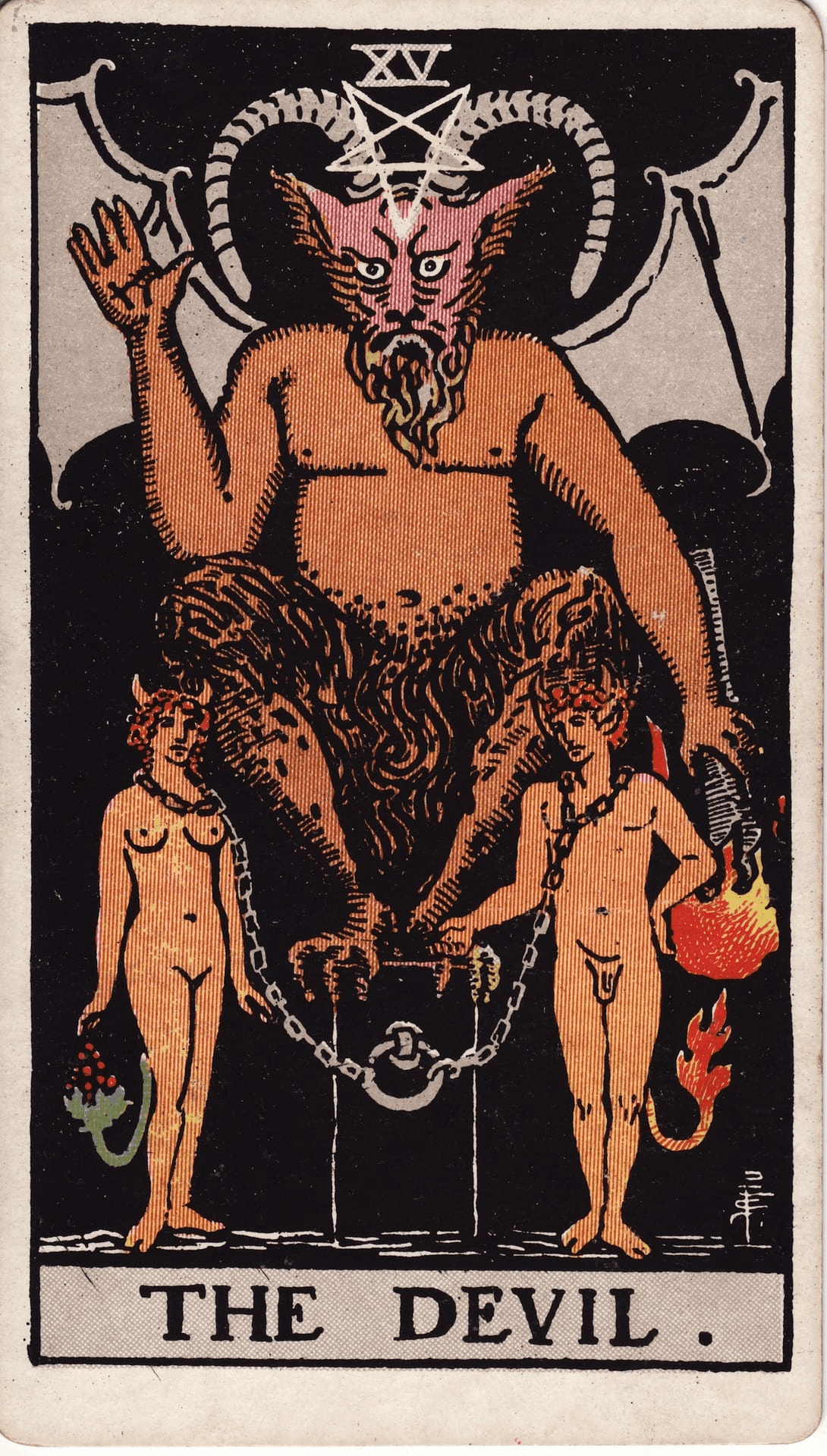
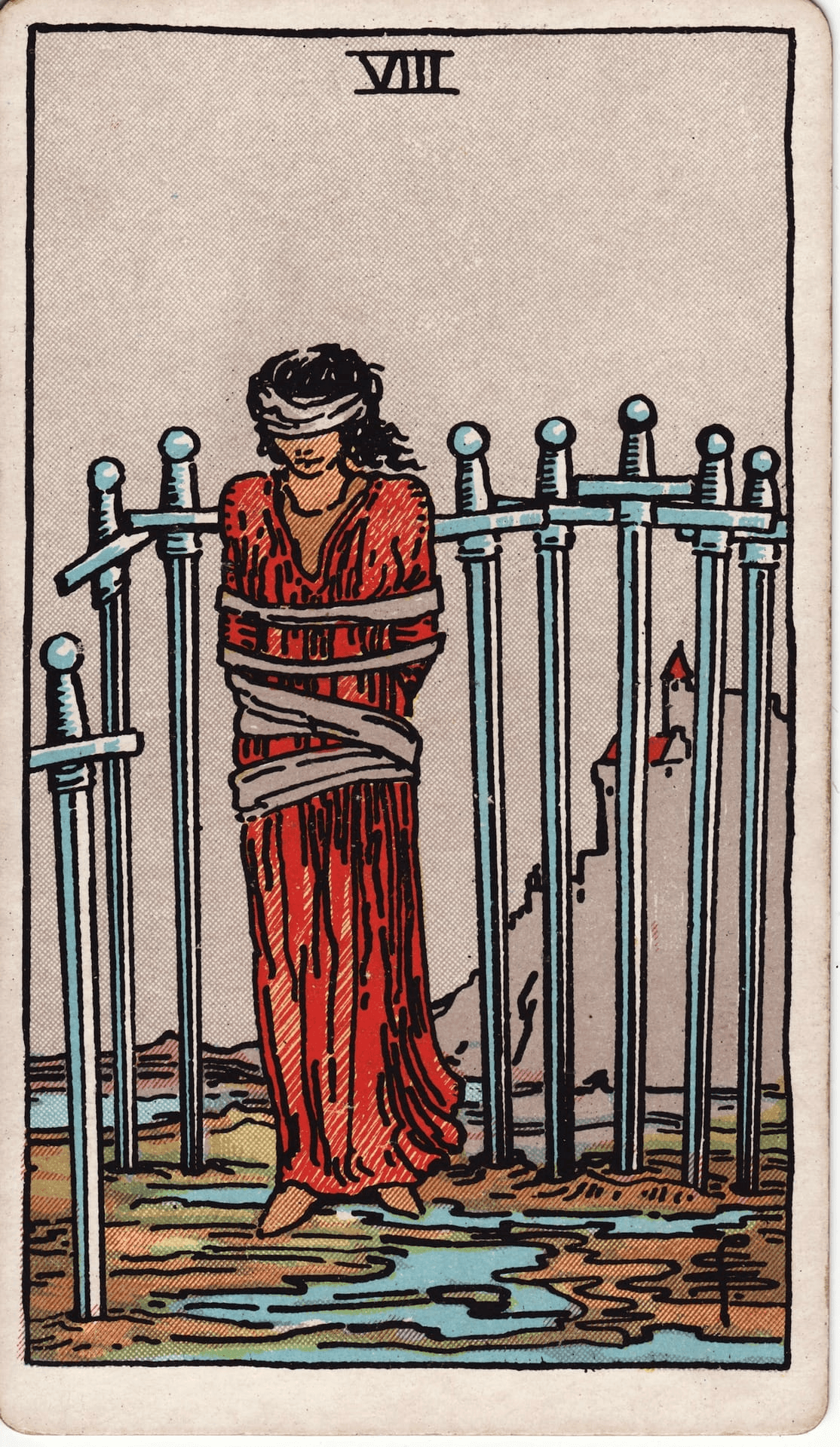
Both can describe feeling trapped. The Devil often points to an attachment, payoff, or repeated habit. Eight of Swords points to restriction and a limited view of the available choices.
Look at The Devil
Two people stand beneath the Devil, chained at the neck to his pedestal. The loops appear loose. That detail can prompt questions about attachment; it does not tell us how easy leaving would be.
What it can mean: Attachment, compulsion, unequal power, or a bargain that keeps taking more than it gives.
Look at Eight of Swords
A blindfolded figure is bound, with swords around her and a castle behind. The swords do not form a closed circle, but she cannot clearly see or move freely. The restriction is part of the picture.
What it can mean: Feeling restricted, lacking information, or seeing fewer choices than may be available.
Same question, different advice
“How can I stop answering work messages late at night?”
Your contract does not require evening replies. You still check the team chat repeatedly, partly to feel indispensable and partly because you assume saying no would get you in trouble.
Compare drawing either card upright in the advice position.
If you draw The Devil
Look at what keeps you opening the chat. The quick reply earns praise, but it also teaches everyone that you are always available. Turn notifications off at a set hour and stop offering instant replies as proof that you matter.
If you draw Eight of Swords
Check the rule you think you must follow. Ask your manager what response time is actually expected, then agree on an evening boundary. If there are real consequences or pressures, account for them. “Just stop worrying” would be useless advice.
What changes? The Devil asks what reinforces the pattern. Eight of Swords asks which limits are real, assumed, or open to negotiation. Neither blames a person for being constrained or proves they can leave safely.
Seven of Cups vs Two of Swords
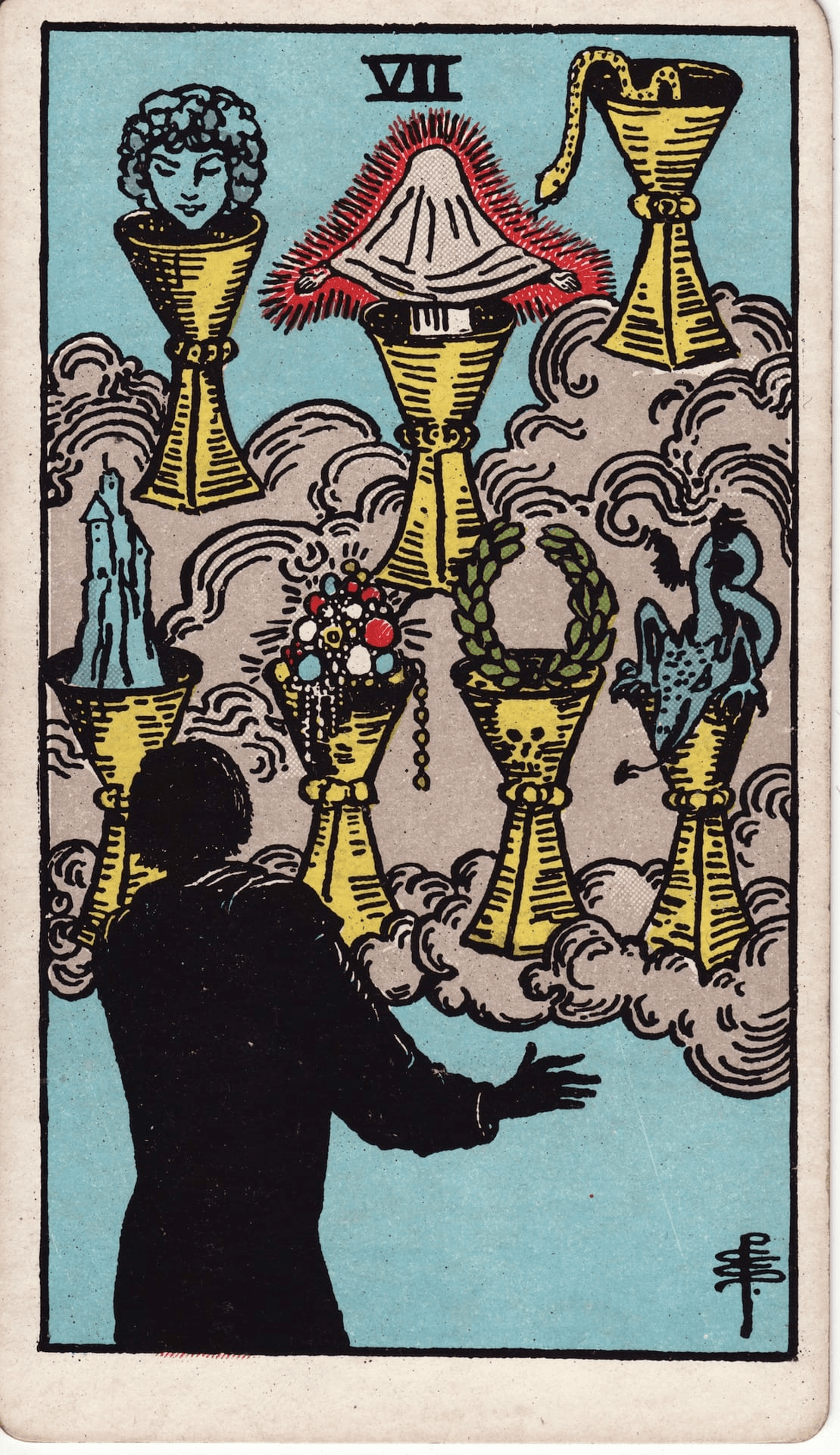
Both can delay a choice. Seven of Cups scatters attention across attractive possibilities. Two of Swords holds a difficult choice at arm’s length.
Look at Seven of Cups
Seven cups float in clouds, holding very different things: jewels, a castle, a wreath, a snake, and other figures. The person looking at them has not reached out and taken one.
What it can mean: Many possibilities, wishful thinking, and the need to test what an appealing option actually involves.
Look at Two of Swords
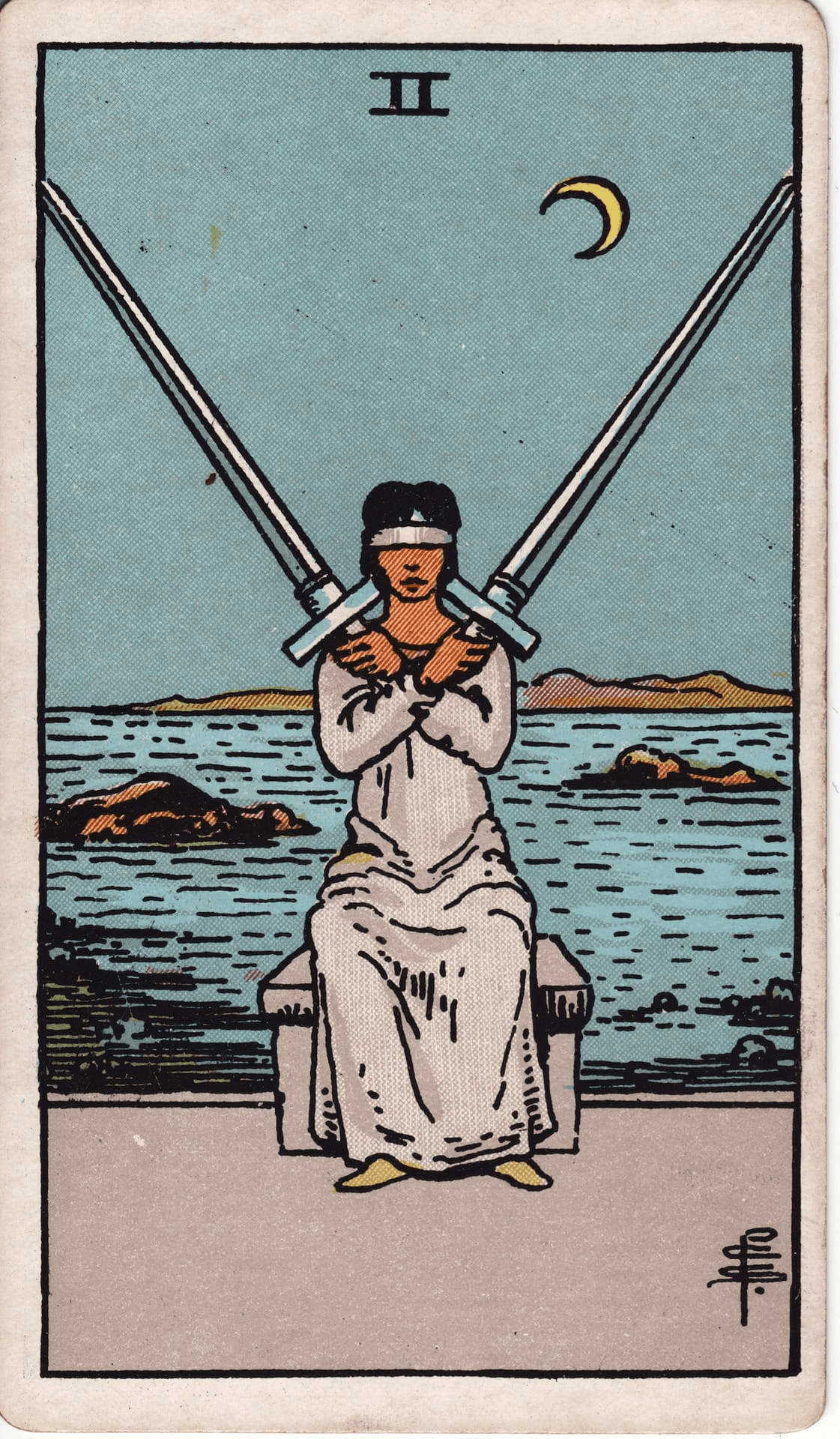
A seated, blindfolded figure holds two swords crossed over the chest. The water and rocks lie behind her. The posture holds a balance, but also keeps the blades in place.
What it can mean: A stalemate, guardedness, or a decision postponed because neither option feels comfortable.
Same question, different advice
“How should I choose what to study next?”
You have saved eight course pages. Two fit your schedule and budget, but you keep browsing new possibilities instead of choosing between them.
Compare drawing either card upright in the advice position.
If you draw Seven of Cups
Close the extra tabs. Compare the two workable courses using cost, weekly hours, and one skill you want to finish with. Ask for a sample lesson. A course that looks exciting on a sales page still has to fit your Tuesday evening.
If you draw Two of Swords
Name the choice you are avoiding. If one course is useful for your job and the other interests you more, there may be no option that does both. Decide which matters this term, set a deadline, and accept what the other choice would have given you.
What changes? Seven of Cups narrows and tests the options. Two of Swords faces the tradeoff between options already on the table. Another hour of browsing will not resolve that tradeoff.
Five of Swords vs Seven of Swords
Both can involve difficult tactics. Five of Swords asks what a conflict costs. Seven of Swords asks how a private or indirect method works, and what it leaves unresolved.
Look at Five of Swords
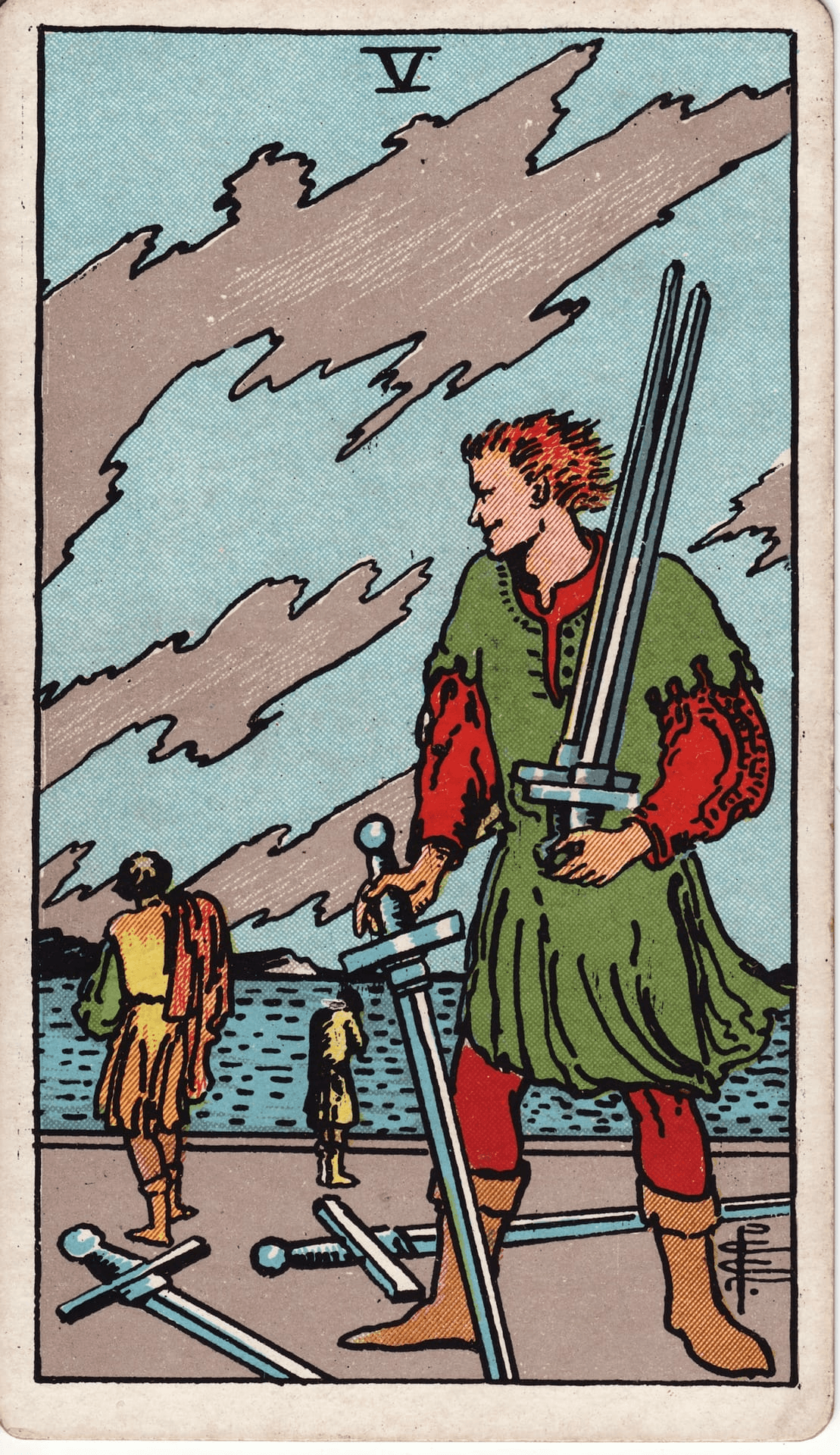
The foreground figure gathers swords while two others walk away. More swords lie on the ground. One person holds the weapons, but the group has broken apart.
What it can mean: A hostile contest, a hollow victory, or the damage done by insisting on winning.
Look at Seven of Swords
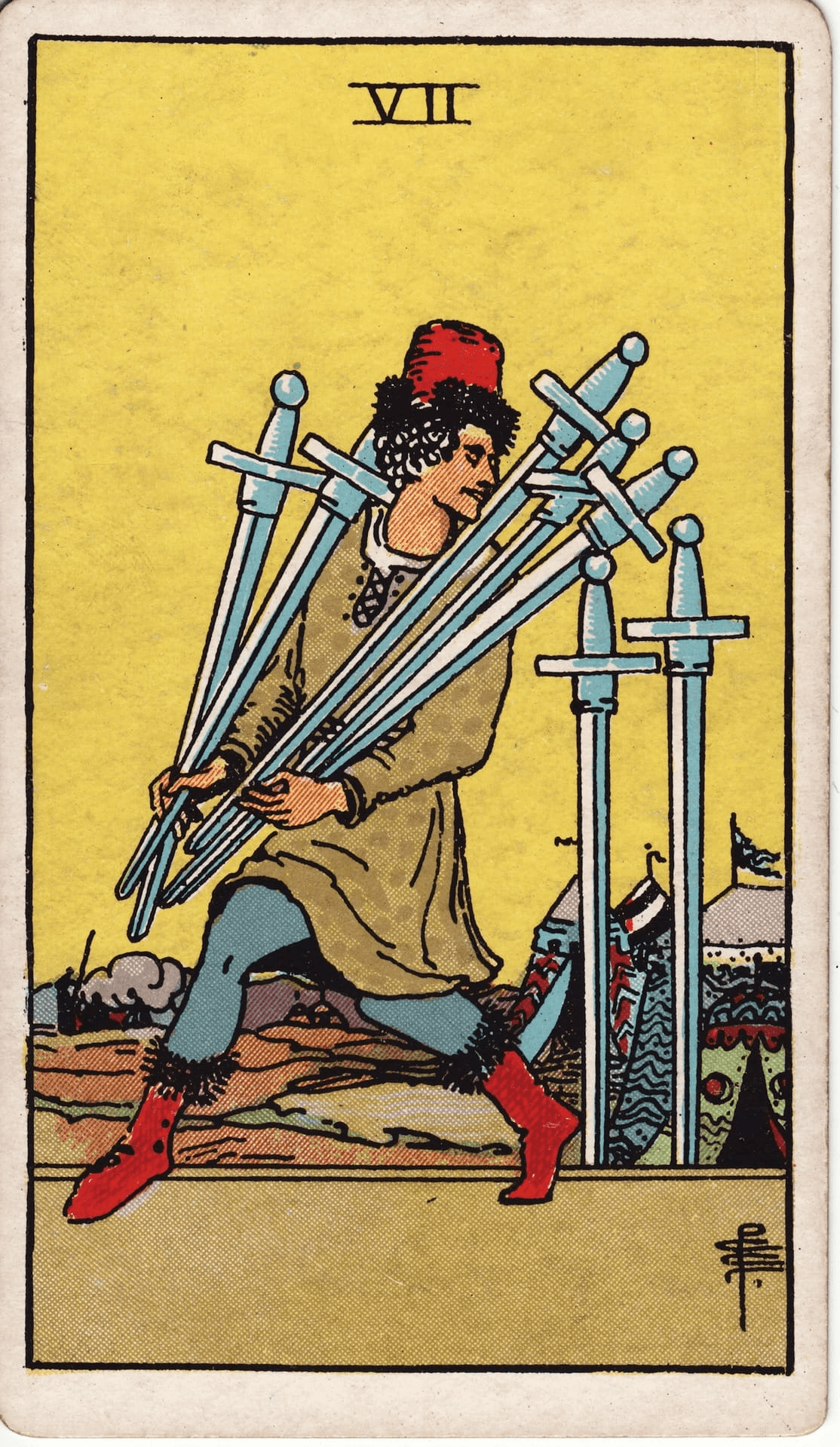
A person carries five swords away from a camp while looking back. Two swords remain behind. The action happens away from a direct confrontation, and the job is incomplete.
What it can mean: An indirect strategy, discretion, evasion, or a plan that avoids dealing openly with everyone involved.
Same question, different advice
“How should I handle a dispute in the volunteer committee?”
A meeting about the event budget becomes a contest over who gets the last word. You consider bypassing the committee and arranging the venue yourself.
Compare drawing either card upright in the advice position.
If you draw Five of Swords
Bring the discussion back to the budget and the actual decision. If you get your venue but lose the volunteers needed to run the event, you have solved very little.
If you draw Seven of Swords
A quiet conversation before the next meeting may help. Secretly committing the committee to a venue probably will not. Use a smaller discussion to gather information, then bring the actual proposal back for agreement. Be clear about what you have and have not arranged.
What changes? Five of Swords tests the price of victory. Seven of Swords tests the method. It does not prove that a committee member is lying, and privacy is not automatically dishonesty.
Eight of Cups vs Six of Swords
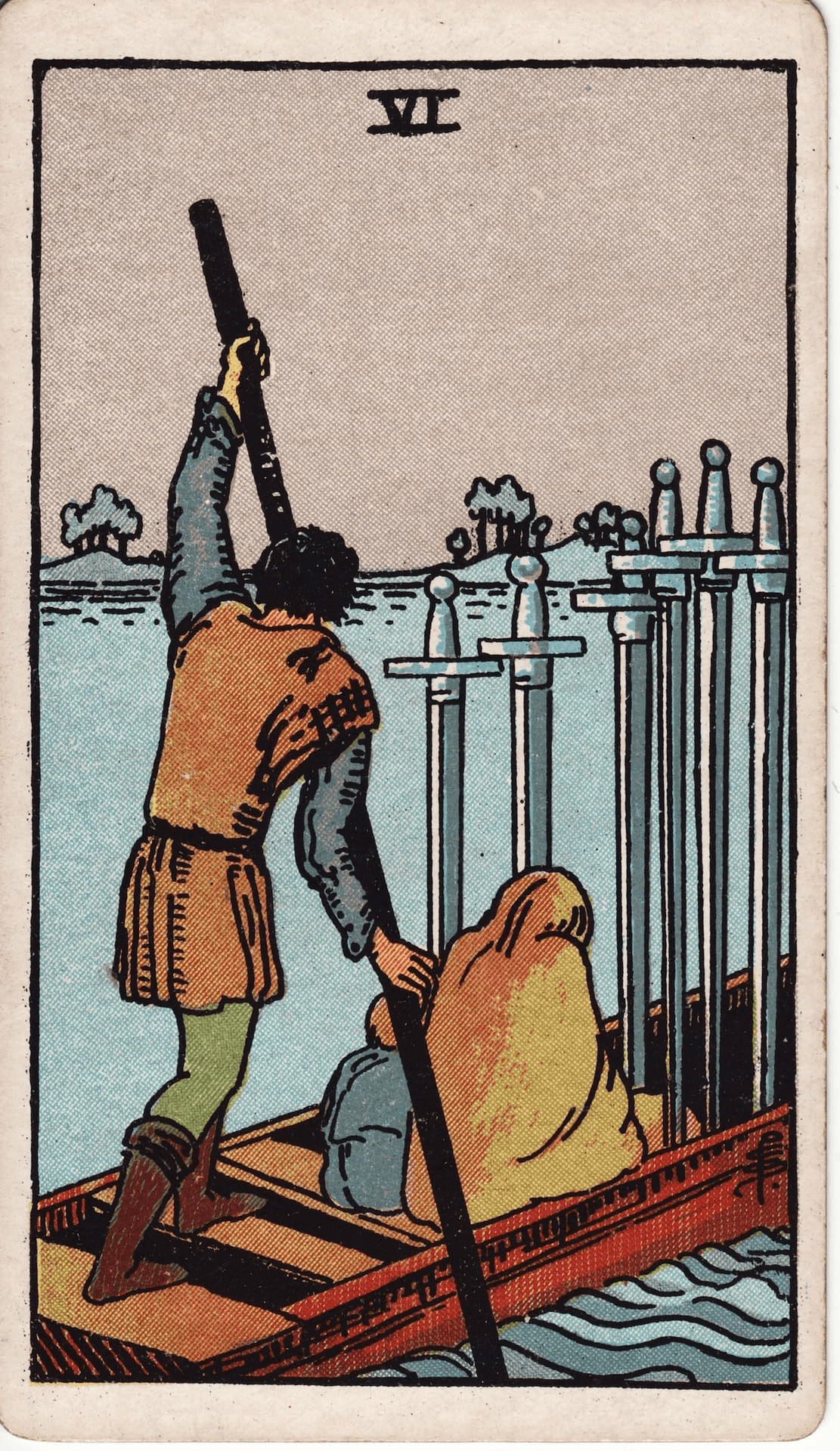
Both move away from a situation. Eight of Cups emphasizes what no longer satisfies you. Six of Swords emphasizes the passage from difficulty toward a more manageable place.
Look at Eight of Cups
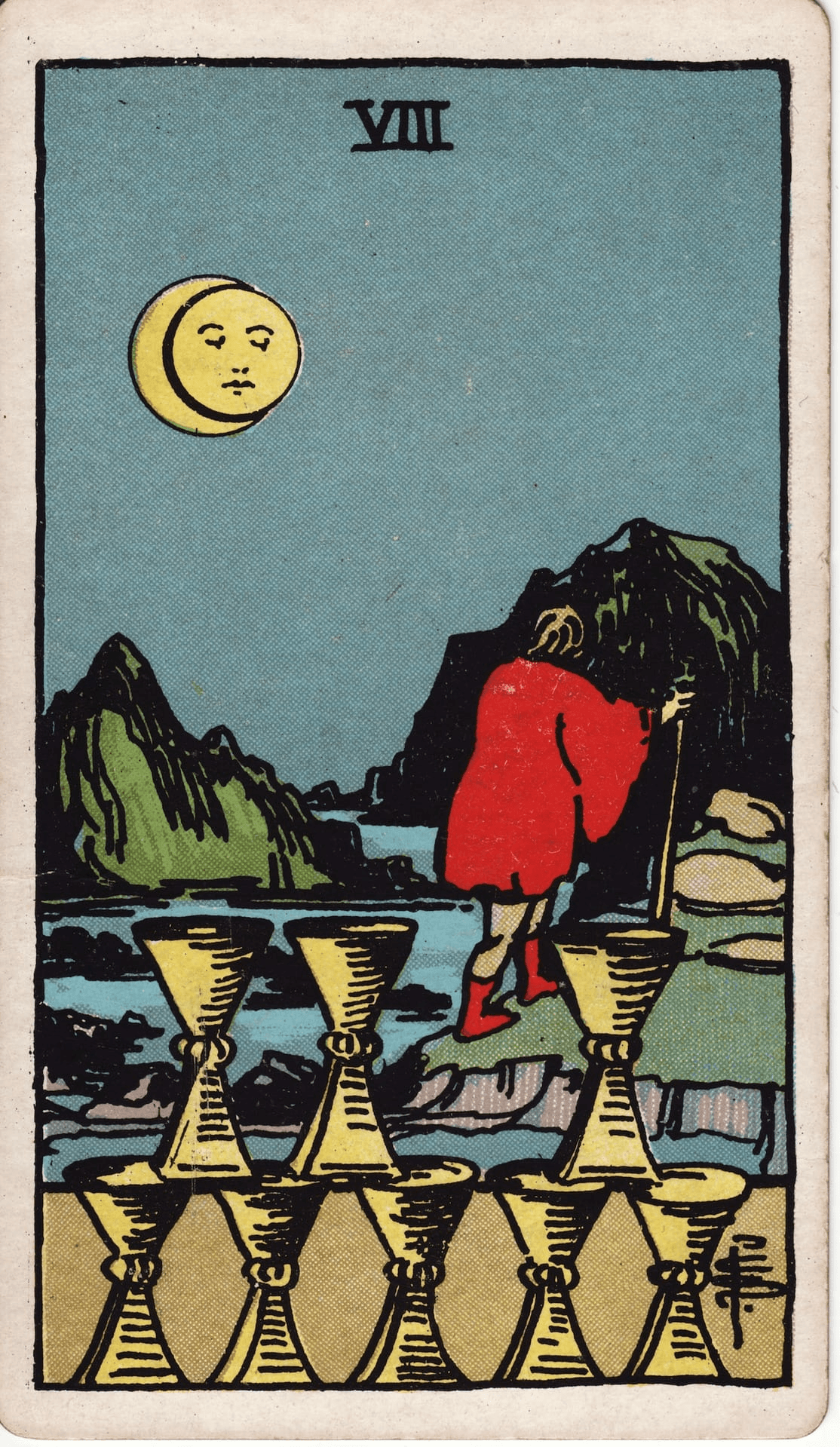
A figure with a walking staff leaves eight cups standing behind and heads toward rougher ground. The cups have not been smashed. Something can remain intact and still be left.
What it can mean: Walking away from what no longer feels worthwhile, even when it is not an obvious failure.
Look at Six of Swords
A boat carries two seated passengers and six swords while another person steers. Rougher water is visible on one side. The passengers are moving, with both help and baggage.
What it can mean: A difficult transition, distance from trouble, and support that makes a change more manageable.
Same question, different advice
“What would help me leave the club I have outgrown?”
You joined a photography club years ago. You no longer enjoy its meetings, but you organize the monthly outings and feel responsible for keeping them going.
Compare drawing either card upright in the advice position.
If you draw Eight of Cups
Admit that the club no longer fits. You do not need a dramatic falling-out to justify leaving. Tell the group you will stop organizing outings after the next one, and let that be an ending rather than another promise to stay.
If you draw Six of Swords
Make the handover manageable. Share the booking details, ask someone to lead the next outing, and agree on a final date. You may still feel sad after leaving. The useful task is arranging the crossing, not demanding that it feel easy.
What changes? Eight of Cups acknowledges the decision to go. Six of Swords works on the transition and the help you need. They are not fixed labels for “leaving alone” and “leaving together.”
Ace of Cups vs Page of Cups
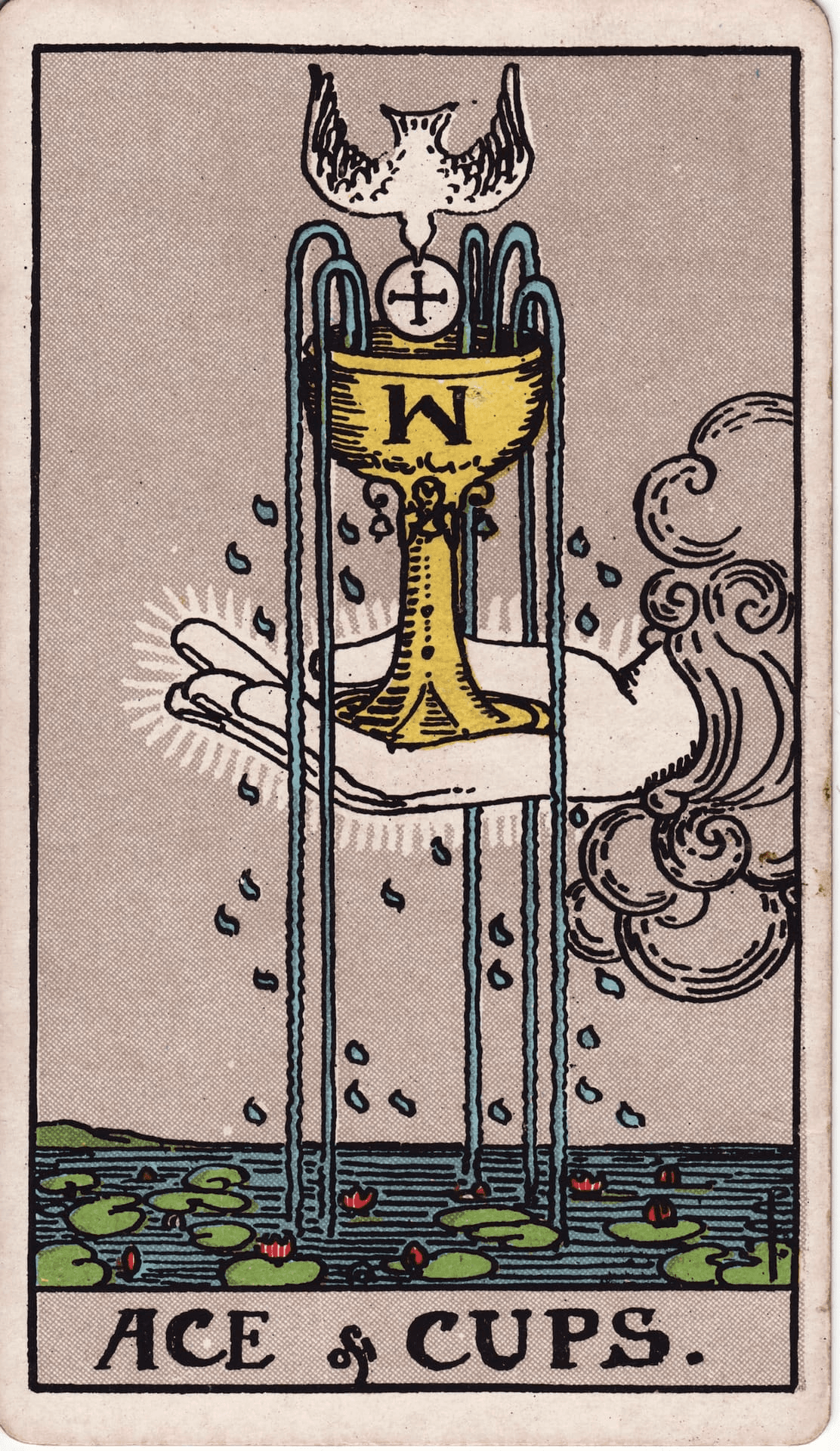
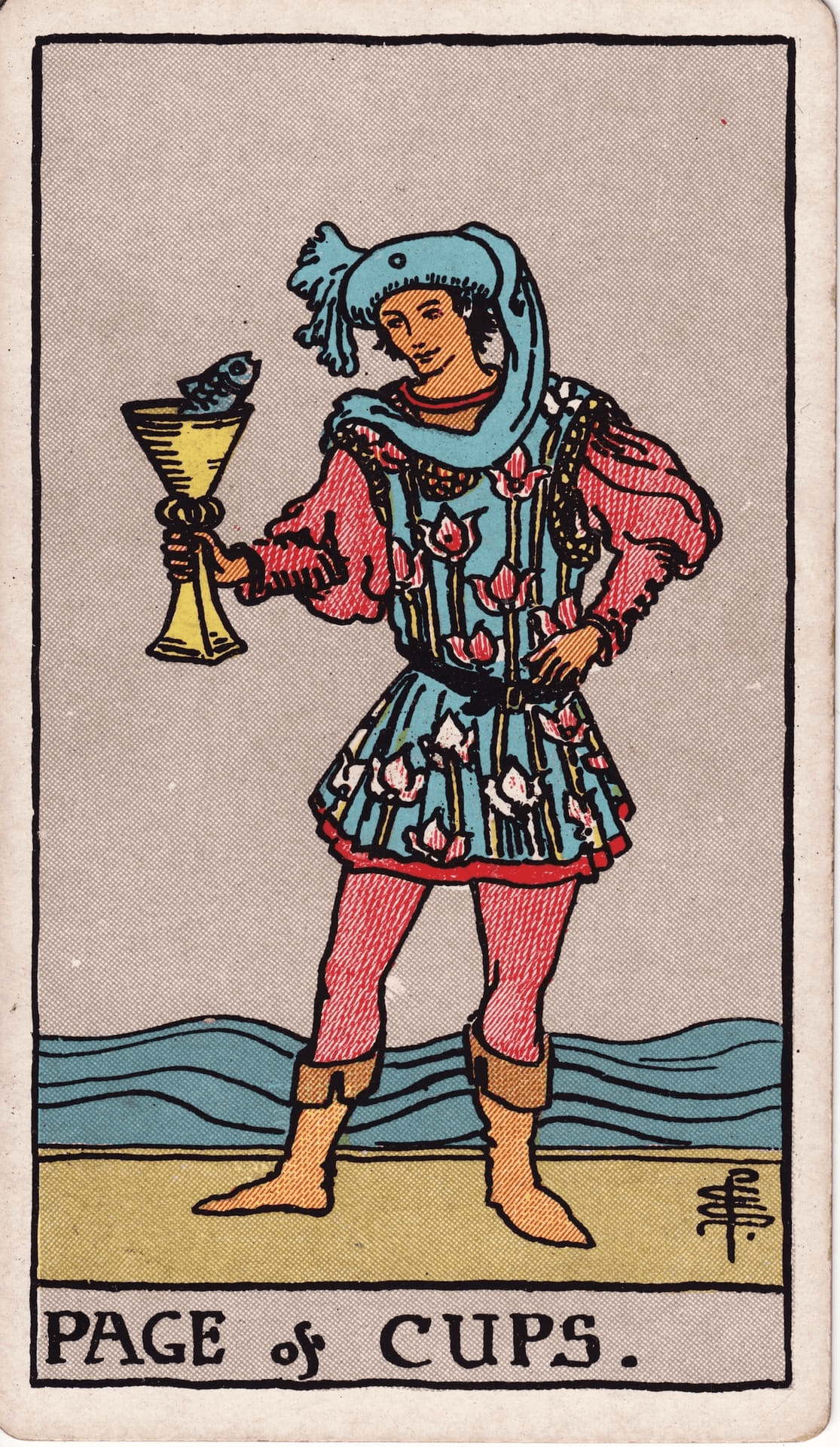
Both can begin something emotional or creative. Ace of Cups emphasizes the opening itself. Page of Cups gives that feeling a tentative voice or gesture.
Look at Ace of Cups
A hand offers an overflowing cup above water and lilies. There is no person standing there to deliver a message. The image presents a source of feeling and an invitation to receive it.
What it can mean: Emotional openness, receptivity, or the start of a feeling that has room to develop.
Look at Page of Cups
A young figure holds a cup and looks at the fish emerging from it. Unlike the Ace’s offered cup, someone here is meeting a surprising, slightly unusual exchange.
What it can mean: A small emotional or creative offer, curiosity, and the willingness to risk an awkward first expression.
Same question, different advice
“How can I start making friends in my new town?”
You meet the same people at a weekly choir rehearsal, but leave quickly afterward. You would like to feel less isolated and worry that an invitation will sound awkward.
Compare drawing either card upright in the advice position.
If you draw Ace of Cups
Give connection somewhere to happen. Stay for the conversation after rehearsal and let yourself enjoy someone’s company without deciding immediately whether this will become a close friendship. Notice who you feel comfortable around.
If you draw Page of Cups
Make the small invitation: “I’m getting a tea before heading home. Want to join me?” It does not need to be clever. The Page can turn a wish for friendship into something another person can answer.
What changes? Ace of Cups makes room for a feeling. Page of Cups expresses or explores it in a modest way. Neither guarantees a friendship or tells you how someone will respond.
Ace of Pentacles vs Page of Pentacles
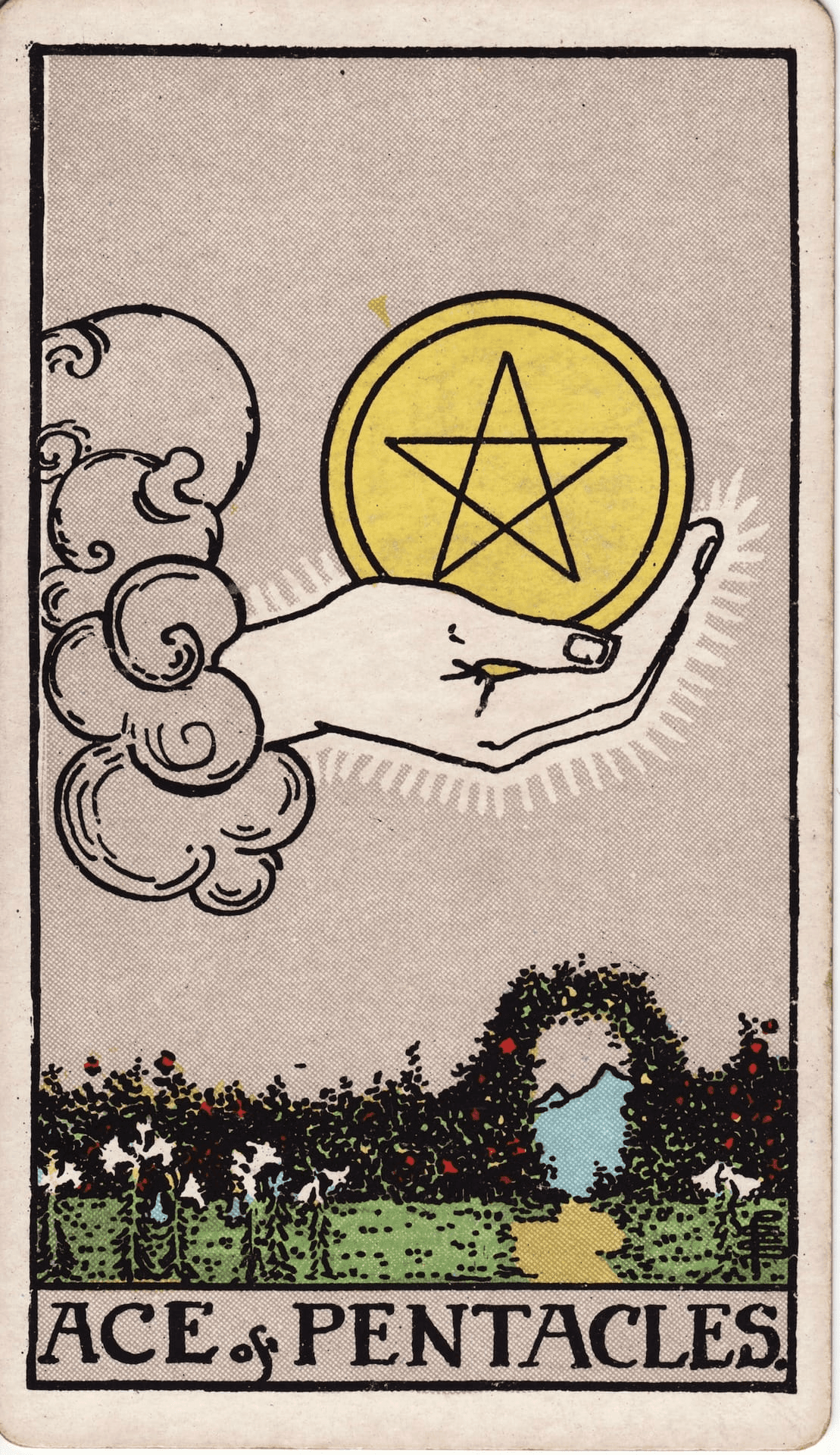
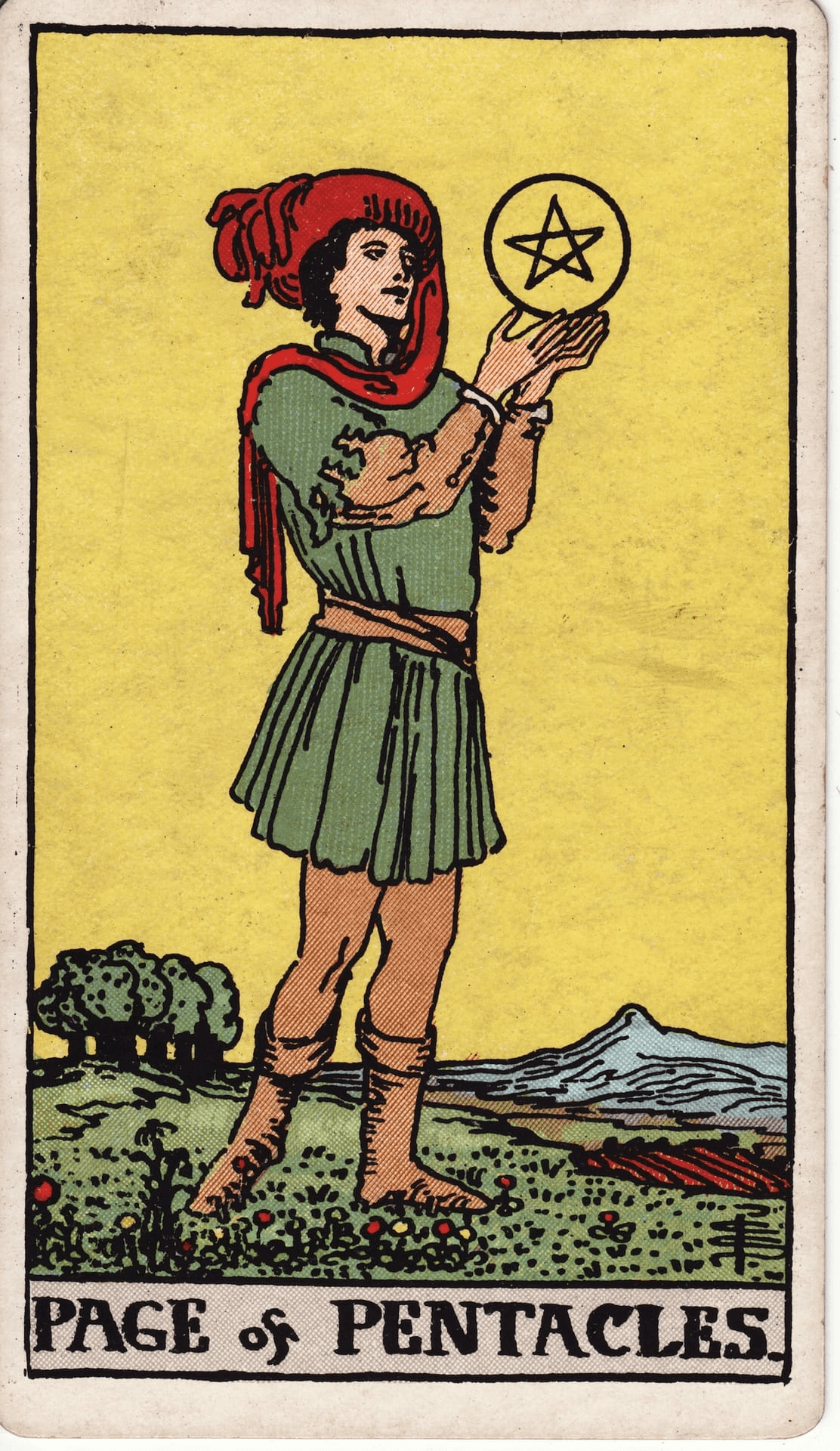
Both can begin practical work. Ace of Pentacles emphasizes a tangible opening: money, materials, access, or an offer. Page of Pentacles emphasizes attention and learning needed to do something with it.
Look at Ace of Pentacles
A hand offers a pentacle over a garden. A path leads through a leafy arch toward mountains. The offer is visible, but the path beyond it still has to be traveled.
What it can mean: A tangible opportunity or resource that needs practical care to become useful.
Look at Page of Pentacles
A young figure holds one pentacle up and studies it. Fields and mountains lie behind. The focus is on the object and the learner’s attention, rather than a hand presenting an offer.
What it can mean: Learning by doing, careful study, and an early stage of practical competence.
Same question, different advice
“How should I approach my first freelance design project?”
A local café offers to pay you to redesign its printed menu. You can do the design, but you have never prepared a file for a commercial printer.
Compare drawing either card upright in the advice position.
If you draw Ace of Pentacles
Get the offer into workable terms. Agree on the fee, the number of revisions, the deadline, and who pays for printing. A paid project is promising; a vague favor that keeps expanding is a different arrangement.
If you draw Page of Pentacles
Ask the printer for its file requirements and prepare a small test before the deadline. Learn the unfamiliar part rather than hoping export settings will take care of it. Being new is manageable when you make time to check your work.
What changes? Ace of Pentacles asks whether the opportunity has a solid basis. Page of Pentacles asks what you need to learn to deliver. Aces are not guaranteed rewards; Pages are not simply smaller Aces.
Two of Cups vs The Lovers
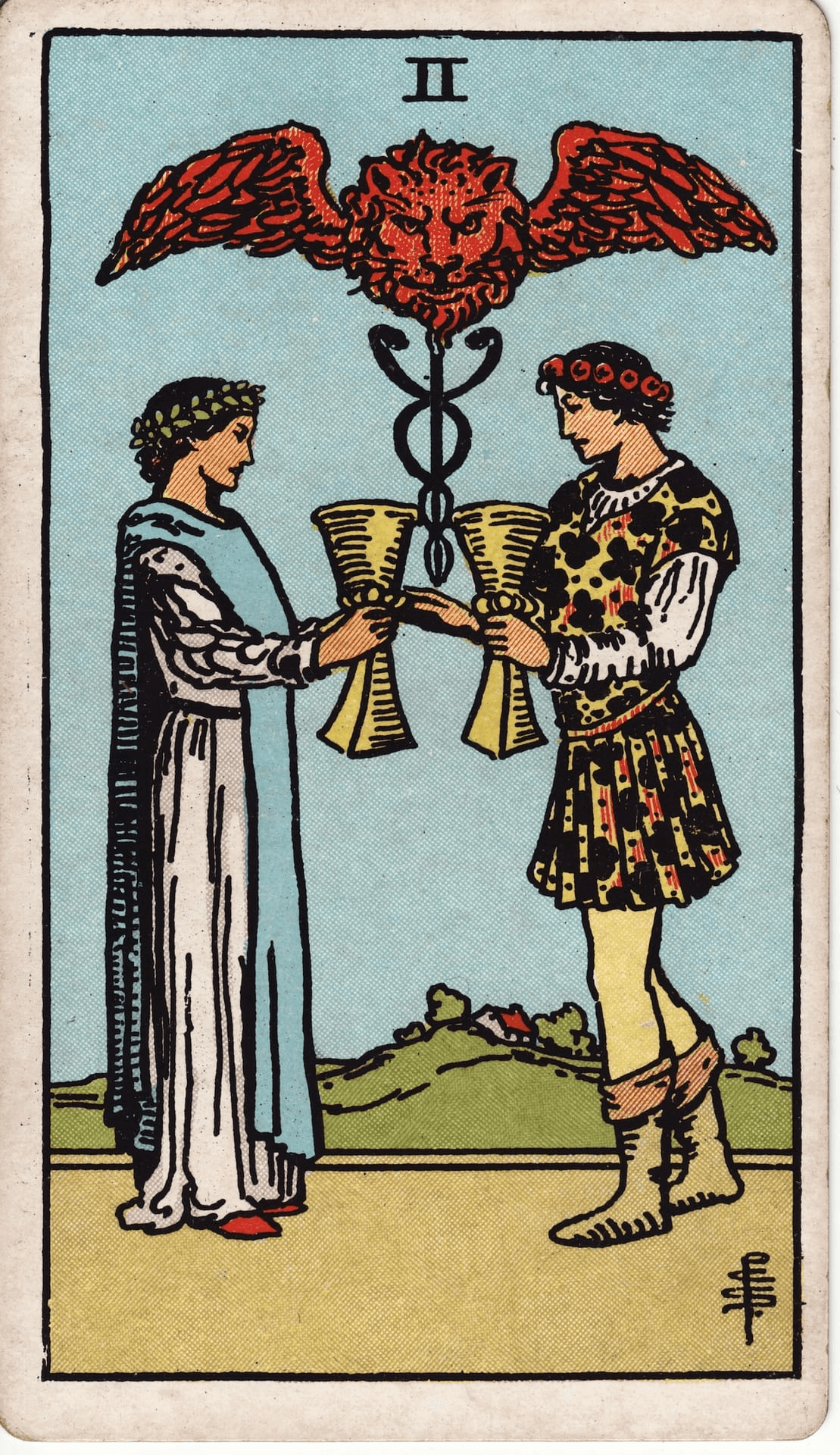
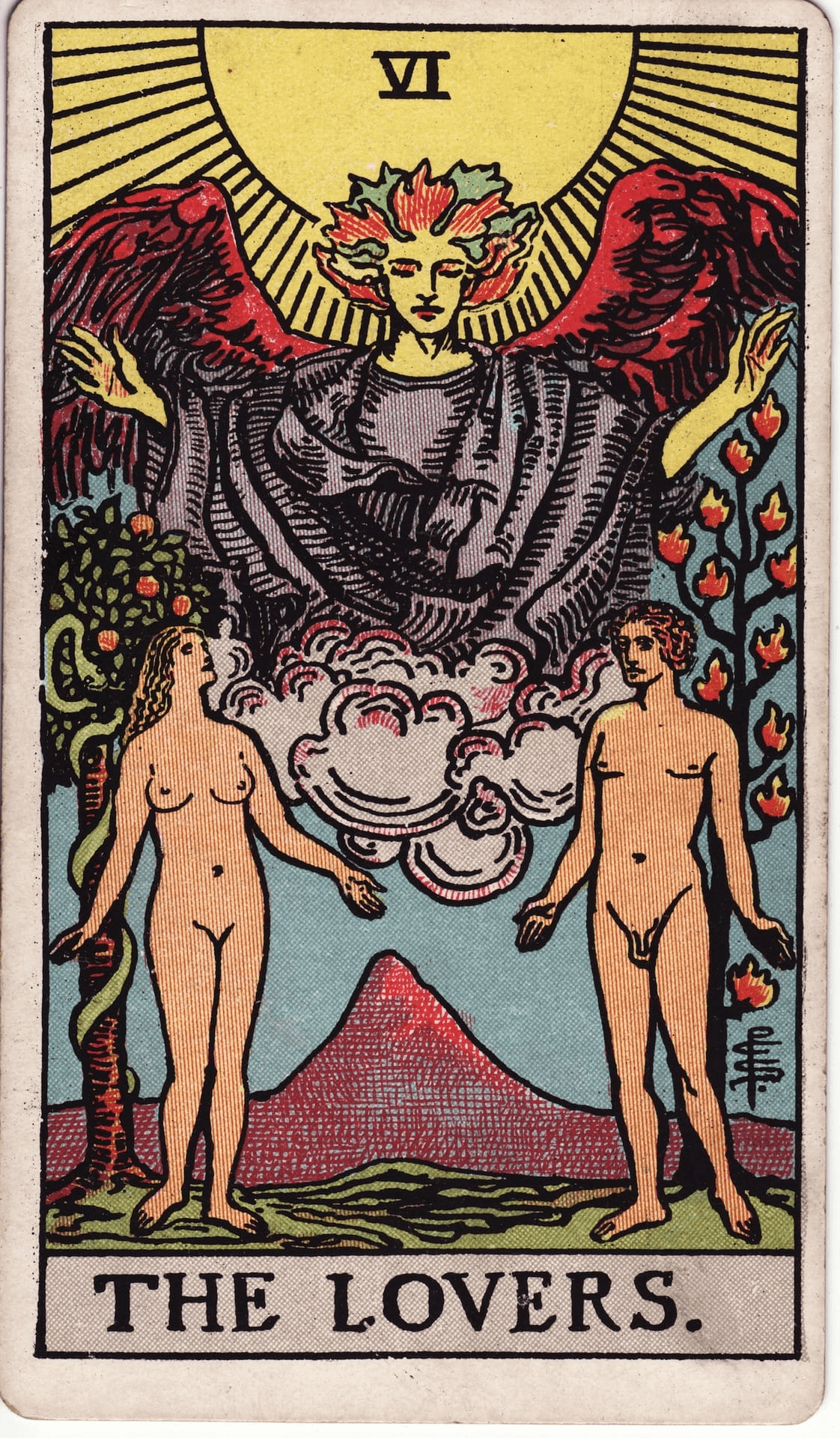
Both can concern a relationship or partnership. Two of Cups focuses on the exchange between two people. The Lovers can ask whether a choice or commitment fits what you value.
Look at Two of Cups
Two clothed figures face each other and each holds a cup. The raised cups make the exchange visible. This is a meeting between people, with an offer on both sides.
What it can mean: Reciprocity, mutual recognition, or an agreement that requires participation from both people.
Look at The Lovers
Two unclothed figures stand below an angel. One tree bears fruit and a serpent; the other bears flames. Unlike Two of Cups, the figures are not holding out matching vessels: look at what stands behind each person as well as between them.
What it can mean: Alignment, a consequential choice, or commitment that asks you to act on your values.
Same question, different advice
“What should I consider before sharing an exhibition with another artist?”
A potter you know proposes a joint show. You like their work, but you have not discussed the workload, the costs, or what kind of work each of you wants to exhibit.
Compare drawing either card upright in the advice position.
If you draw Two of Cups
Check the exchange. Who will organize the space, handle sales, and pay which costs? Explain what you can offer and ask what they can offer. A good partnership needs more than one enthusiastic person carrying all the work.
If you draw The Lovers
Ask whether you want the same kind of show. If you want experimental work and they want only familiar pieces that sell quickly, resolve that difference before agreeing. An attractive opportunity can still ask you to give up something you care about.
What changes? Two of Cups tests the mutual exchange. The Lovers tests the choice and what you are committing to. Neither means romance must be involved or establishes the other person’s feelings.
Try the swap yourself
Choose a question from this page and cover the advice. Write one sentence for the first card, then replace it with the second. Which part of your answer has to change? Point to a detail in the picture that supports your choice.
If both answers say only “take some time” or “a change is coming,” make them more specific. A reading becomes useful when it tells you what deserves attention in the situation you actually asked about.
The examples are fictional. These are useful distinctions, not rigid rules: the question, position, and other cards can change the reading. A picture cannot prove another person’s feelings or promise what will happen next.