The Devil & Knight of Swords
Combined Meaning
The Devil and Knight of Swords can describe getting caught in a pattern and reacting fast: sending the angry message, trying to win the same argument, or pursuing something harder because it feels out of reach. The first task is to notice what sets the reaction off.
Your free personal reading
What do your cards mean for you?
The Devil + Knight of Swords can be explored through the question you’re facing. Get an interpretation and a practical next step, right here.
Tap a question. Read your free answer here.
Checking your reading access…
Want to practice reading cards together? Try two worked examples and an exercise. Free, with the classic Rider–Waite cards.
Explore the full combined meaning
The Knight gives the Devil’s attachment momentum. A thought can become a message before you have checked it; an argument can become another attempt to force a response. That does not mean confrontation is always wrong. It means speed may be helping the pattern repeat. In a problem-and-advice spread, the Devil can name the restriction while the Knight suggests addressing it directly. In a situation-and-risk spread, the Knight may instead warn against an impulsive response. Decide which role the cards occupy before choosing between those readings. For feelings or intentions, the pair may suggest intensity or urgency as an interpretation, but it cannot prove obsession, abuse, or what another person intends. If the Devil is reversed, consider an effort to step out of a pattern. If the Knight is reversed, consider whether your response is scattered, delayed, or more forceful than the situation requires.
A worked reading
“I want to send another message after an argument. What should I consider?”
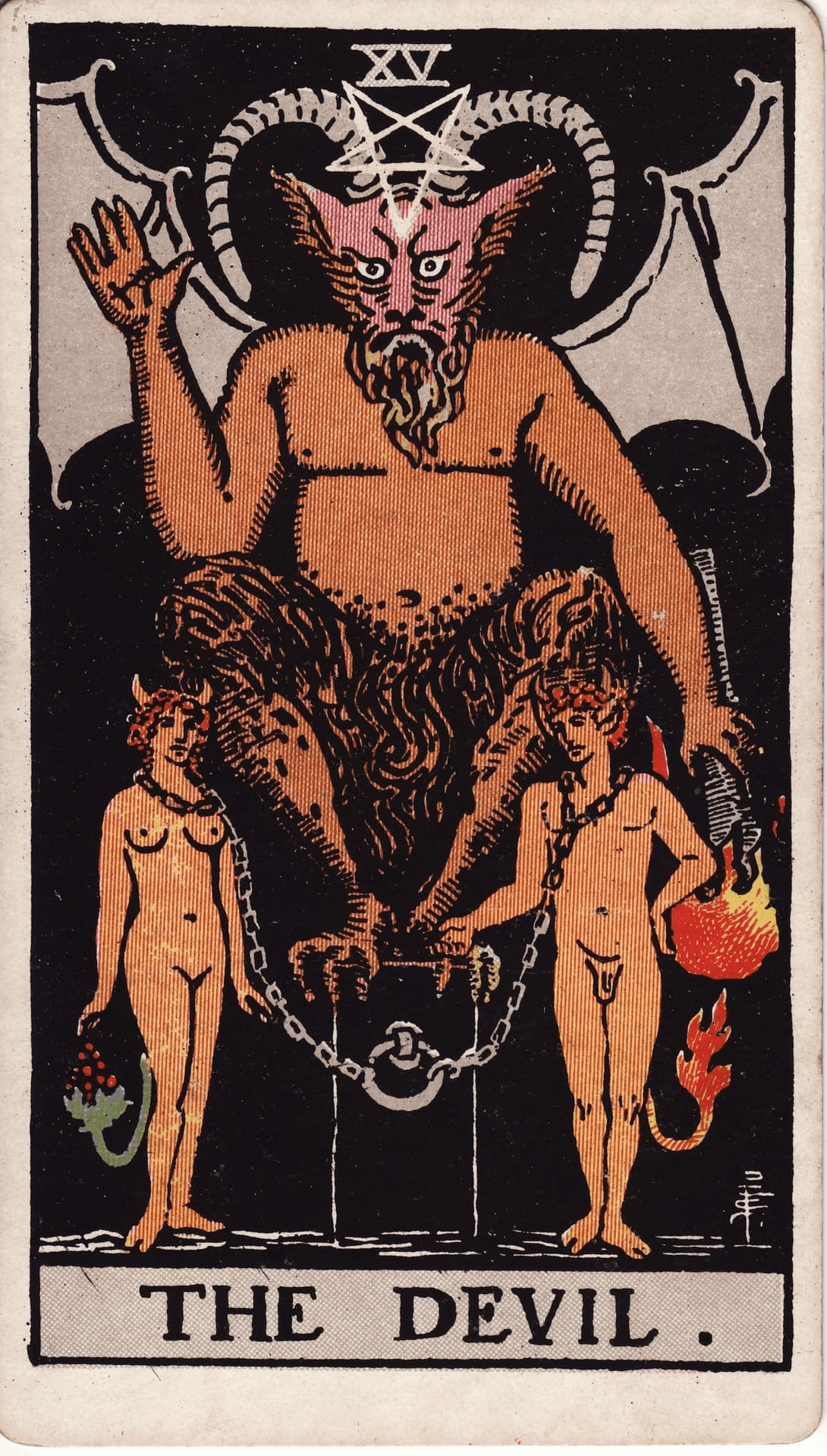 The Devil
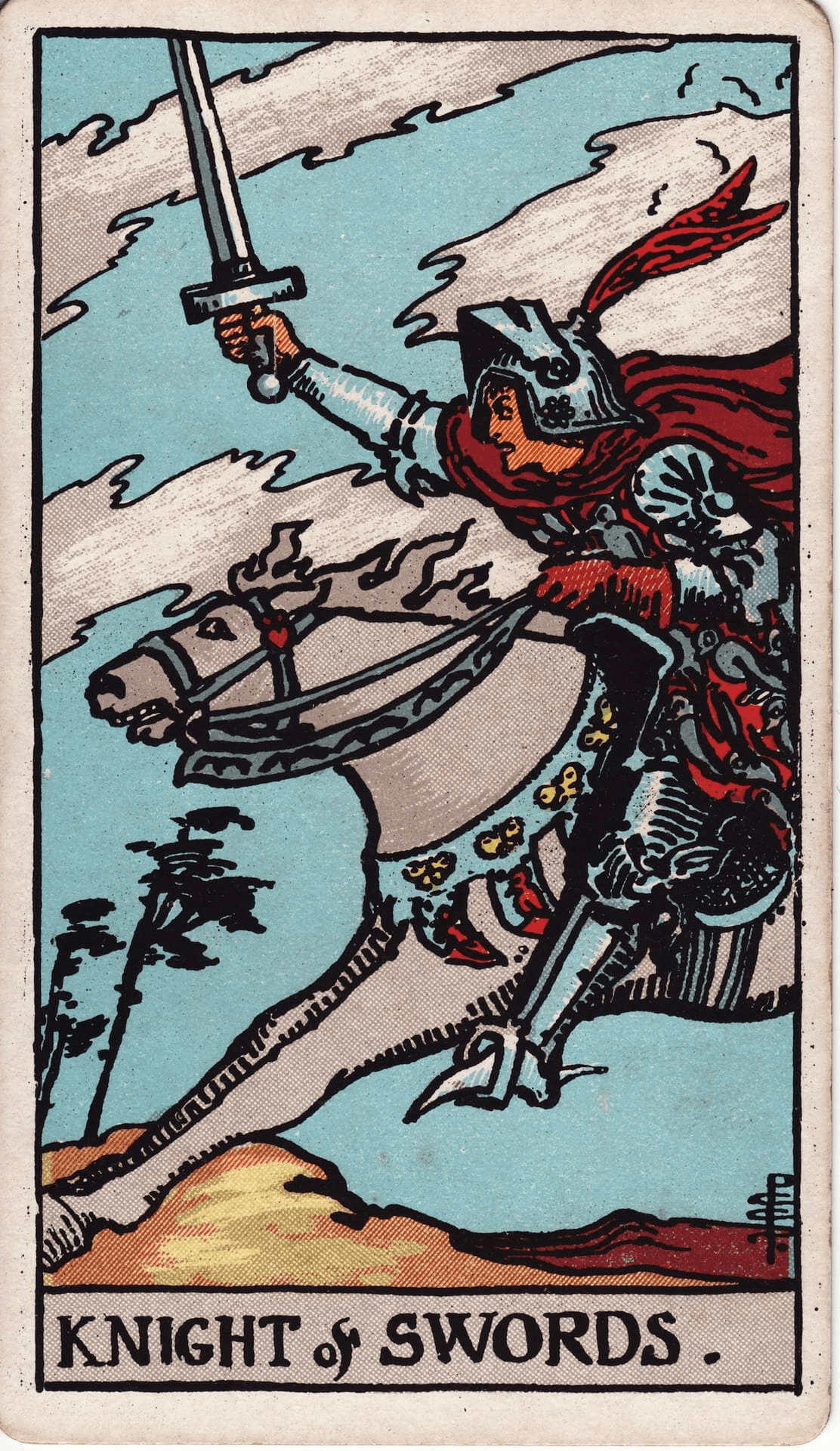 Knight of Swords
You may be trying to get relief from the argument by getting an immediate reply. Another forceful message could keep you in the same exchange. Write down the one thing that still needs saying, leave the draft for a while, and reread it before deciding whether to send it. You can state a boundary without reopening every point.
Why this reading fits
- The chains on the Devil suit a repeated exchange that is difficult to leave. That is a reading of the pattern, not a judgment about either person.
- The charging Knight fits the impulse to respond quickly. In a risk position, his speed asks for scrutiny rather than imitation.
If the positions change
If the Knight were advice, he could support a brief, direct statement that ends an unproductive exchange. The difference is purposeful clarity rather than another attempt to win.
A mistake to avoid
Neither card proves that the other person is obsessed with you or intends harm. Use their actual words and actions when deciding how to respond.
If The Devil is reversed
You may be noticing the pattern sooner. Think about a concrete interruption, such as muting the conversation while you decide what to say.
Individual Card Meanings
To view the meaning of each card individually:
Advice from the Cards
General Advice
Put the message in a draft. Name the outcome you want, then check whether the wording makes that outcome more likely. If you need a boundary, state what you will do rather than trying to force a response.
Love Advice
Repeated checking, demands for an answer, or arguments that go in circles are worth addressing as behaviors. The cards do not establish someone’s motives. Focus on what happens between you and what limits you need.
Career Advice
Pressure can make every request feel urgent. Before replying to a difficult message, separate the actual deadline from the tone. A short factual answer may serve you better than answering every accusation.
Health Advice
Notice whether reading more advice is helping you act or keeping you in a loop of worry. The cards cannot diagnose a condition or establish that a habit is an addiction.
Yes/No/Maybe?
Pause rather than a clean yes. Identify the pressure behind the decision and check the facts before acting.
Keywords
Reactive choices, attachment, urgency, confrontation, breaking a pattern
Reading these cards with a third card?
These three-card combinations include both of your cards.
More combinations for each card