Practice reading tarot
Read the question, look at the cards, and try a short answer. Then open the notes to see a worked reading and why it fits the cards and their positions.
45 pairs · 7 trios · Classic Rider–Waite–Smith cards · Free, no account or deck needed
How to use these exercises
- Read the question first. A card about a choice means something different in a business question than in a question about dating.
- Look at each position. A card describing the problem does not automatically tell you what to do.
- Connect the cards in a short answer. What does the second card add to the first? What practical next step fits this particular question?
Try a reading
Exercise 37 of 52 · Notes opened for 0 of 52 exercises in this visit
“I've been offered two freelance jobs this week. How should I decide?”
These cards are upright. Read them in the positions shown.
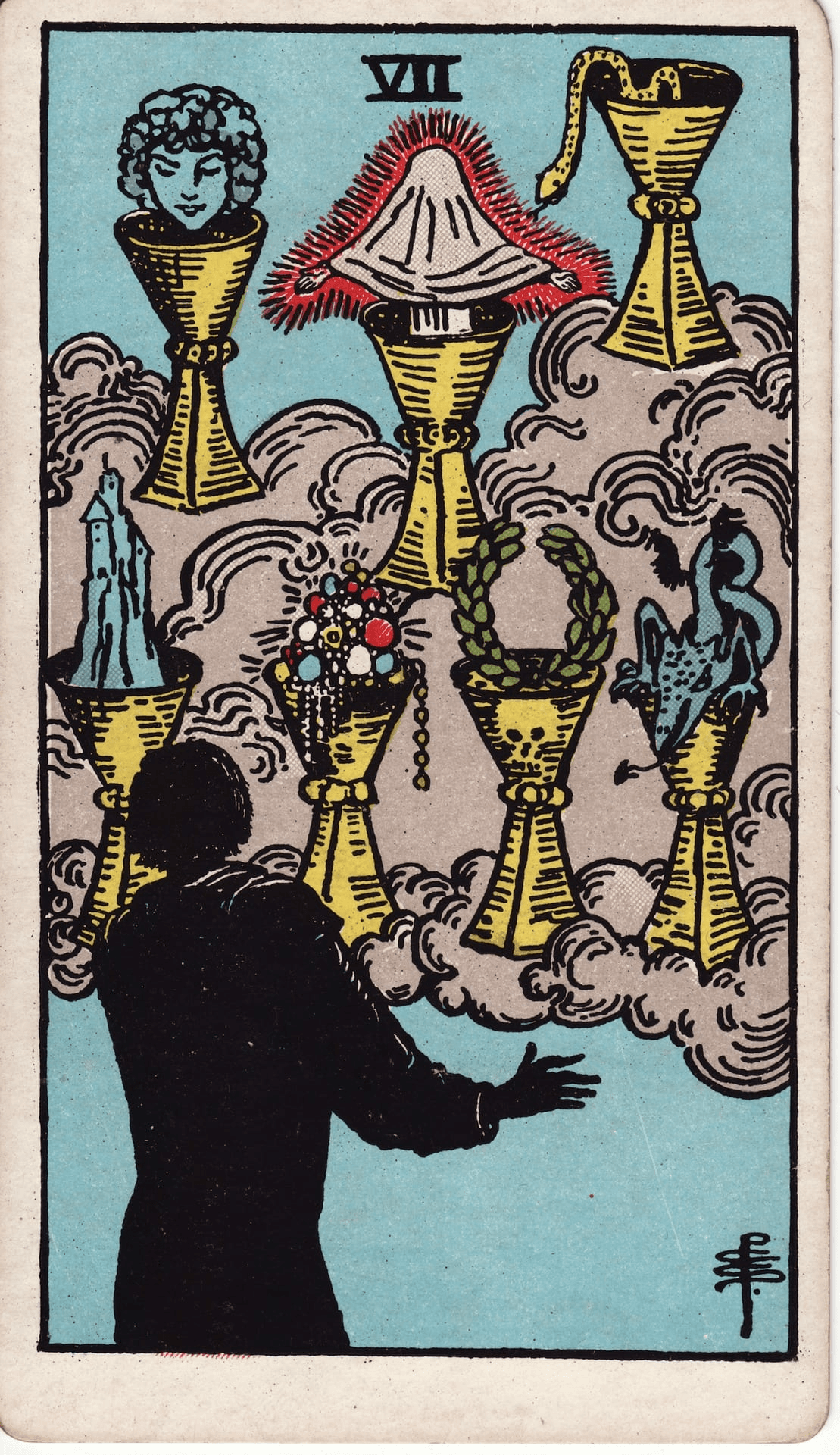 Seven of Cups
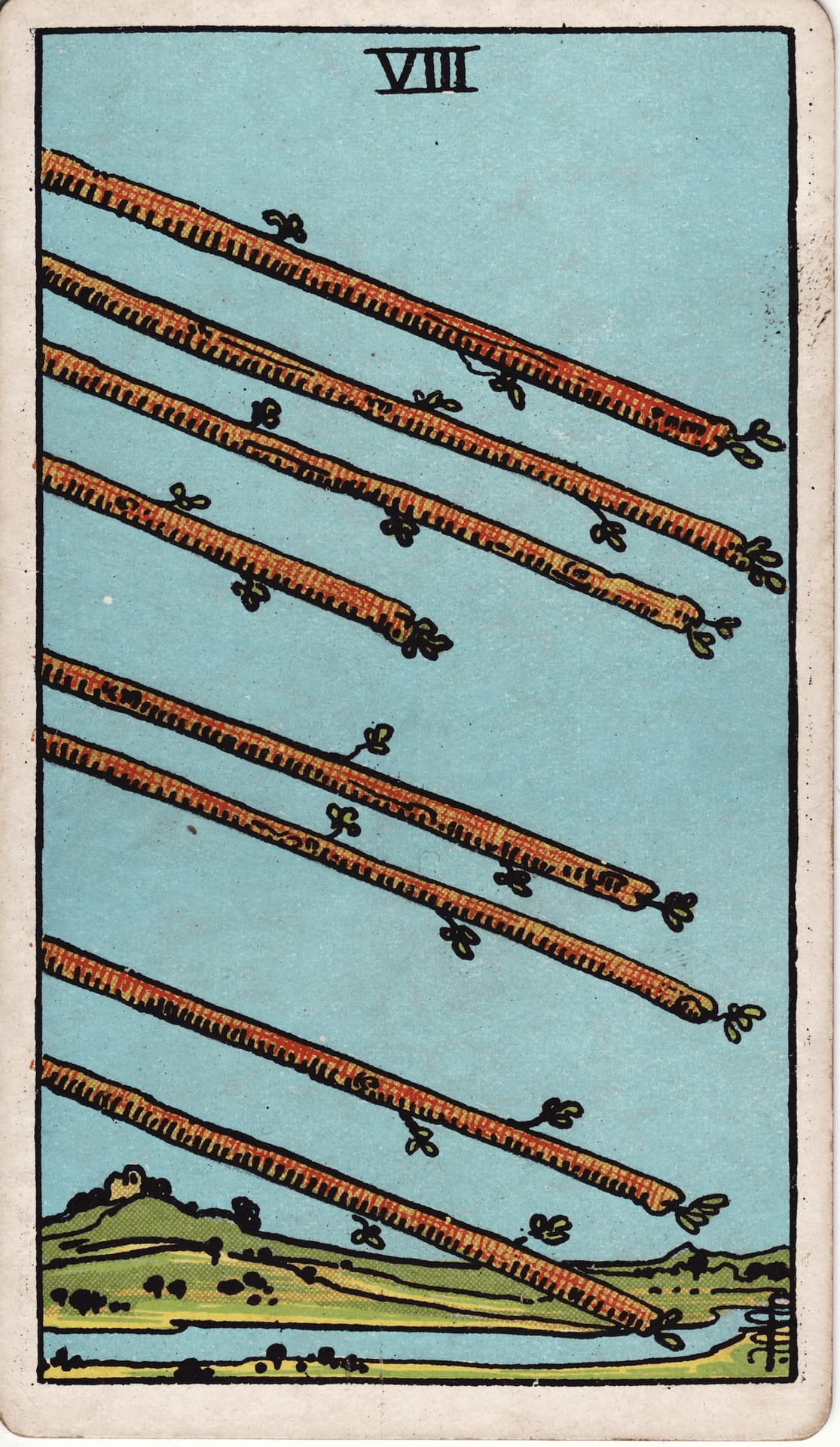 Eight of Wands
Try two or three sentences. Answer the question, give each card its assigned job, and suggest something the person could do.
Writing is optional. Your notes stay in this tab, are not sent or saved, and disappear when you reload the page.
Reveal the worked reading and notes
One reading that fits
Both jobs may sound better in your imagination than they do in the brief. The Seven of Cups asks you to separate the attractive pitch from the actual work. Use the Eight of Wands to get the missing information quickly: ask each client for the deliverables, fee and deadline before you promise anything. A fast answer is useful; a rushed commitment is a different thing.
Why it fits the cards
- The Seven of Cups shows several enticing or unsettling possibilities, rather than one settled choice. In a problem position, that fits comparing imagined benefits before checking the terms.
- The Eight of Wands shows wands already in flight. As the next step, it fits prompt communication and getting a decision moving once the details are available.
Change the positions
Put the Eight of Wands in the problem position and speed itself becomes the issue: perhaps a client wants an answer before you can judge the work. The Seven of Cups as advice could ask you to consider other options instead of treating these two offers as your only choices.
A mistake to avoid
The Seven of Cups does not mean both offers are fake. It asks what you have verified. The Eight of Wands does not tell you to accept whichever client replies first.
If Seven of Cups is reversed
The options may be becoming clearer, or you may be ruling one out just to stop thinking about it. Explain your choice in terms of the actual brief. If you can only say that you are tired of deciding, there is still a detail to check.
Your wording can differ. Check whether your reading answers the question and whether you can point to the cards and positions to explain it.
Read the combination articleChoose an exercise
Compare your reasoning, not your wording
There is no score here. Two readings can use different words and still fit the cards. Ask whether your answer addresses the question, respects the positions, and explains how the cards connect. If you could swap in almost any card without changing your answer, try making it more specific.
The notes also show how different positions or a reversed card could change the reading. These are fictional situations for learning. A card does not establish someone else’s private feelings or guarantee what will happen.
Need a hand with the basics? Browse individual card meanings, compare the court cards, or use the combination finder for cards you have drawn yourself.