Practice reading tarot
Read the question, look at the cards, and try a short answer. Then open the notes to see a worked reading and why it fits the cards and their positions.
45 pairs · 7 trios · Classic Rider–Waite–Smith cards · Free, no account or deck needed
How to use these exercises
- Read the question first. A card about a choice means something different in a business question than in a question about dating.
- Look at each position. A card describing the problem does not automatically tell you what to do.
- Connect the cards in a short answer. What does the second card add to the first? What practical next step fits this particular question?
Try a reading
Exercise 44 of 52 · Notes opened for 0 of 52 exercises in this visit
“I wanted this promotion. Why am I afraid to ask for help now?”
These cards are upright. Read them in the positions shown.
 Nine of Cups
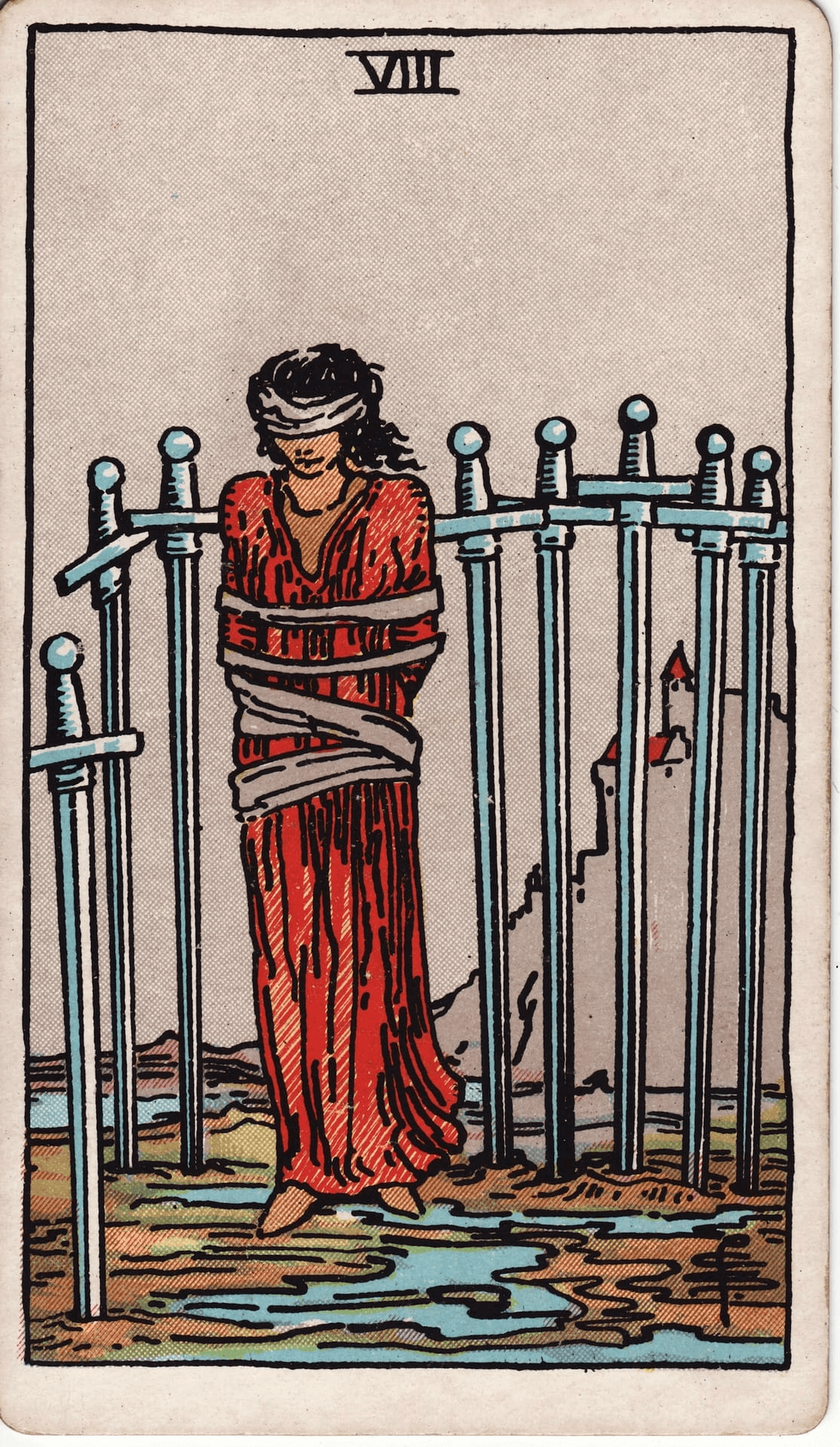 Eight of Swords
Try two or three sentences. Answer the question, give each card its assigned job, and suggest something the person could do.
Writing is optional. Your notes stay in this tab, are not sent or saved, and disappear when you reload the page.
Reveal the worked reading and notes
One reading that fits
You can want the role and still need guidance. The Nine of Cups gives you room to be pleased about the promotion. The Eight of Swords asks you to examine the rule that seems to go with it: perhaps you think asking for help would show you cannot do the job. Separate what you need to learn from what needs someone else's approval, then ask for one specific piece of support. Needing an answer does not cancel the achievement.
Why it fits the cards
- The Nine of Cups shows a figure seated before a display of cups. In a position about what is going well, it fits satisfaction in an achievement the question already identifies.
- The Eight of Swords shows a bound, blindfolded figure with space between the swords. As the difficulty, it fits feeling unable to act before checking which restrictions are real and which have been assumed.
Change the positions
Put the Eight of Swords in the situation position and the workload or rules become the starting point. The Nine of Cups as advice could ask what you wanted from the promotion and which requests support that aim. You do not have to accept every extra task to justify taking the role.
A mistake to avoid
Do not assume every limit is self-imposed. A short-staffed team or an unclear brief is a real constraint, not a failure to think positively.
If Eight of Swords is reversed
You may be beginning to question a rule you had treated as fixed. Check whether you can request a handover, ask a colleague or get a decision from your manager. Finding one available step does not mean every restriction has disappeared.
Your wording can differ. Check whether your reading answers the question and whether you can point to the cards and positions to explain it.
Read the combination articleChoose an exercise
Compare your reasoning, not your wording
There is no score here. Two readings can use different words and still fit the cards. Ask whether your answer addresses the question, respects the positions, and explains how the cards connect. If you could swap in almost any card without changing your answer, try making it more specific.
The notes also show how different positions or a reversed card could change the reading. These are fictional situations for learning. A card does not establish someone else’s private feelings or guarantee what will happen.
Need a hand with the basics? Browse individual card meanings, compare the court cards, or use the combination finder for cards you have drawn yourself.