Practice reading tarot
Read the question, look at the cards, and try a short answer. Then open the notes to see a worked reading and why it fits the cards and their positions.
45 pairs · 7 trios · Classic Rider–Waite–Smith cards · Free, no account or deck needed
How to use these exercises
- Read the question first. A card about a choice means something different in a business question than in a question about dating.
- Look at each position. A card describing the problem does not automatically tell you what to do.
- Connect the cards in a short answer. What does the second card add to the first? What practical next step fits this particular question?
Try a reading
Exercise 7 of 52 · Notes opened for 0 of 52 exercises in this visit
“What am I avoiding while I try to get this promotion?”
These cards are upright. Read them in the positions shown.
 Nine of Cups
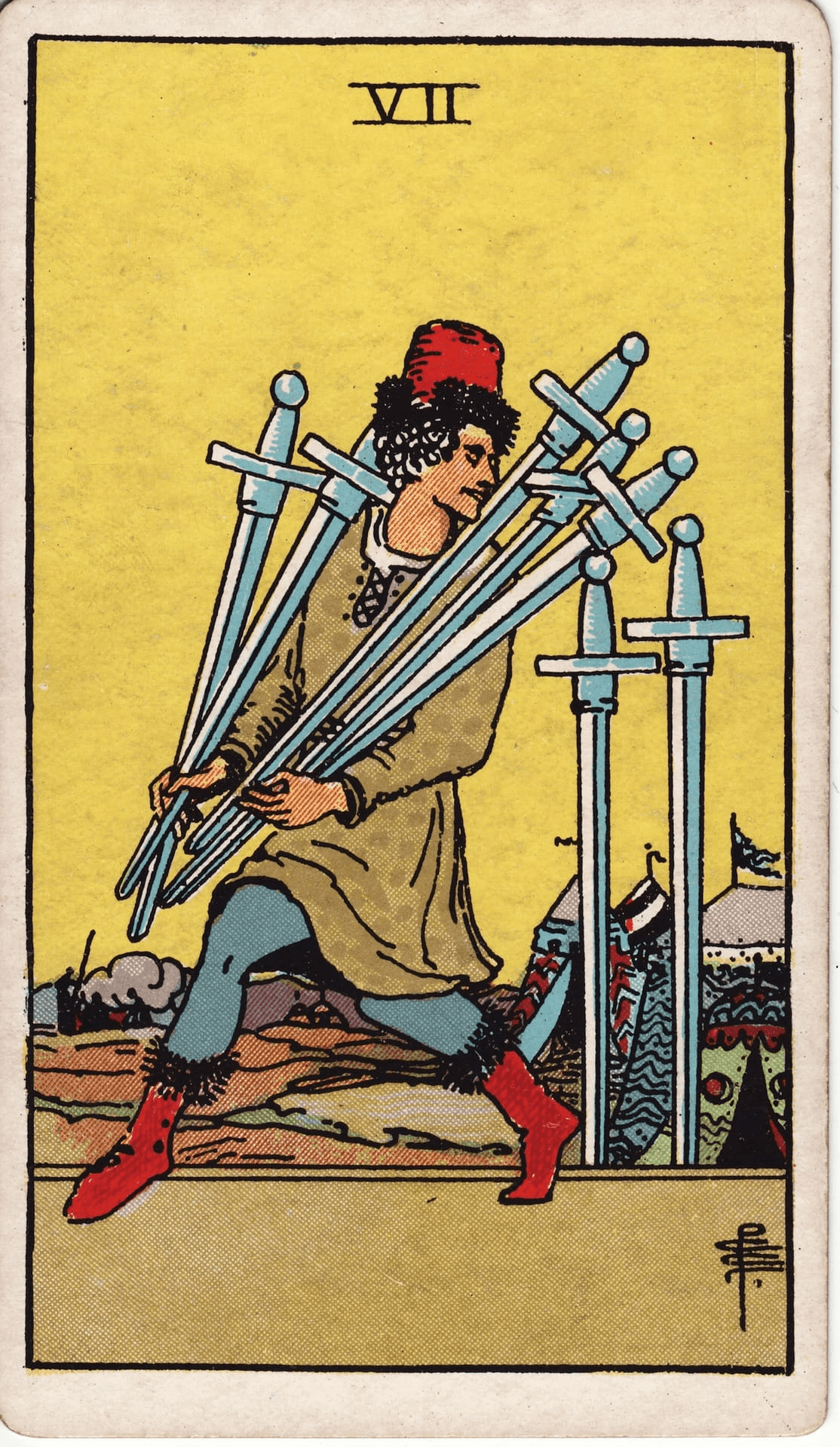 Seven of Swords
Try two or three sentences. Answer the question, give each card its assigned job, and suggest something the person could do.
Writing is optional. Your notes stay in this tab, are not sent or saved, and disappear when you reload the page.
Reveal the worked reading and notes
One reading that fits
You want the promotion, and there may be part of your approach you would rather not discuss openly. Inspect the shortcut: an exaggerated achievement, a promise you cannot keep, or work quietly handed to someone else. Aim for an outcome you can enjoy without having to defend how you got it.
Why it fits the cards
- Nine of Cups identifies the desired satisfaction. It says what you want rather than assuring you that you will get it.
- Seven of Swords introduces concealment, evasion or an indirect tactic. It changes a wish-fulfilment reading into a question about the approach.
Change the positions
With Seven of Swords as the situation and Nine of Cups as advice, the question might concern protecting a private plan while deciding what would satisfy you. Privacy alone is not deception.
A mistake to avoid
Do not accuse a colleague of lying because this card appears. Examine known actions before drawing conclusions about someone else.
If Seven of Swords is reversed
You might be ready to admit an avoidance or correct an incomplete account. Alternatively, the tactic may be getting harder to maintain. Look at what is actually happening.
Your wording can differ. Check whether your reading answers the question and whether you can point to the cards and positions to explain it.
Read the combination articleChoose an exercise
Compare your reasoning, not your wording
There is no score here. Two readings can use different words and still fit the cards. Ask whether your answer addresses the question, respects the positions, and explains how the cards connect. If you could swap in almost any card without changing your answer, try making it more specific.
The notes also show how different positions or a reversed card could change the reading. These are fictional situations for learning. A card does not establish someone else’s private feelings or guarantee what will happen.
Need a hand with the basics? Browse individual card meanings, compare the court cards, or use the combination finder for cards you have drawn yourself.