Practice reading tarot
Read the question, look at the cards, and try a short answer. Then open the notes to see a worked reading and why it fits the cards and their positions.
45 pairs · 7 trios · Classic Rider–Waite–Smith cards · Free, no account or deck needed
How to use these exercises
- Read the question first. A card about a choice means something different in a business question than in a question about dating.
- Look at each position. A card describing the problem does not automatically tell you what to do.
- Connect the cards in a short answer. What does the second card add to the first? What practical next step fits this particular question?
Try a reading
Exercise 36 of 52 · Notes opened for 0 of 52 exercises in this visit
“How can I keep learning when a classmate turns every discussion into a contest?”
These cards are upright. Read them in the positions shown.
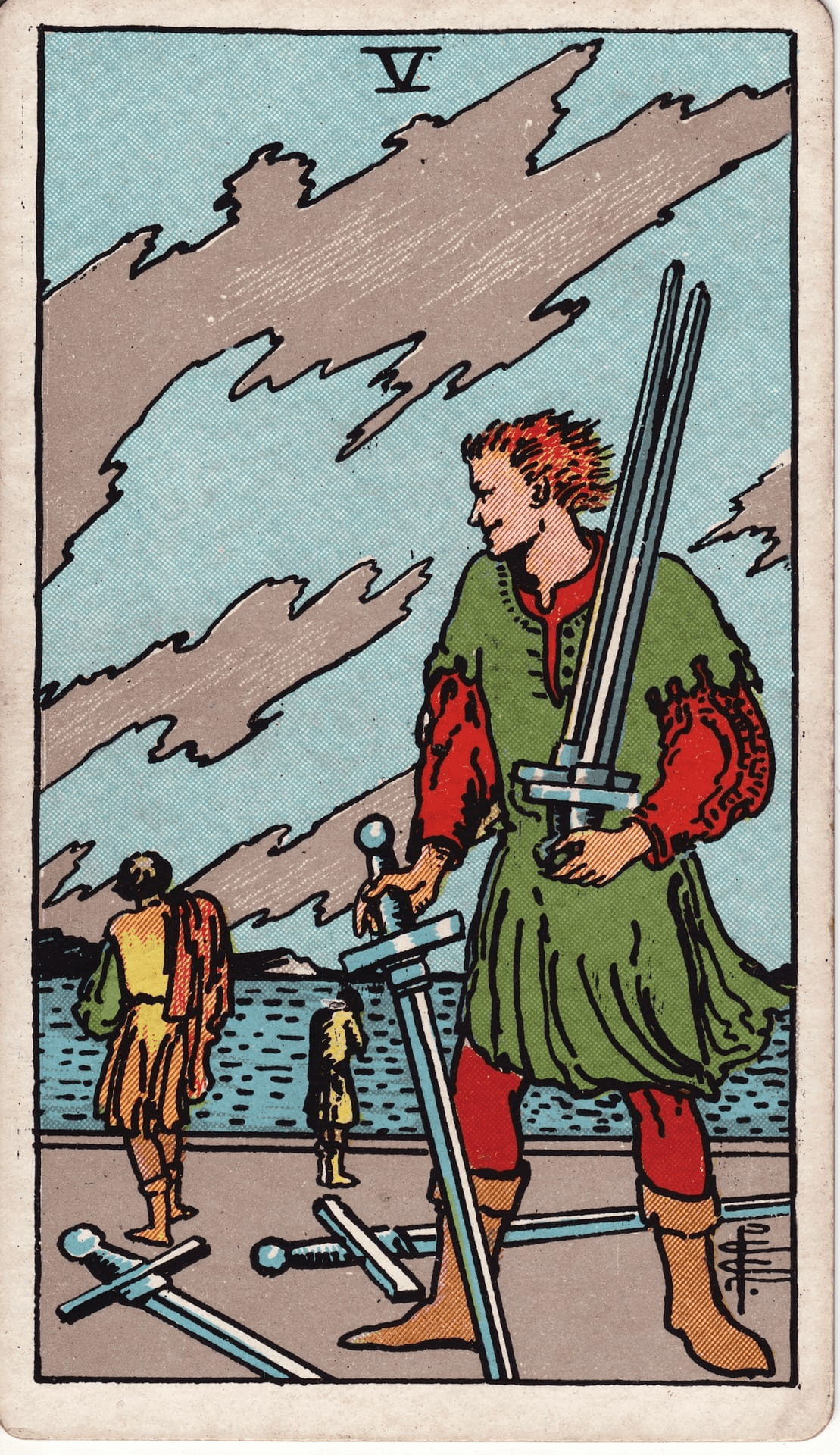 Five of Swords
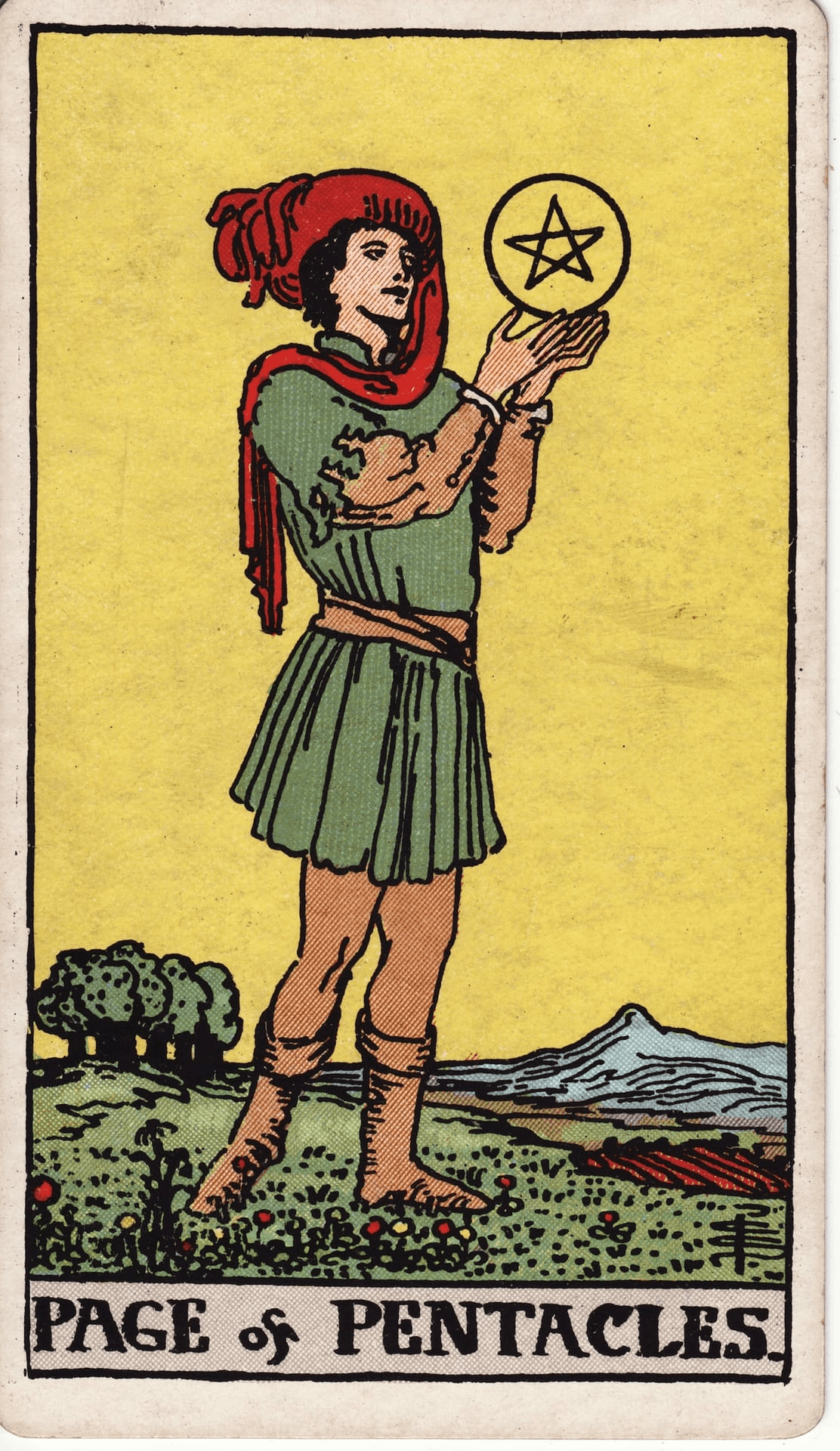 Page of Pentacles
Try two or three sentences. Answer the question, give each card its assigned job, and suggest something the person could do.
Writing is optional. Your notes stay in this tab, are not sent or saved, and disappear when you reload the page.
Reveal the worked reading and notes
One reading that fits
You came to learn, and the argument keeps getting in the way. The Five of Swords names the cost of that contest; the Page of Pentacles brings you back to the subject. Write down the point you still do not understand and ask the teacher about it. You can correct an error without taking on every argument your classmate offers.
Why it fits the cards
- The Five of Swords shows one figure collecting swords while two others walk away. In an obstacle position, that fits a discussion where proving a point costs people their willingness to participate.
- The Page of Pentacles studies the coin in his hands. As a useful response, he asks for attention to the task and room to be a beginner.
Change the positions
Make the Page of Pentacles the obstacle and the issue might be expecting yourself to know everything immediately. The Five of Swords as advice could then ask whether you can leave an unhelpful contest, rather than find a better way to win it.
A mistake to avoid
The Five of Swords does not prove your classmate is a bad person. Read the behavior you have observed, and decide which conversations are worth your time.
If Five of Swords is reversed
You might be ready to stop competing, or still replaying an argument after everyone else has moved on. Ask whether there is one point to clear up. If there is not, you can return to the work without getting the last word.
Your wording can differ. Check whether your reading answers the question and whether you can point to the cards and positions to explain it.
Read the combination articleChoose an exercise
Compare your reasoning, not your wording
There is no score here. Two readings can use different words and still fit the cards. Ask whether your answer addresses the question, respects the positions, and explains how the cards connect. If you could swap in almost any card without changing your answer, try making it more specific.
The notes also show how different positions or a reversed card could change the reading. These are fictional situations for learning. A card does not establish someone else’s private feelings or guarantee what will happen.
Need a hand with the basics? Browse individual card meanings, compare the court cards, or use the combination finder for cards you have drawn yourself.