Practice reading tarot
Read the question, look at the cards, and try a short answer. Then open the notes to see a worked reading and why it fits the cards and their positions.
45 pairs · 7 trios · Classic Rider–Waite–Smith cards · Free, no account or deck needed
How to use these exercises
- Read the question first. A card about a choice means something different in a business question than in a question about dating.
- Look at each position. A card describing the problem does not automatically tell you what to do.
- Connect the cards in a short answer. What does the second card add to the first? What practical next step fits this particular question?
Try a reading
Exercise 41 of 52 · Notes opened for 0 of 52 exercises in this visit
“My brother offered to lend me money, but keeps bringing up old mistakes. How should I respond?”
These cards are upright. Read them in the positions shown.
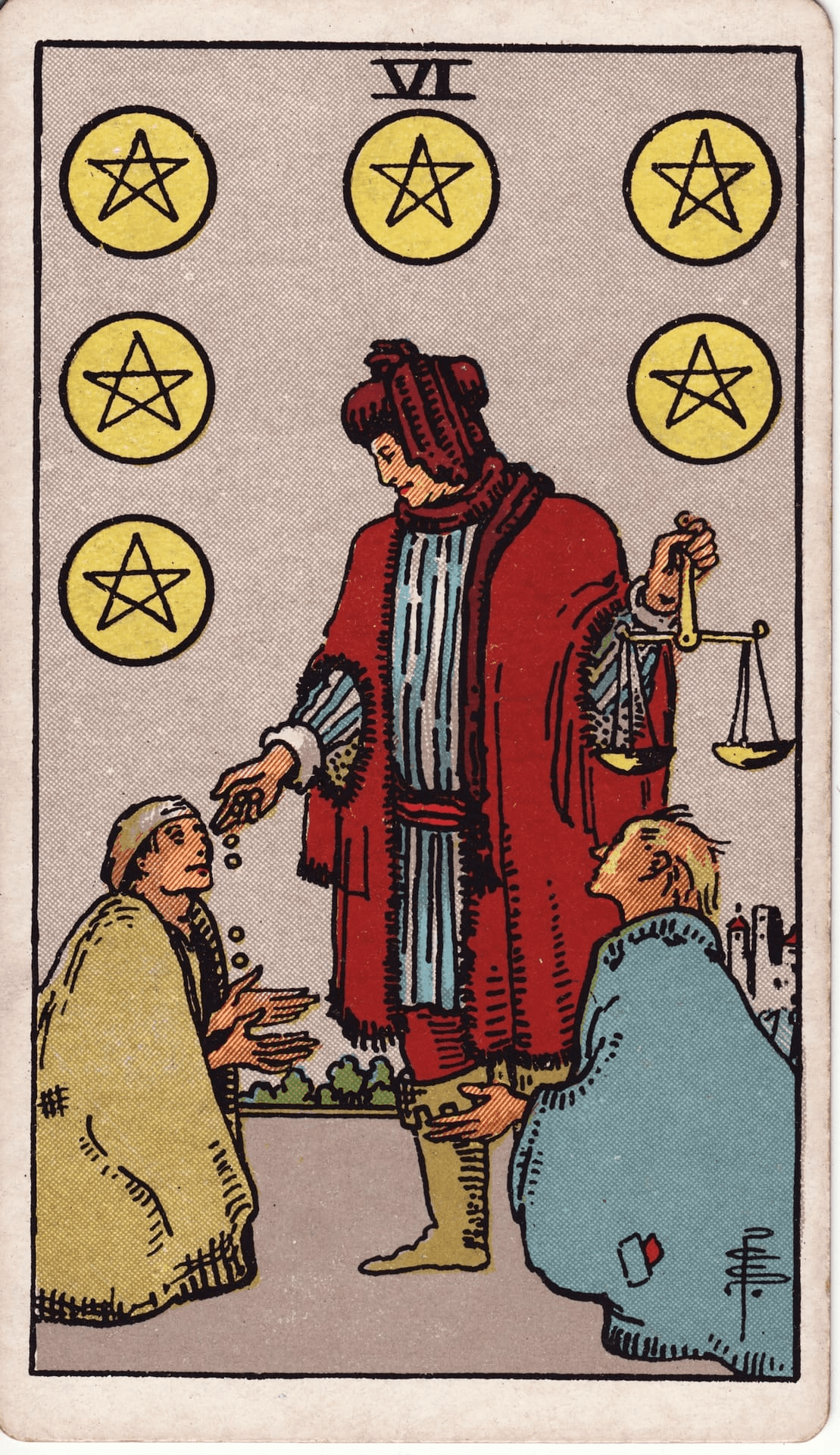 Six of Pentacles
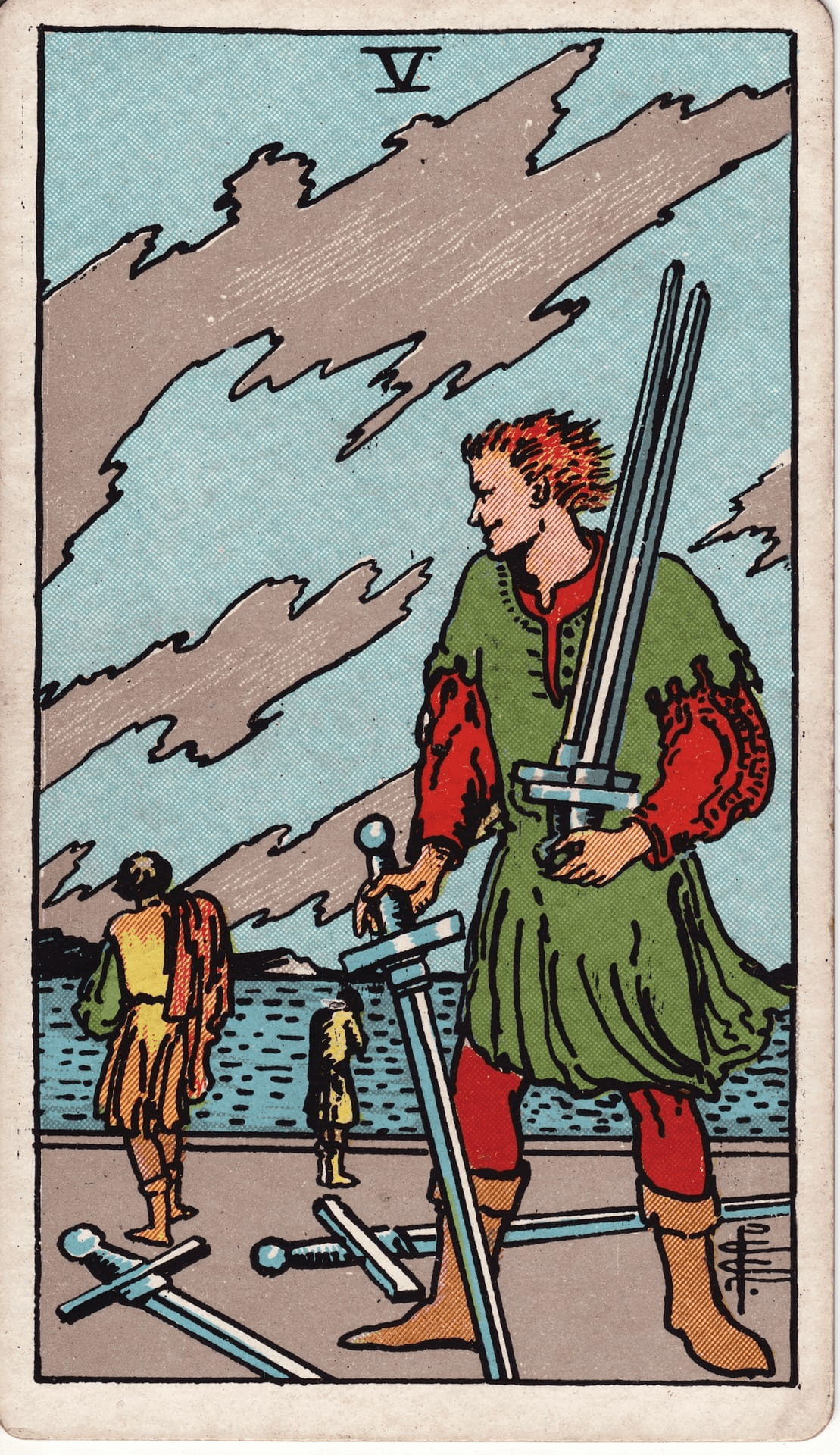 Five of Swords
Try two or three sentences. Answer the question, give each card its assigned job, and suggest something the person could do.
Writing is optional. Your notes stay in this tab, are not sent or saved, and disappear when you reload the page.
Reveal the worked reading and notes
One reading that fits
The money could help with a bill, and the criticism could still make the arrangement difficult. The Six of Pentacles asks you to make the offer clear: how much, when it must be repaid and what your brother expects. The Five of Swords asks you to include the arguments in that assessment. Tell him which terms you can agree to and that accepting a loan does not mean agreeing to repeated lectures. His response will give you more useful information than guessing his motive.
Why it fits the cards
- The Six of Pentacles shows one person distributing coins while holding scales. In an offer position, it fits help with terms and an unequal ability to give.
- The Five of Swords shows a victory that leaves other people walking away. As a cost, it asks whether the arrangement gives someone a way to keep winning an old argument.
Change the positions
Put the Five of Swords in the problem position and the old disputes are what need attention first. The Six of Pentacles as advice could then ask what limited, clearly agreed help you could accept without reopening your entire financial history.
A mistake to avoid
The Six of Pentacles does not make every offer generous, and the Five of Swords does not prove your brother planned to control you. Judge the stated terms and the behavior you already know.
If Six of Pentacles is reversed
The exchange may be uneven in ways the repayment terms do not show. Check for expectations about favors, access to your decisions or gratitude on demand. Clarify those before treating the money as an uncomplicated gift or loan.
Your wording can differ. Check whether your reading answers the question and whether you can point to the cards and positions to explain it.
Read the combination articleChoose an exercise
Compare your reasoning, not your wording
There is no score here. Two readings can use different words and still fit the cards. Ask whether your answer addresses the question, respects the positions, and explains how the cards connect. If you could swap in almost any card without changing your answer, try making it more specific.
The notes also show how different positions or a reversed card could change the reading. These are fictional situations for learning. A card does not establish someone else’s private feelings or guarantee what will happen.
Need a hand with the basics? Browse individual card meanings, compare the court cards, or use the combination finder for cards you have drawn yourself.