A three-card spread
Three-Card Relationship Tarot Spread
You keep having the same argument. Or you like someone, but every conversation leaves you guessing. This three-card relationship spread gives you a place to start: your part, the connection, and one useful next step.
Use it for a partner, friend, or family member. Ask about something you can actually address, such as “How can we make plans without another argument?” The cards can help you examine what happens between you. They cannot tell you what someone secretly thinks.
Already drawn your cards? Enter them belowThe three positions
Card 1
You
What are you bringing to this situation? Look at your effort, expectations, or habits.
Card 2
The connection
How are you interacting? Read this against conversations and behavior you have actually observed.
Card 3
A helpful next step
What could you do next? Turn the card into an action you can take yourself.
How to use this spread
- Write one question about a specific interaction. Give the three positions their roles before you shuffle.
- Draw three cards and lay them left to right in the order above. Keep any reversals you normally use.
- Read each card in its position, then put the three ideas into one sentence. Check that sentence against what you know.
A worked example
“How can we share the work of making plans?”
You arrange every date, book the table, and check the time. Your partner often suggests changing the plan at the last minute. You draw these three cards, all upright.
You
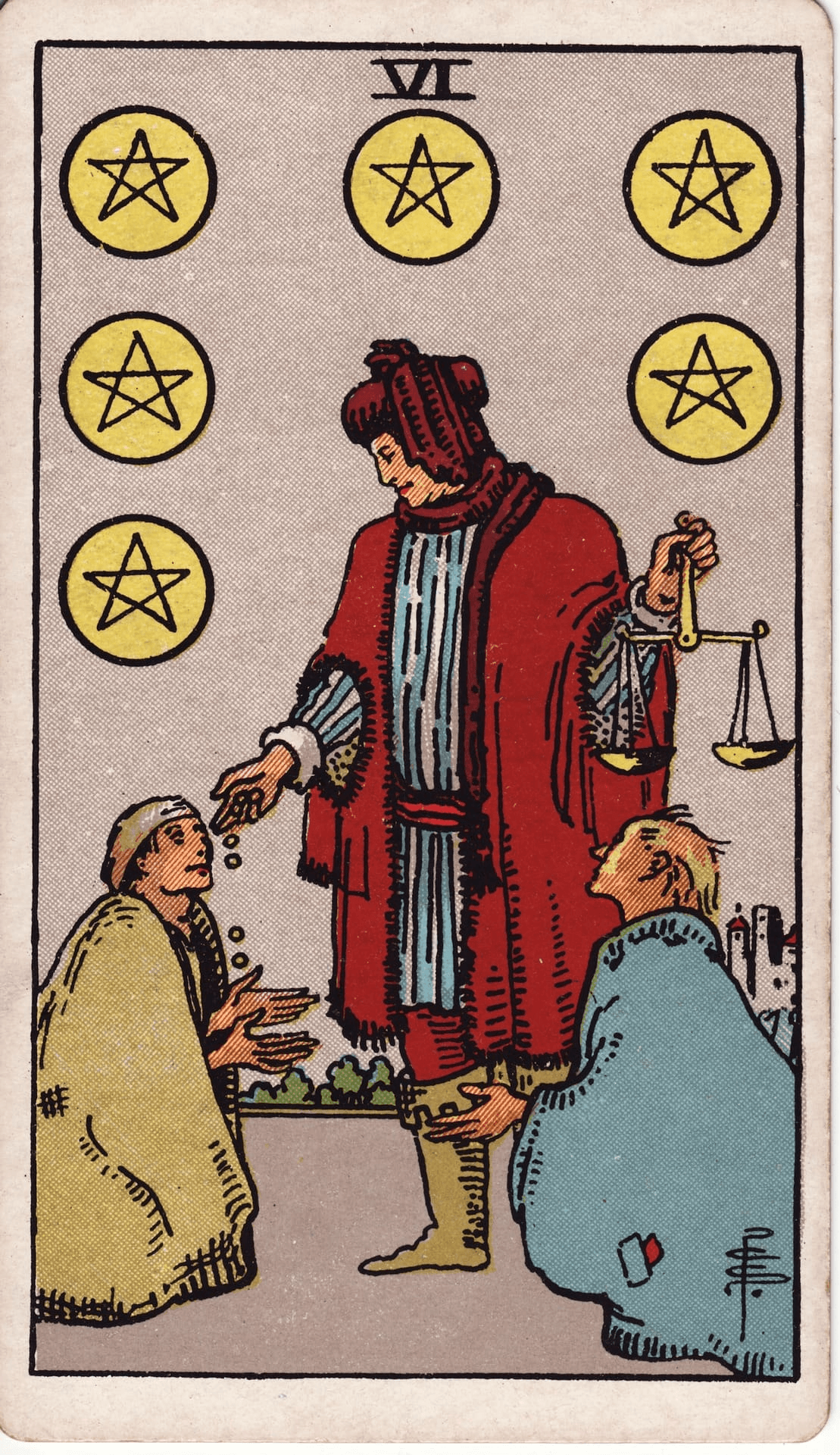
Six of Pentacles
One person gives while others receive. In your position, this raises a fair question: have you become the person who does all the arranging? Giving is useful. Taking responsibility for every detail can leave you annoyed.
The connection
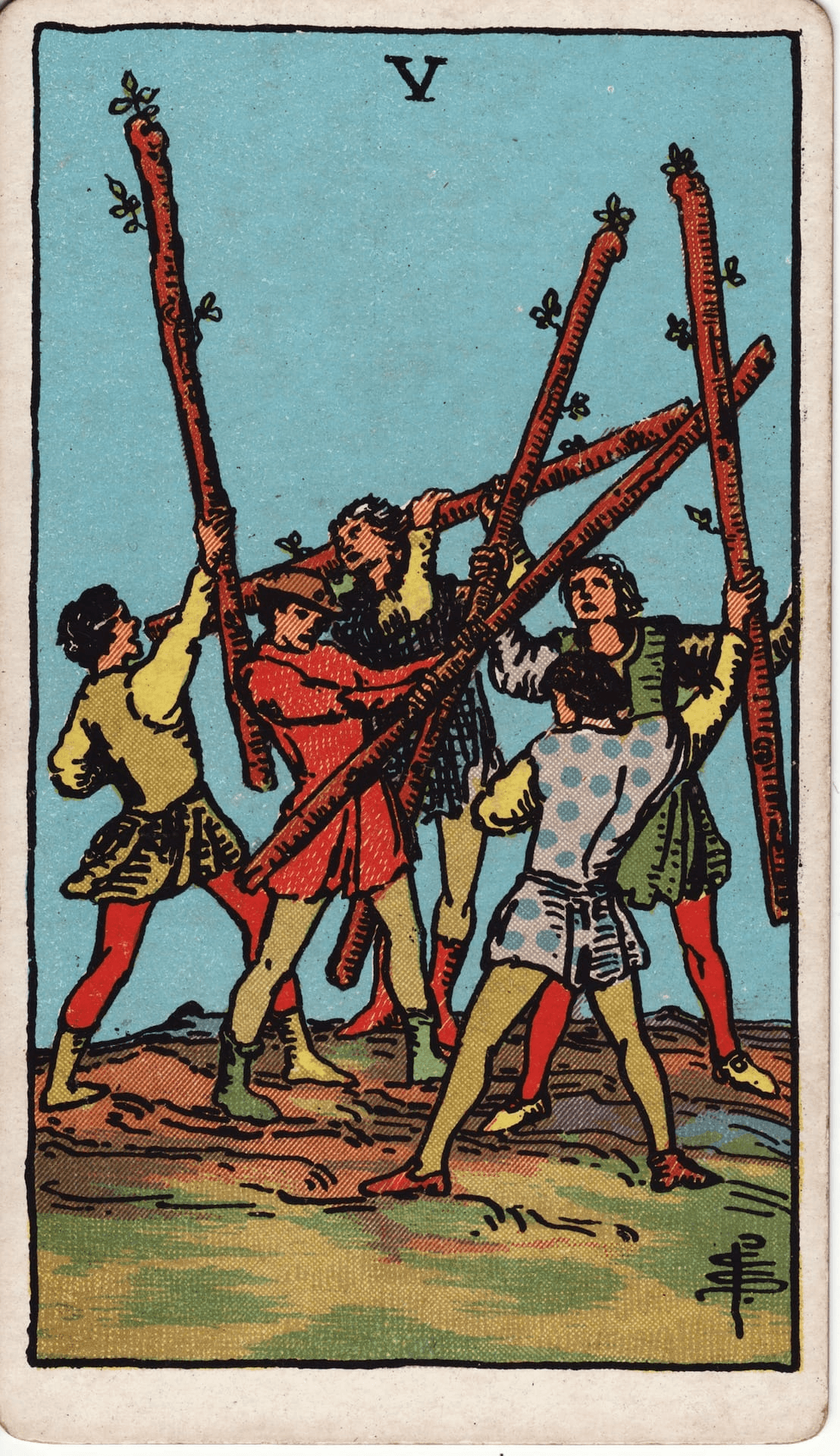
Five of Wands
The figures struggle to coordinate their staffs. Here, it fits the competing plans: you want to settle the details; your partner keeps changing them. It describes the friction you already see, without declaring the whole relationship a disaster.
A helpful next step
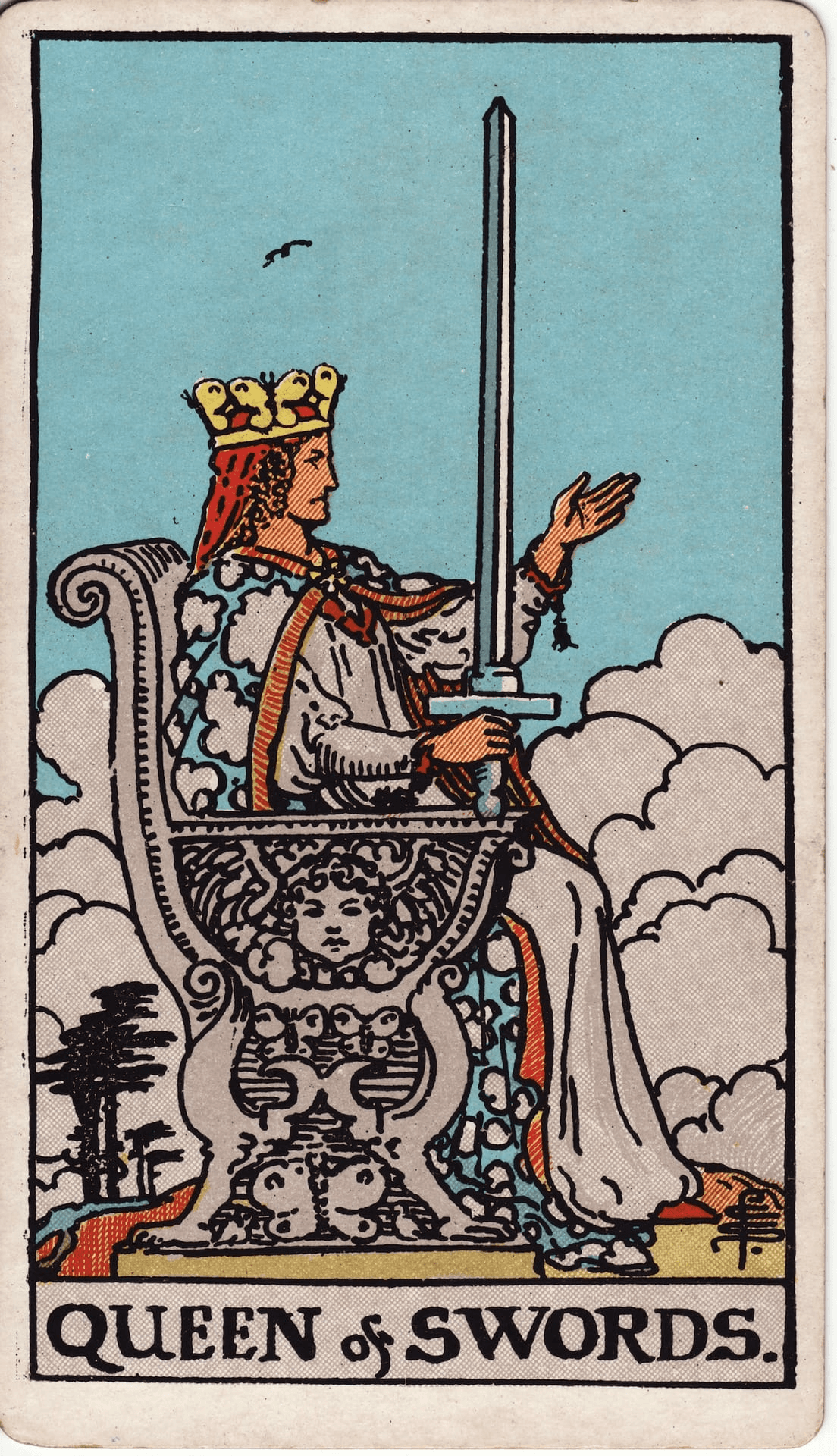
Queen of Swords
The Queen holds her sword upright and extends a hand. Take her directness seriously. Say what is frustrating you, then make a clear request: “Can you choose the place and book it this Friday?” Give the other person room to answer.
Read the three cards together
You may be doing too much of the planning, and the repeated changes are making that imbalance harder to ignore. The next step is a specific conversation about sharing the job. See whether the agreement changes what actually happens; drawing another card will not make the reservation.
Why the positions matter
The Queen of Swords is advice here, so her clarity becomes something to practice. In the “You” position, she could instead prompt you to examine how you speak when you are irritated. The same card takes on a different job.
Explore the pairs inside this example
These reference articles discuss the cards together. Use the assigned positions above when reading this particular example.
Turn the reading into something you can try
After your reading, write the exact request you want to make. Keep it small enough that both of you can tell whether it happened. Revisit your notes after the conversation, and compare the reading with the response you received.
Draw three cards from your own deck and enter them in order. The lookup opens a combination reference. Choose “Read these cards for my question” to use this spread’s positions and add any reversals.
Which cards did you draw?
Choose the cards from your deck. Free lookup, no account needed.
No deck at hand?
Our digital reading draws three random cards and lets you ask a question. It starts a separate reading; the positions on this page are not assigned automatically.
Draw three random cards online