A three-card spread
Situation, Challenge & Advice Tarot Spread
When you are stuck, it is easy to mix up the job in front of you with everything that makes it difficult. This spread separates them. One card describes the situation, one names a challenge, and one gives you a response to consider.
It works well for a stalled project, a difficult conversation, or a routine that keeps falling apart. Ask “What would help me finish this?” rather than asking the cards to supply a deadline. You still have to decide what to do.
Already drawn your cards? Enter them belowThe three positions
Card 1
Situation
What is happening now? Start with the task or pattern you can describe in ordinary words.
Card 2
Challenge
What is making it harder? A pleasant-looking card can still show a distraction or an excess here.
Card 3
Advice
What response might help? Look for a behavior you can try, rather than a guaranteed result.
How to use this spread
- Choose one situation and write a question about how to handle it. Assign the positions before drawing.
- Shuffle, then place three cards left to right: situation, challenge, advice. Note any reversals.
- Explain each card using its role. Finish with one action, and decide when you will check whether it helped.
A worked example
“What would help me finish my illustration portfolio?”
You need six finished pieces. You keep practicing, but you also keep changing the theme and starting new sketches. You draw these three cards upright.
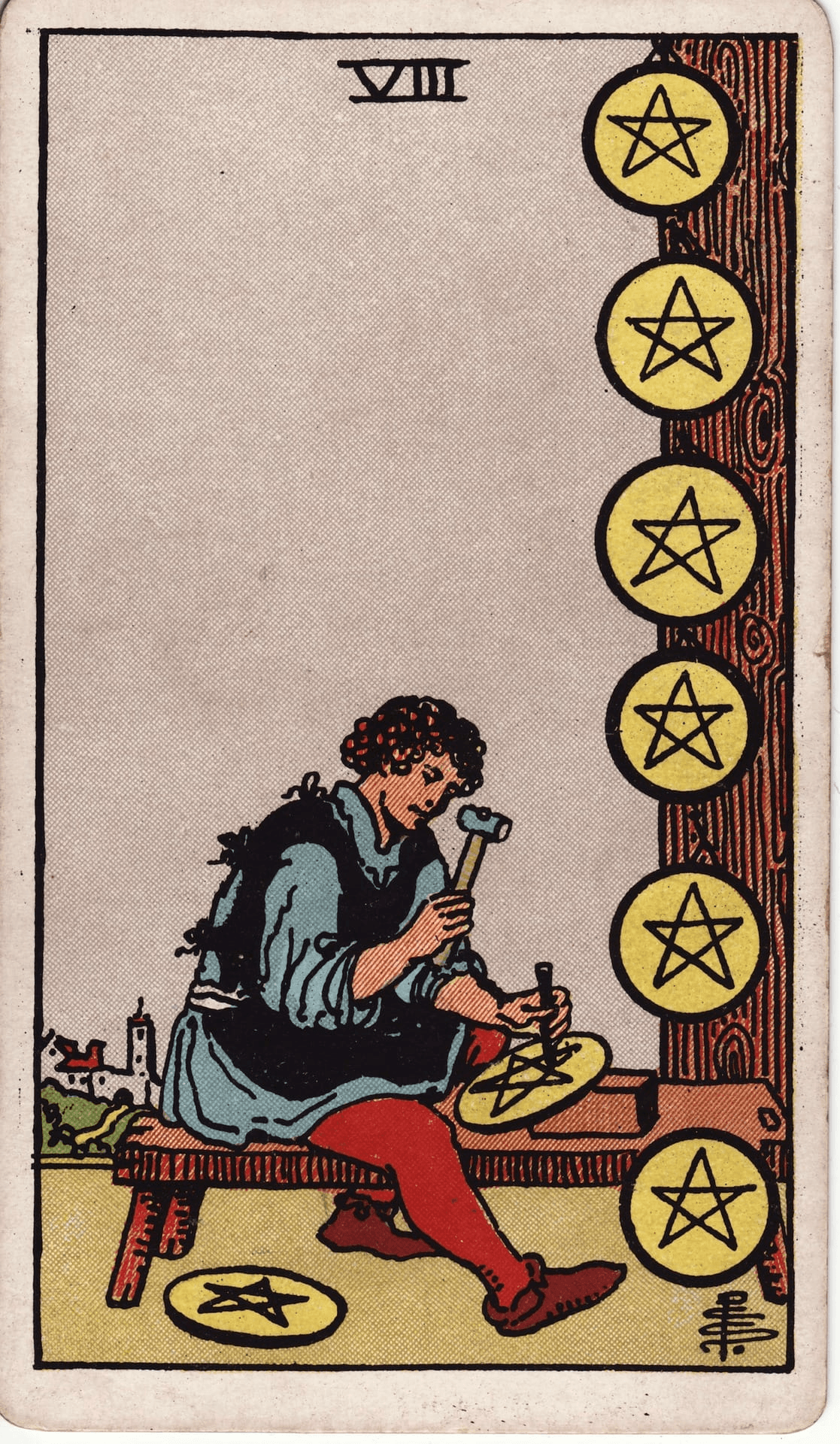
Situation
Eight of Pentacles
The worker repeats the same task at a bench. As the situation, this fits the work already underway: your skills are developing through practice. You have something to build on. The question is how to turn that effort into finished pieces.
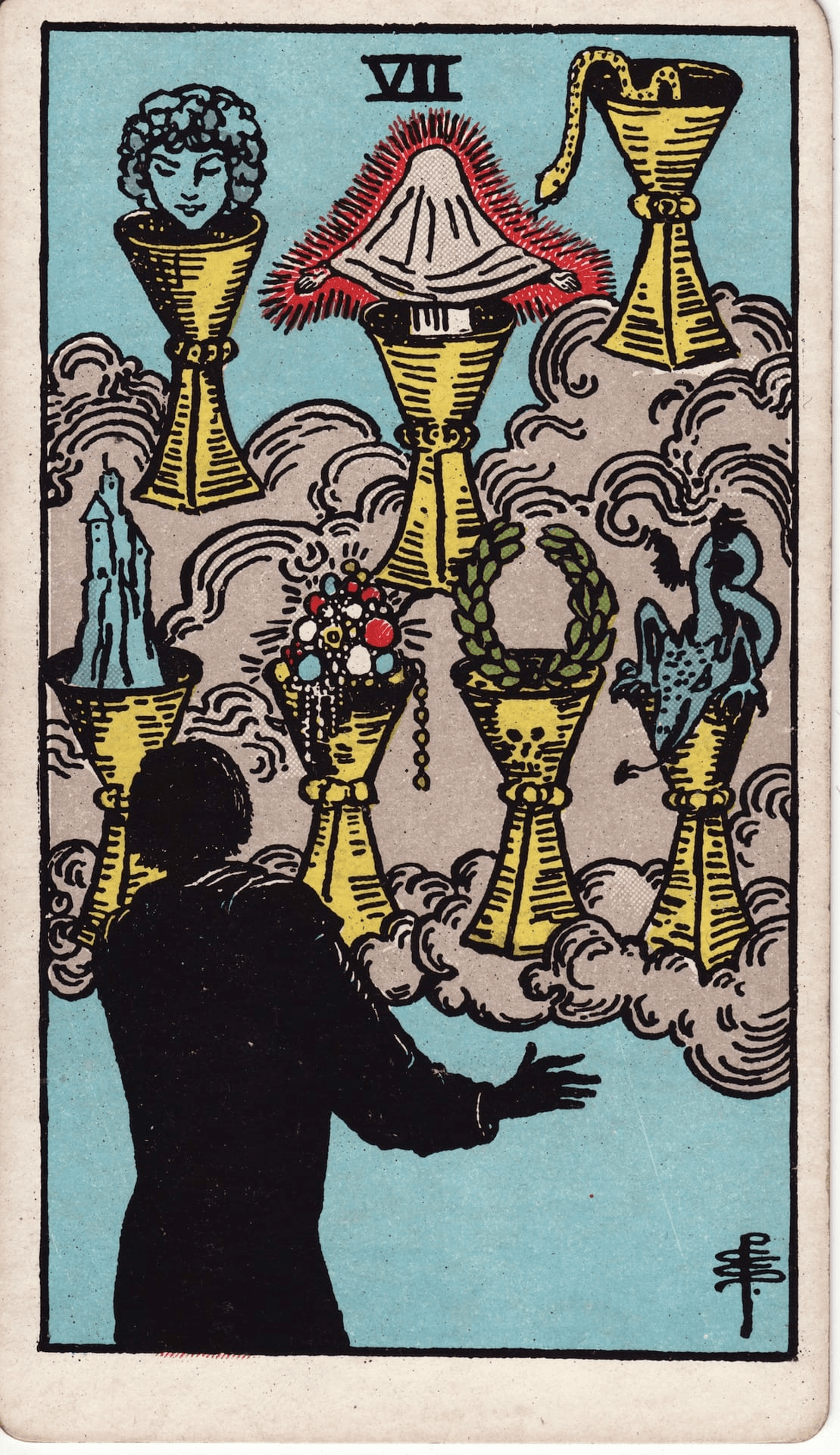
Challenge
Seven of Cups
The cups offer very different possibilities. In the challenge position, those choices can be the problem. Every new theme seems worth trying, so none gets enough attention. More ideas will not necessarily help you finish the portfolio.
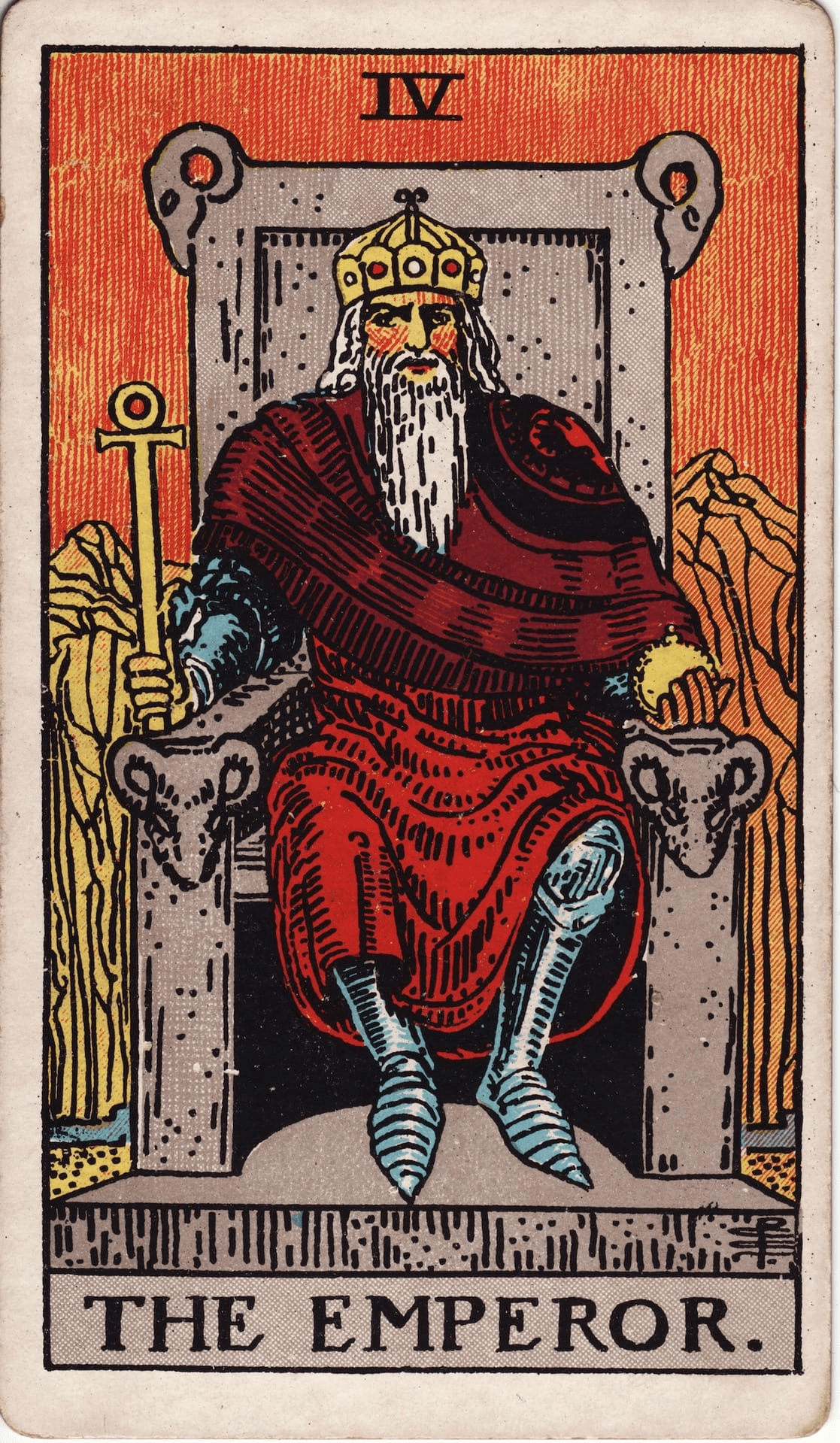
Advice
The Emperor
The Emperor sits on a solid stone throne. As advice, use structure: choose one theme, list the six pieces, and give the first a finish date. Decide what “finished” means before you find another detail to change.
Read the three cards together
You are putting in the hours, but changing direction keeps turning finished work into another draft. Keep the practice. Narrow the choices. For the next week, complete one piece in the theme you chose and set the other ideas aside in a separate notebook.
Why the positions matter
The Emperor gives this reading a practical routine because he occupies the advice position. As the challenge, he could describe rules that have become too rigid. Likewise, Seven of Cups as advice might invite you to explore alternatives; as the challenge here, it asks you to stop multiplying them.
Explore the pairs inside this example
These reference articles discuss the cards together. Use the assigned positions above when reading this particular example.
Turn the reading into something you can try
Write your next step as a sentence with a verb and a limit: “Finish the first piece by Sunday.” At the end of the week, note what happened. That gives you something useful to learn from, even if your first interpretation needs adjusting.
Draw three cards from your own deck and enter them in order. The lookup opens a combination reference. Choose “Read these cards for my question” to use this spread’s positions and add any reversals.
Which cards did you draw?
Choose the cards from your deck. Free lookup, no account needed.
No deck at hand?
Our digital reading draws three random cards and lets you ask a question. It starts a separate reading; the positions on this page are not assigned automatically.
Draw three random cards online